

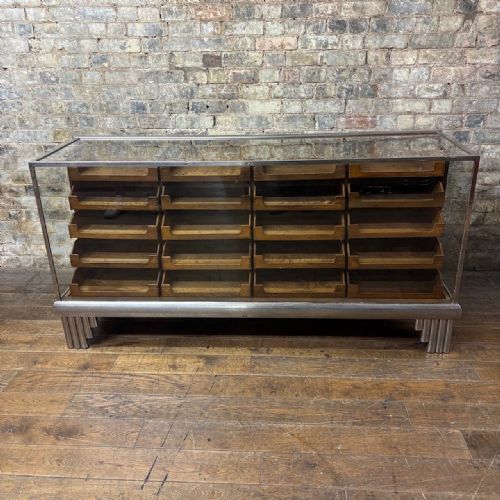


Antique Haberdashery Display Drawers
These antique haberdashery display drawers are trade counters and shop fittings designed to hold ribbons and cottons.
Antique Haberdashery Display Drawers
When you search for antique haberdashery display drawers, you are looking at practical shop fittings from the nineteenth and early twentieth centuries. These pieces were built for drapery shops, chemist stores, and general merchants to organise small wares behind the counter.
You are most likely to meet banks of drawers and countertop cabinets built in oak, pine, and mahogany. Many feature glazed fronts or numerous small compartments suited for sorting thread, needles, and small dry goods.
The origins span Victorian workshops through to interwar commercial premises. Surviving examples range from large shop counters to compact countertop needle cabinets bearing original maker details.
How they were made
Carpenters built these heavy commercial units using durable timbers such as oak, mahogany, teak, and pine to withstand daily trade use. Drawers often incorporated brass pulls, iron handles, and chrome details alongside glass panels for product visibility.
Construction methods focused on sturdy joinery to support dozens of narrow drawer compartments within a single bank. Many pieces retain original painted finishes or surface markings from their decades of retail service.
Antique Haberdashery Display Drawers Retail Price Guide 2026
Typical asking prices for haberdashery display drawers among the pieces listed under this phrase on Sellingantiques today, from the lower quarter to the upper quarter. They describe what is for sale here now, not the wider market.
One cheerful Victorian pine shop fitting arrives with an originally painted white surface and fifty separate drawers for maximum sorting.
What varies in quality
The distinction between standard utility shop fittings and finer examples lies in the choice of timber and original hardware. Pieces constructed from solid walnut or mahogany with intact glass fronts and original brass handles represent the more substantial end of commercial joinery.
Intact provenance and original trade labeling elevate certain pieces above standard multi-drawer chests. Units retaining distinct manufacturer attribution or specialised shop functions demonstrate greater historical integrity.
Dudley & Co
The Antique Haberdashery Display Drawers Glossary
- Bank of Drawers
- A large cabinet containing multiple small drawers stacked together. These units provided systematic storage for textiles and small shop inventory.
- Draper's Counter
- A long retail shop counter incorporating storage drawers beneath the surface. Shop assistants used the top for measuring and cutting cloth.
- Shop Fitting
- Custom furniture built specifically for commercial retail interiors. These robust fixtures were designed to display merchandise effectively to customers.
- Interwar Commercial
- Design and manufacturing originating between the First and Second World Wars. Pieces from this period often blend traditional timber construction with chrome and modern metal elements.
Antique Haberdashery Display Drawers: Frequently Asked Questions
What were antique haberdashery display drawers used for?
Merchants used these multi-drawer cabinets in drapery shops and general stores to sort small sewing items like buttons, ribbons, and threads.
The numerous shallow drawers kept small goods visible and organised for customers behind the counter.
How do I identify a Victorian haberdashery cabinet?
Victorian examples typically feature solid timber construction in oak, pine, or walnut with traditional brass or iron drawer pulls.
Many incorporate hand-cut joinery and heavy proportions designed for intensive daily trade use during the nineteenth century.
Can I use an old shop counter at home?
These large banks of drawers and counters suit modern kitchens, studios, and living spaces as statement storage islands.
The numerous small compartments provide practical organisation for contemporary household items and collections.
What is the difference between Edwardian and Art Deco shop fittings?
Edwardian cabinets generally continue heavier nineteenth-century timber traditions with straightforward functional hardware.
Art Deco commercial pieces from the nineteen-thirties often incorporate chrome details and streamlined geometric lines suited to modernizing retail spaces.