

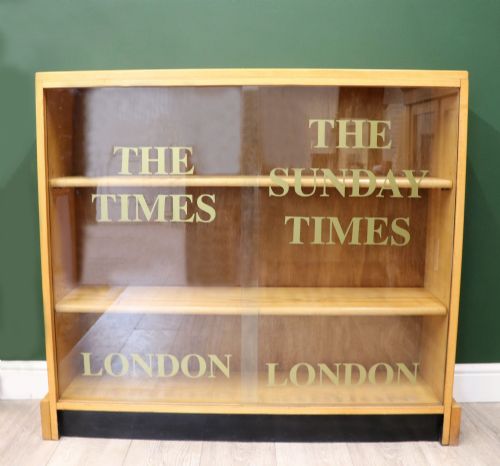




Oak Retail Display Cabinet
An oak retail display cabinet brings commercial heritage into a room, offering glazed protection for stored belongings.
Oak Retail Display Cabinet
An oak retail display cabinet serves as a functional piece for presenting merchandise or personal collections, originating from commercial environments such as shops and museums. When buyers search this phrase, they find heavy-duty furniture designed to withstand daily trade use while keeping contents clearly visible.
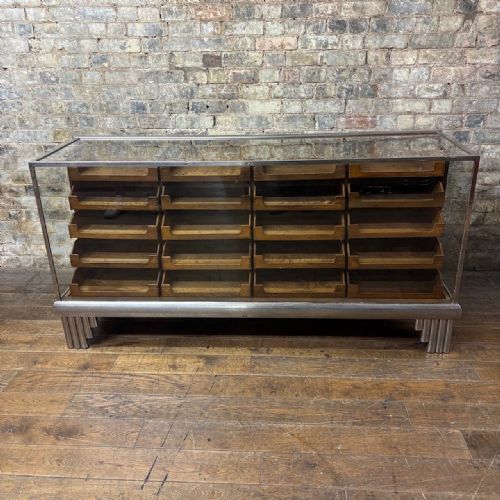
The pieces on this page span several distinct eras, notably the Victorian, Edwardian, and Art Deco periods, alongside specific commercial interpretations from the 1920s and 1930s. Forms range from compact countertop display cabinets to large shop counters and massive haberdashery units with multiple drawers.
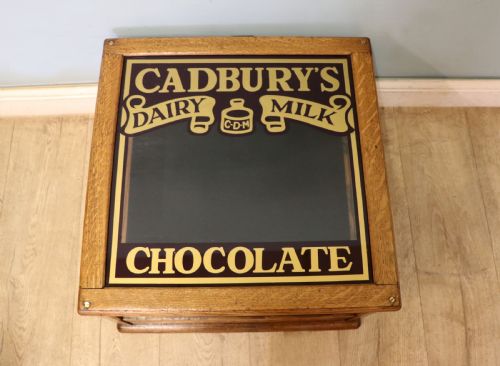
Origins include English workshops and French museum pieces, demonstrating how commercial joinery adapted for different retail sectors like cigar sales, confectionery, and general drapery. Buyers encounter variations that include specific chocolate sign-writing or specialised glass showcases tailored for distinct retail needs.
What varies in quality
The standard of timber selection and joinery marks the difference between utilitarian trade furniture and finer commercial display pieces. Heavier proportions and specialised configurations, such as extensive drawer arrangements in haberdashery units, indicate higher manufacturing ambition.
Original hardware, intact glass panes, and surviving commercial elements like period sign-writing contribute to the integrity of a piece. The transition from plain utilitarian shop fittings to decorative French museum cases or Art Deco framing alters the visual refinement of the cabinet.
Oak Retail Display Cabinet Retail Price Guide 2026
Typical asking prices for oak retail display cabinet among the pieces listed under this phrase on Sellingantiques today, from the lower quarter to the upper quarter. They describe what is for sale here now, not the wider market.
The archive records specialised commercial forms including cigar display cases and glazed wardrobe shop fittings.
F Sage And Co·Dudley And Co
The Oak Retail Display Cabinet Glossary
- Haberdashery cabinet
- A multi-drawer retail unit traditionally used for storing small sewing goods and ribbons. These pieces often feature glass-fronted drawers for quick stock identification.
- Countertop display cabinet
- A smaller scale showcase designed to sit upon a shop counter for customer eye-level viewing. They protect delicate merchandise while remaining within reach of the vendor.
- Shop fitting
- Permanent or semi-permanent furniture built specifically for commercial retail premises. Such items are constructed with durability as a primary objective.
- Museum display case
- A specialised cabinet intended for institutional exhibition rather than general retail. They prioritize secure glass enclosure and unobstructed viewing angles.
Oak Retail Display Cabinet: Frequently Asked Questions
What is an oak retail display cabinet?
An oak retail display cabinet is a piece of commercial furniture originally built for shops, museums, or businesses to showcase merchandise. They combine robust timber frames with extensive glazing to protect items while keeping them visible.
Today, these cabinets find a second life in domestic settings, offering practical storage for collections, books, or personal objects while adding historical character to a room.
How do I date an oak retail display cabinet?
Dating relies on observing stylistic markers, materials, and construction methods associated with specific decades. Pieces span from late Victorian and Edwardian shop fittings through to 1920s and 1930s Art Deco commercial designs.
Hardware choices, such as brass versus chrome, along with structural forms like haberdashery counters or countertop showcases, help place a cabinet within its historical manufacturing period.
How were these cabinets used?
Merchants utilised these cabinets in high street shops to display goods safely to the public, preventing handling while encouraging sales. Specialised variations held items like cigars, confectionery, or haberdashery items.
Museums and institutional premises also employed similar glazed oak cases to exhibit specimens and artefacts securely under controlled conditions.
How do I live with one?
Living with a commercial display cabinet involves placing it in a room where its depth and glazed surfaces can be safely appreciated. Because many are heavy shop fittings, positioning requires stable flooring and adequate clearance for doors or drawers.
Interior lighting can be arranged around the glass panels to highlight displayed collections, letting the historic timber frame anchor the surrounding decor.