



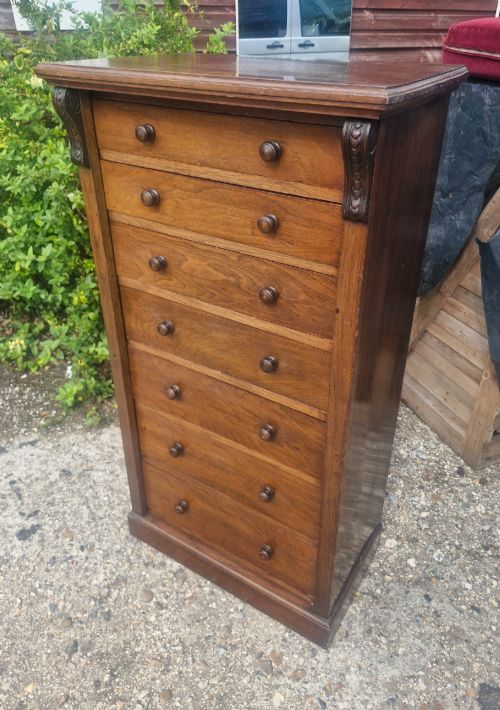
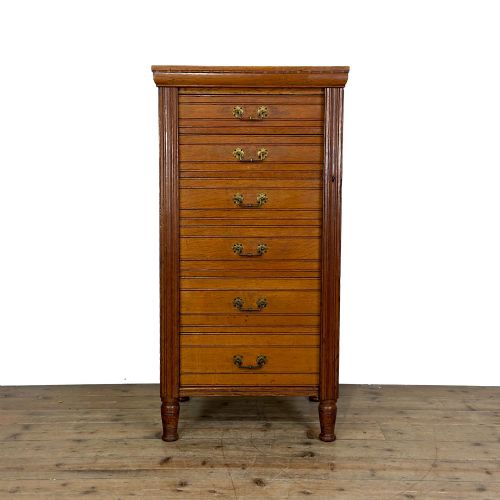

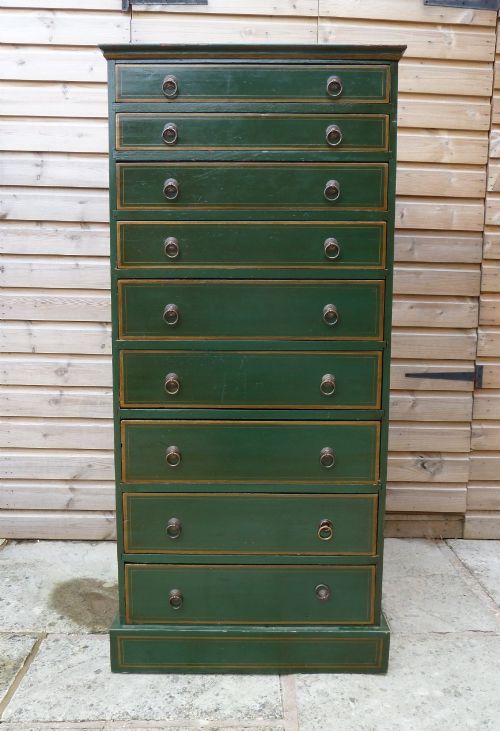
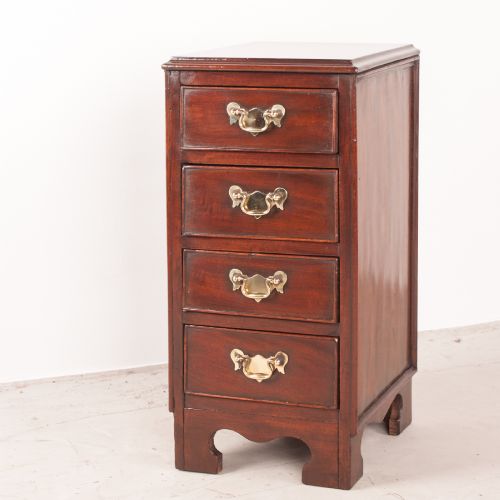

Collector Drawer Unit
These collector drawer unit pieces offer multi-compartment storage for specimens and small objects, combining tidy utility with period craftsmanship.
Collector Drawer Unit
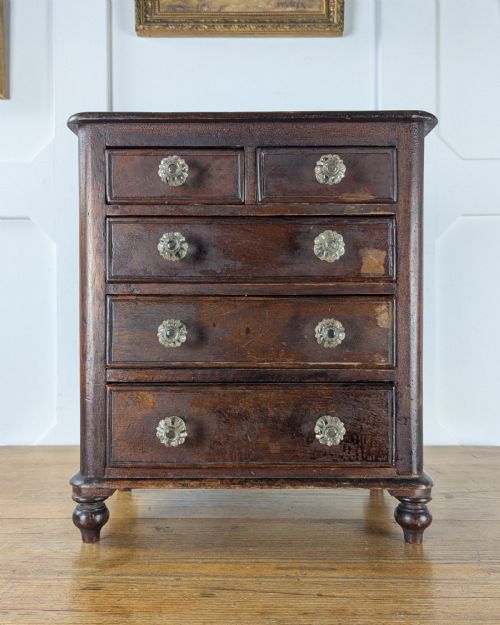
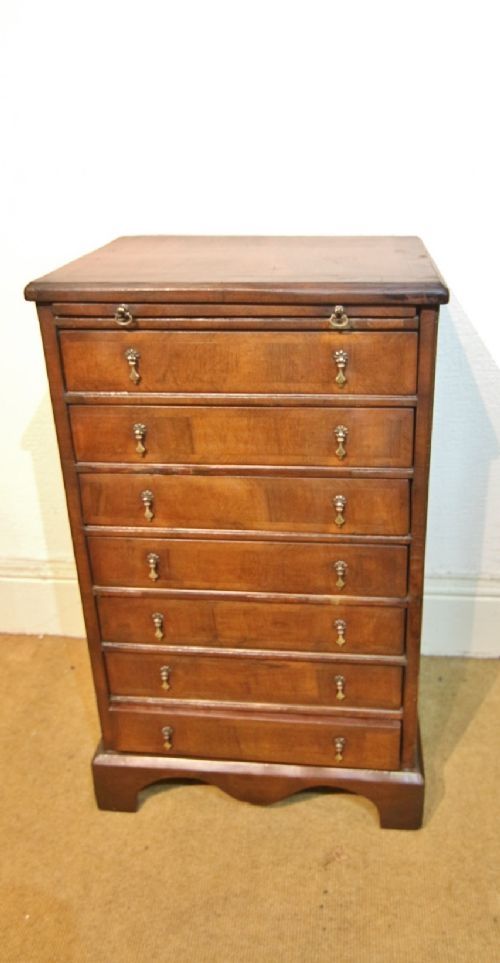
A collector drawer unit gathers together multi-drawer formats designed to hold specimens, documents, or small domestic items. Pieces on this page span the nineteenth century, the Edwardian era, and the 1920s, ranging from miniature apprentice chests to large banks of drawers.
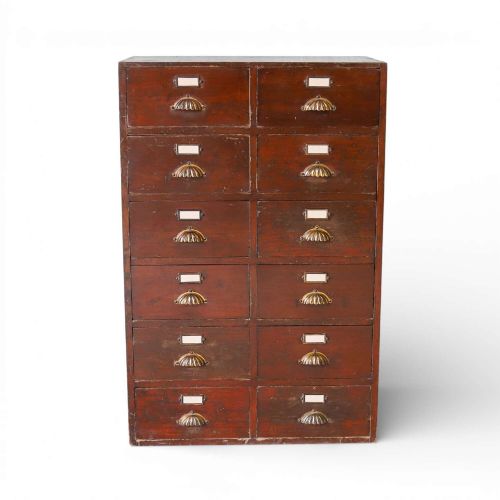
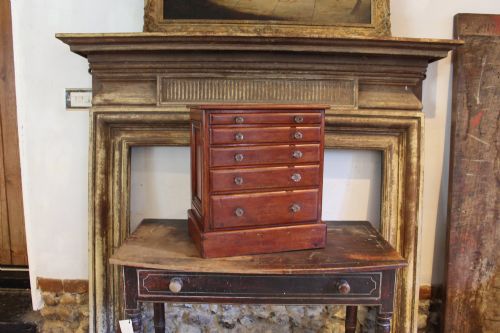
The frequent versions include banks of office drawers, chemist apothecary cabinets, and small tabletop specimen chests. Materials run from mahogany, walnut, and burr walnut to pine and deal.
Origins stretch across English country houses, shops, and apothecaries, employing styles from Victorian and Edwardian to Arts and Crafts and Industrial Utility.
Materials and Construction
Carpenters built these units using solid timbers like mahogany, oak, walnut, and pine, often adding burr walnut veneers or satin walnut for display surfaces. Drawer construction relies on traditional joints, housing numerous small compartments built for sorting specimens or papers.
Metal fittings such as brass shell pulls and label holders appear across workshop, office, and shop pieces, providing practical identification for each drawer. Glass and leather inserts also feature in specific filing and display formats.
Collector Drawer Unit Retail Price Guide 2026
Typical asking prices for collector drawer unit among the pieces listed under this phrase on Sellingantiques today, from the lower quarter to the upper quarter. They describe what is for sale here now, not the wider market.
Florists utilised specialised seed chests with tiny glazed drawers to keep garden stocks orderly before modern packets arrived.
Judging Quality
The upper tier of these pieces shows in the selection of timbers, such as figured walnut or dense mahogany, paired with original brass pull handles and intact label holders. Superior examples maintain smooth drawer action across banks containing twenty or more compartments.
Simpler versions utilise stained deal or painted pine intended strictly for utility in offices or shops. The presence of maker inscriptions or dated signatures elevates particular pieces above standard workshop production.
Luxmore's of Ilfracombe·Charles William Schofield
The Collector Drawer Unit Glossary
- Wellington chest
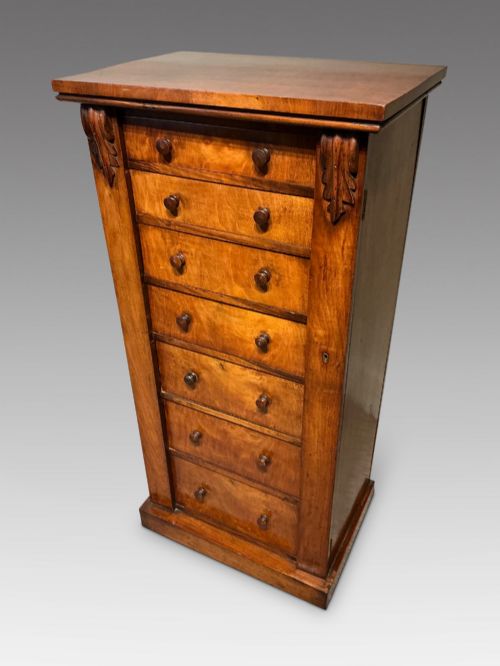
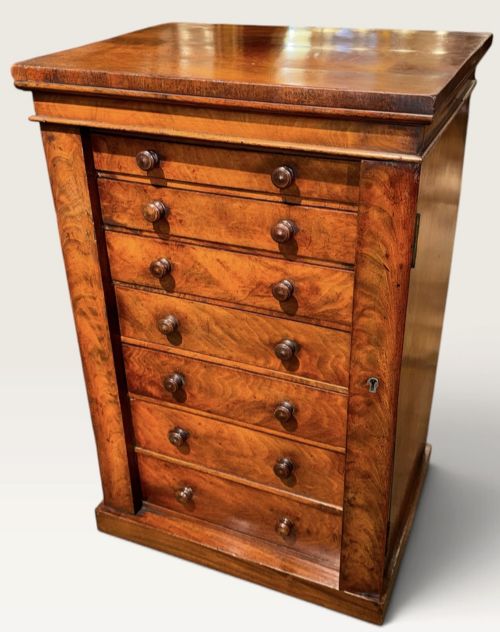
- A tall, narrow chest of drawers secured by a locking hinged stile on one side that fastens over the drawer edges. This format typically dates from the Victorian period in mahogany or walnut.
- Apprentice piece
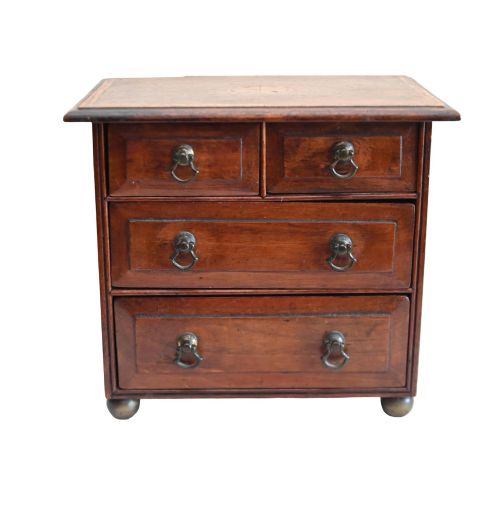
- A miniature furniture item created by a trainee craftsman to demonstrate mastery of joinery techniques. These small chests replicate full-size Georgian or Victorian drawer units.
- Bank of drawers
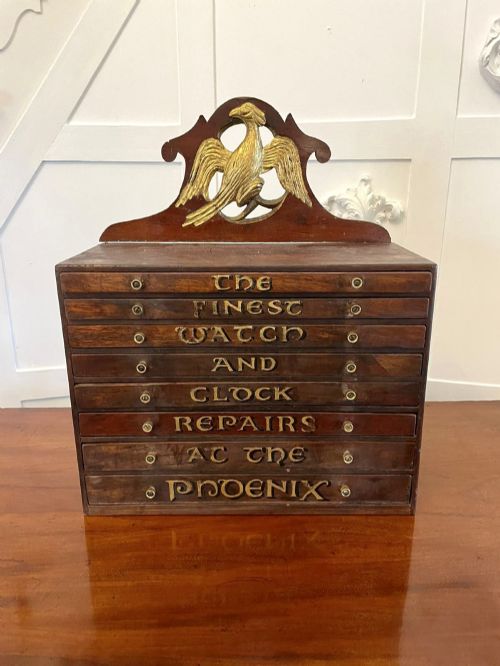
- A large multi-compartment storage unit designed for commercial, apothecary, or office use. They feature numerous small drawers intended for systematic sorting.
- Specimen cabinet
- A specialised cabinet with shallow drawers built for storing natural history collections like insects, shells, or minerals. The interiors often retain original felt or compartment dividers.
- Cartonnier
- A desktop or freestanding cabinet fitted with compartments or drawers for holding papers and documents. French versions frequently incorporate leather accents.
Collector Drawer Unit: Frequently Asked Questions
What were collector drawer units used for originally?
These units served multiple trades and domestic purposes, housing natural history specimens, apothecary items, workshop tools, and office documents.
Larger banks of drawers equipped shops and chemists, while smaller tabletop chests held collections or writing materials in private homes.
How do I date an antique drawer unit?
Dating relies on timber choices, construction methods, and hardware styles such as brass shell pulls or label holders.
Victorian and Edwardian pieces often display distinct proportions, timber veneers like burr walnut, and period label frames that indicate their exact era of manufacture.
Can I use these cabinets for modern office storage?
Many multi-drawer formats adapt easily to modern sorting, holding stationery, craft supplies, or small desk accessories.
Units built for A4 storage or card indexes provide functional compartmentalization suited to contemporary workspaces.
Are miniature chests the same as apprentice pieces?
Miniature chests encompass both apprentice demonstration pieces and small decorative storage items made for domestic use.
Apprentice pieces specifically exhibit advanced joinery details scaled down to test a craftsman's skill.