



Cold Painted Spelter Statue
A cold painted spelter statue brings vibrant character and decorative grace into a room, offering the charm of bronze at a lighter scale.
Cold Painted Spelter Statue
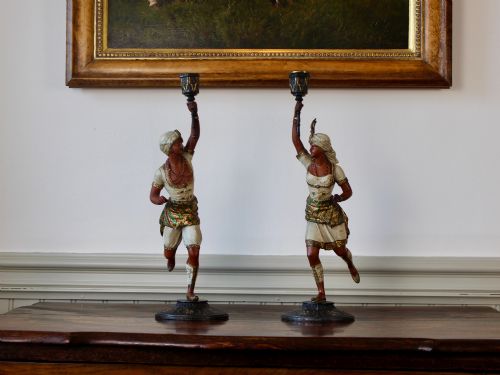
A cold painted spelter statue represents a rich tradition of European decorative metalwork, spanning from Victorian origins through to the height of the Art Deco era. These pieces take the form of figures, dancers, animals, figural candlesticks, and groups mounted on bases.
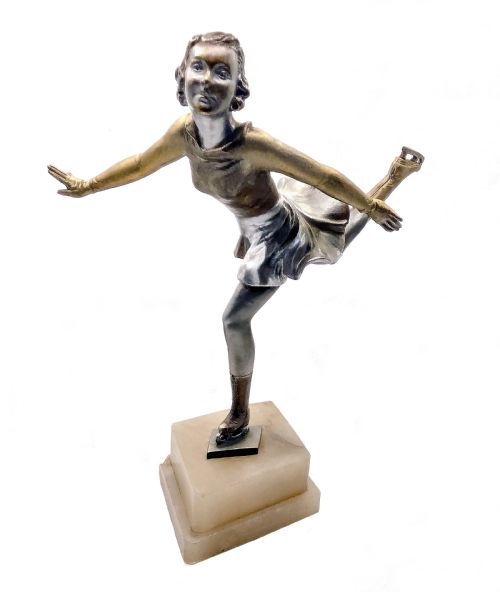
The most common version met on this page is the Art Deco figure from the nineteen thirties, often depicting dancers or skaters and frequently mounted upon marble or onyx bases. Earlier nineteenth century Victorian and nineteen hundreds examples also appear, alongside unusual animal subjects.
Makers and designers such as Josef Lorenzl and Geo Maxim are associated with these sculptural works, bringing distinct stylistic flair to the medium. French and continental workshops produced the majority of these decorative objects.
Construction and finishing methods
These pieces are cast from spelter, a zinc alloy utilised as a cost-effective alternative to bronze. Artisans shaped the metal into detailed forms ranging from human figures to animals and figural candlesticks.
The surface finish relies on cold painting, a technique where colour is applied to the metal without high-temperature firing. This pigment sits on the exterior, giving the sculptures their characteristic polychrome appearance.
Sculptures are frequently mounted onto sturdy plinths made of marble or onyx. This combination provides both structural stability and a contrasting visual base for the metalwork.
Cold Painted Spelter Statue Retail Price Guide 2026
Typical asking prices for cold painted spelter statue among the pieces listed under this phrase on Sellingantiques today, from the lower quarter to the upper quarter. They describe what is for sale here now, not the wider market.
Materials recorded across the inventory include spelter, cold paint, zinc alloy, marble, and onyx.
Evaluating quality and execution
Quality rests in the crispness of the casting and the sensitivity of the modelling, where finer details in drapery and expression elevate a piece. The presence of a recognised designer's hand or attribution sets superior examples apart from standard factory output.
The preservation of the original cold painted surface dictates much of the visual appeal. Intact, unrefreshed polychrome colouring holds greater artistic integrity than heavily restored or repainted surfaces.
The choice and integration of the mounting material also influence the piece. Heavy, well-cut marble or onyx bases that complement the proportions of the metal sculpture demonstrate superior craftsmanship.
Josef Lorenzl·Geo Maxim
The Cold Painted Spelter Statue Glossary
- Spelter
- A zinc alloy commonly utilised for decorative sculptures and figures as an economical substitute for bronze. It takes casting detail well but possesses a lighter weight.
- Cold paint
- A non-firing pigment technique applied directly to metal surfaces after casting. This method allows for multi-coloured finishes but requires careful handling to preserve the pigment.
- Onyx
- A banded variety of chalcedony frequently used for sculptural bases. Its natural veining adds a decorative border to metal figures.
- Art Deco
- A design style prominent in the nineteen thirties characterised by streamlined forms and dynamic geometric styling. Figures from this period often depict dancers and athletes.
- Orientalist
- A nineteenth and early twentieth century style drawing inspiration from Middle Eastern and Asian cultures. It appears in continental figural work and sculptural groups.
Cold Painted Spelter Statue: Frequently Asked Questions
What is spelter metal?
Spelter is primarily a zinc alloy used extensively in European manufacturing for decorative objects and sculptures. It provided a pliable medium that allowed makers to achieve intricate detail without the expense of bronze.
While softer than bronze, the alloy accepted cold painted finishes readily, resulting in colourful decorative items that graced homes across the Victorian and Art Deco periods.
How do I care for cold paint?
Cold paint sits on the surface of the metal rather than being kiln-fired, making it sensitive to moisture and abrasion. Dusting should be done gently with a dry, soft cloth.
Keep these figures away from direct sunlight and damp environments to prevent the original pigment from flaking or fading over time.
How are Art Deco figures mounted?
Many figures from the nineteen thirties are secured directly to bases made of heavy stone such as marble or onyx. These plinths grounded the lighter metal sculptures and provided a clean architectural contrast.
The shape and material of the base often help in dating the piece to the interwar period.
What subjects are most common?
Human figures dominate the selection, particularly female dancers, ice skaters, and stylized characters typical of continental design. Animal subjects and figural candlesticks also appear.
These varied forms reflect the changing decorative tastes from nineteenth century Victorian styles through to modernist nineteen thirties aesthetics.