
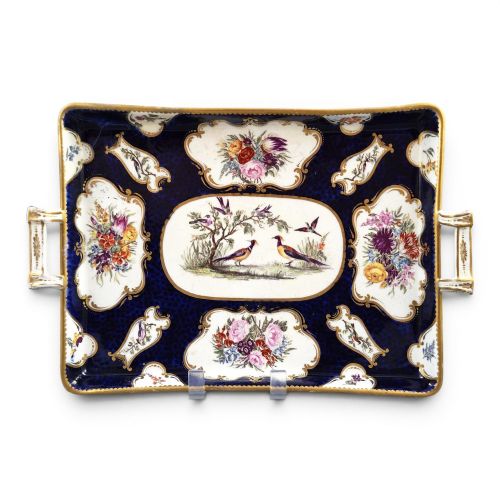


Cobalt Serving Tray
A cobalt serving tray brings deep blue depth to the table, combining functional service with striking painted or transferred scenes.
Cobalt Serving Tray
A cobalt serving tray encompasses a wide variety of serving platters, meat plates, and decorative dishes realised in rich blue hues. These pieces emerge primarily from 19th Century British and European production, spanning the Georgian, Regency, and Victorian eras.
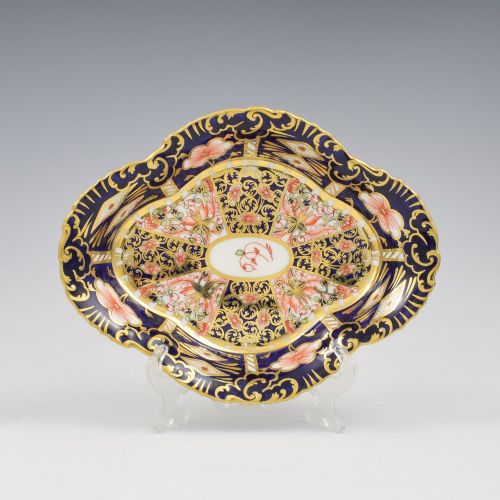
The forms vary from large oval meat platters and well-and-tree serving pieces to trefoil dishes and fan-shaped plates. Buyers frequently encounter transfer-printed earthenware and painted porcelain showcasing intricate patterns ranging from classical ruins to Chinoiserie motifs.
Many examples stem from renowned traditions such as English blue and white transferware, alongside continental porcelain and later 20th-century mirror glass variations. They function equally well for grand dining presentations or as cabinet display pieces.
How they were made
Potters utilised earthenware, ironstone, and fine porcelain bodies, shaping them into platters and trays before applying cobalt pigment directly onto the raw clay or beneath a clear glaze. This metallic oxide withstood high kiln temperatures, yielding the characteristic deep blue coloration.
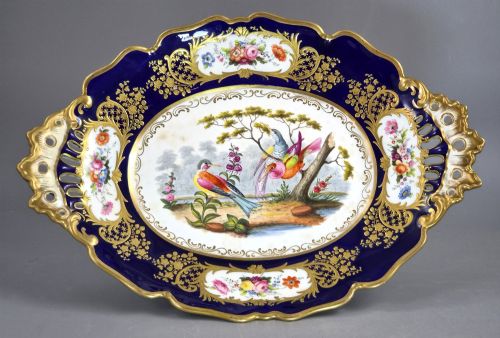
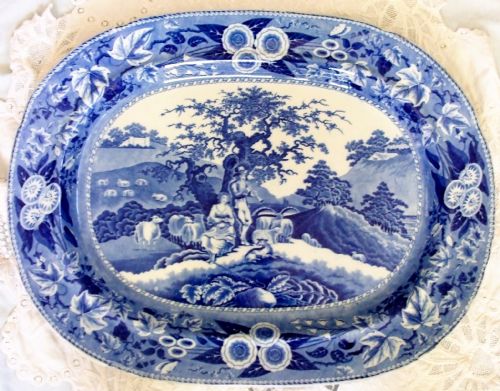
Transfer printing involved engraving copper plates, pulling the design onto tissue paper, and pressing it onto the ceramic surface prior to glazing and firing. Finer decorative trays featured hand-painted enamel details, sometimes accented with gilding or gold leaf applied over the glaze.
Some Victorian birds were painted with such fierce expressions they appear to supervise the Sunday joint.
What varies in quality
Quality rests heavily upon the crispness of the cobalt transfer print and the subtlety of any hand-painted embellishments. Early examples with deep, unblemished blue tones and precise pictorial registration command greater appreciation among collectors.
The sophistication of the ceramic body itself, whether translucent porcelain, sturdy ironstone, or refined earthenware, dictates the tier of the piece. Superior items exhibit balanced moulding, clean foot rings, and harmonious integration of cobalt pigments with secondary colours like iron-red and gold.
Royal Crown Derby·Coalport·Thomas Lakin·John Rogers and Son·Spode·Mason·Royal Worcester·Sevres·Ridgway·Don Pottery·Minton
The Cobalt Serving Tray Glossary
- Transferware
- Earthenware or porcelain decorated by printing a design from an engraved copper plate onto tissue paper, which was then transferred onto the ceramic body. This technique allowed intricate pictorial scenes to be reproduced consistently across large meat platters and dishes.
- Chinoiserie
- European artistic style reflecting Chinese aesthetic influences, frequently featuring imaginary landscapes, pagodas, and exotic figures. It appears widely on Georgian and Victorian blue and white serving dishes.
- Ironstone
- A heavy, durable type of earthenware patented in the early 19th century to imitate porcelain. It provided a robust surface for large serving platters and meat plates subject to heavy use.
- Imari
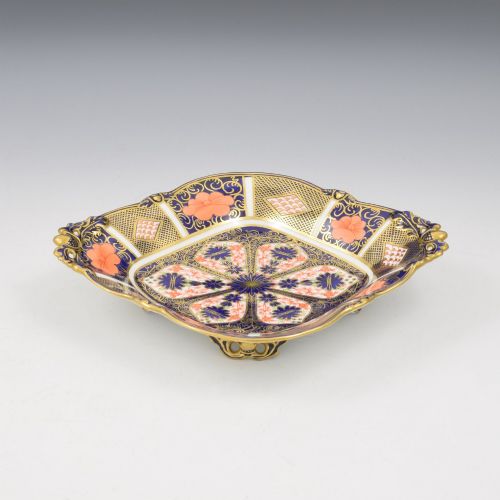
- A decorative style inspired by Japanese export porcelain featuring a palette of cobalt blue, iron-red, and gold. English factories adopted this aesthetic enthusiastically during the 19th and early 20th centuries.
- Well-and-tree
- A specialised meat platter design featuring channels carved into the ceramic surface that drain juices into a central well. This kept roasted meats elevated during Victorian dining.
Cobalt Serving Tray: Frequently Asked Questions
Can I use antique cobalt platters for serving food?
Most antique ceramic platters are safe for serving dry foods, though historic glazes on older earthenware can sometimes be sensitive to acidic contents.
Hand washing is essential to preserve the cobalt pigment and any delicate gold leaf accents over time.
How do I date a blue and white transfer platter?
Dating relies on examining the maker marks stamped or printed on the reverse, alongside the style of the border and the depth of the blue colour.
Earlier Georgian pieces often feature distinct romantic or classical transfer scenes without modern registry marks.
What is the difference between porcelain and ironstone trays?
Porcelain is fine, dense, and frequently translucent when held to the light, often reserved for dessert dishes and finer display trays.
Ironstone is a much heavier, opaque, and highly durable earthenware designed primarily for heavy meat platters and utilitarian service.
How should I display a large serving tray?
Large platters look striking mounted securely on walls using specialist plate hangers or stood upright on sturdy plate stands within a cabinet.
Positioning them away from direct sunlight protects any enamel colours and gilding from fading.