
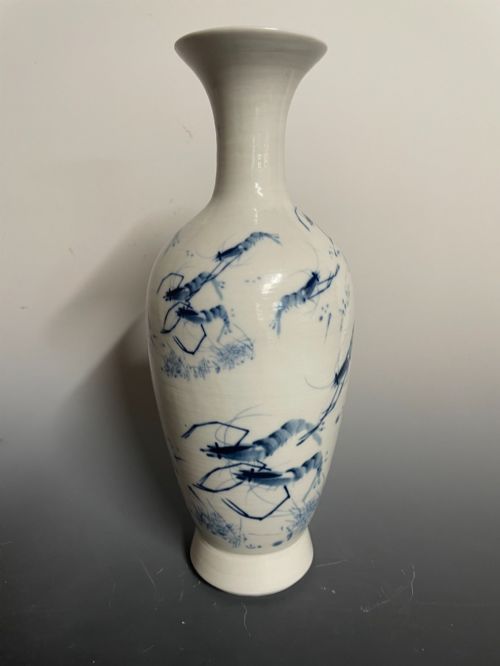
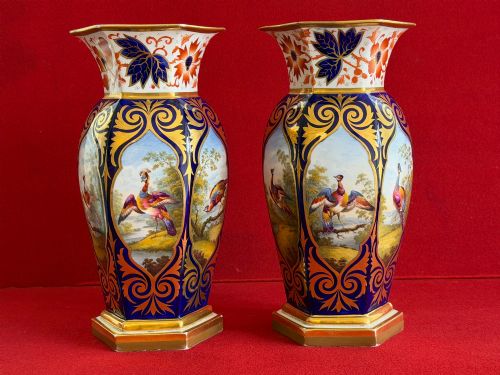
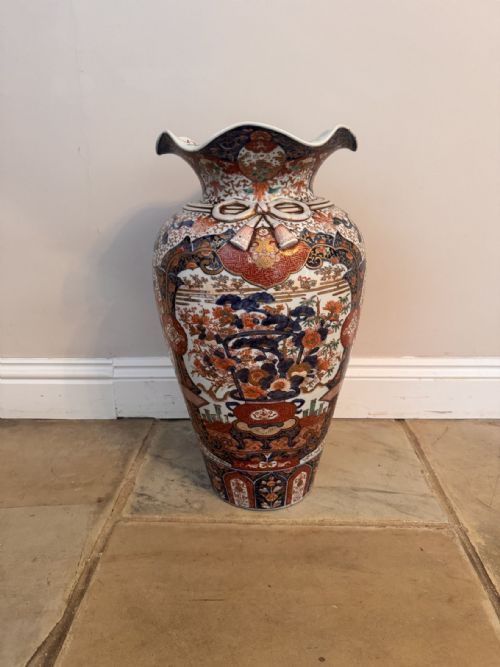
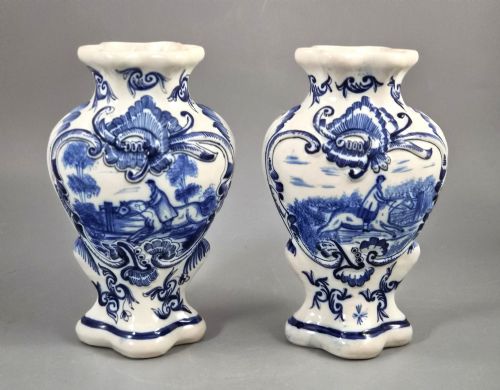
Cobalt Blue Urn Vase
A cobalt blue urn vase brings rich colour and classical form to a room, drawing the eye through deep glazes and painted detail.
Cobalt Blue Urn Vase
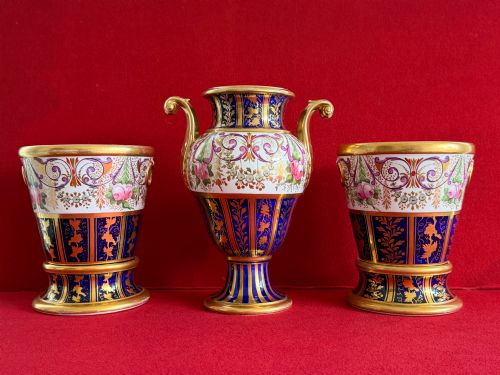
A cobalt blue urn vase encompasses tall floor standing vessels, lidded jars, and handled amphora forms shaped from porcelain, earthenware, and glass. These pieces span production from Georgian and Regency English manufactories to Japanese Imari workshops and 19th century French kilns.
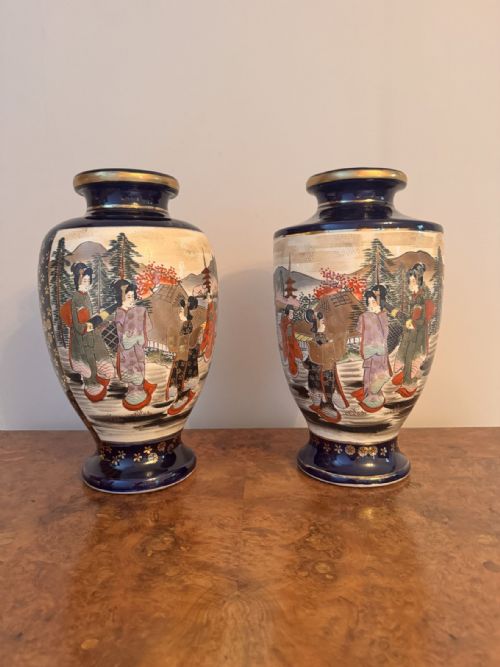
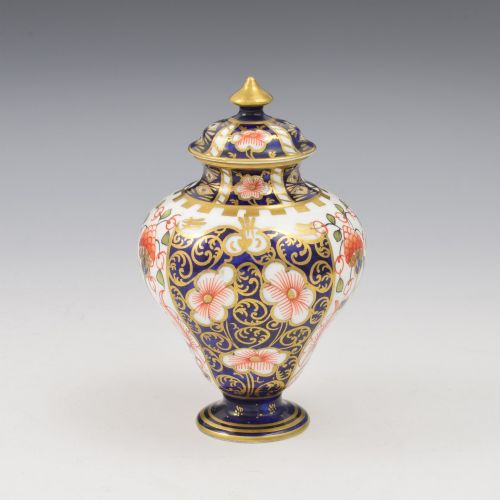
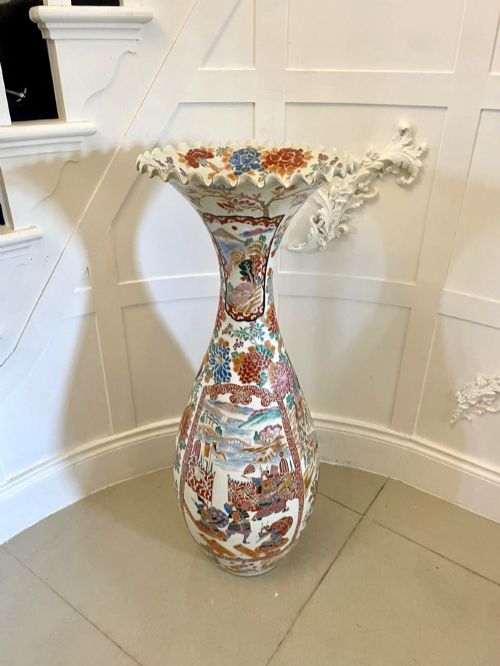
The version most commonly met on this page is the Japanese Imari vase or lidded jar from the late 19th century, alongside English porcelain examples decorated with rich blue grounds and gilding. Forms range from miniature bud vases to large floor standing pairs.
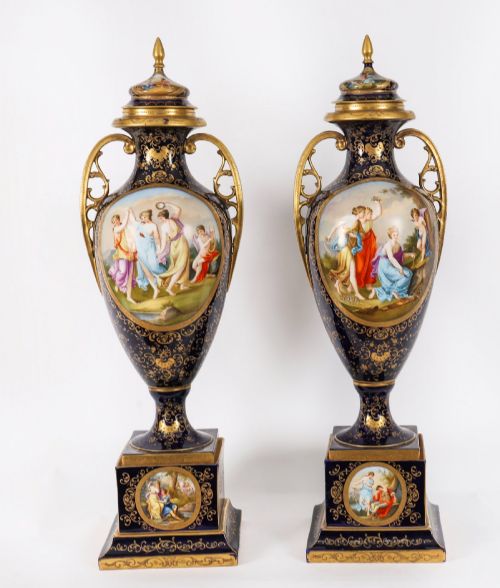
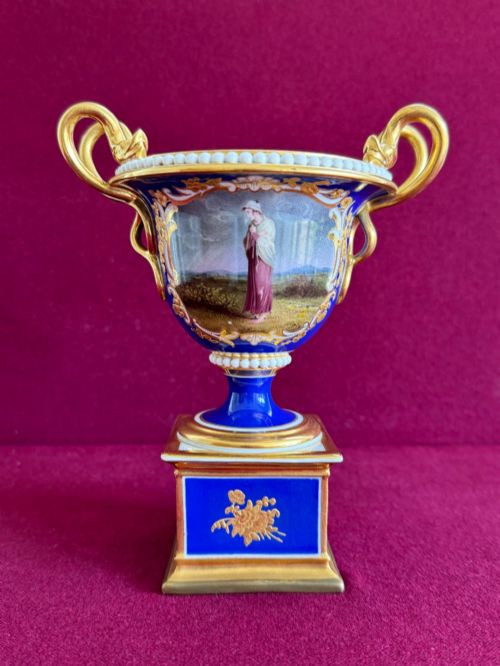
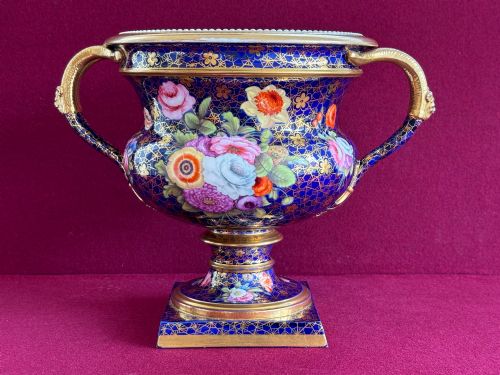
Makers utilised cobalt glaze to achieve deep, saturated blue backgrounds that often contrast with gold leaf, enamel painting, or bronze mounts. These vessels served as decorative garnitures, mantel ornaments, and substantial focal points in period interiors.
How they were made
Potters shaped these vessels from porcelain, earthenware, and terracotta, applying cobalt glaze directly to the body before high-temperature firing to fix the intense blue colour. Artisans frequently added gilding, gold leaf, and enamel details over the glaze in subsequent firings.
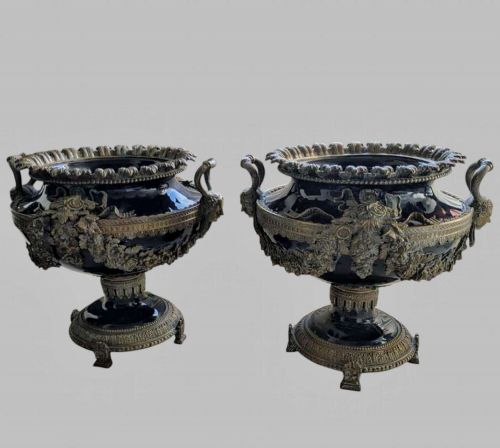
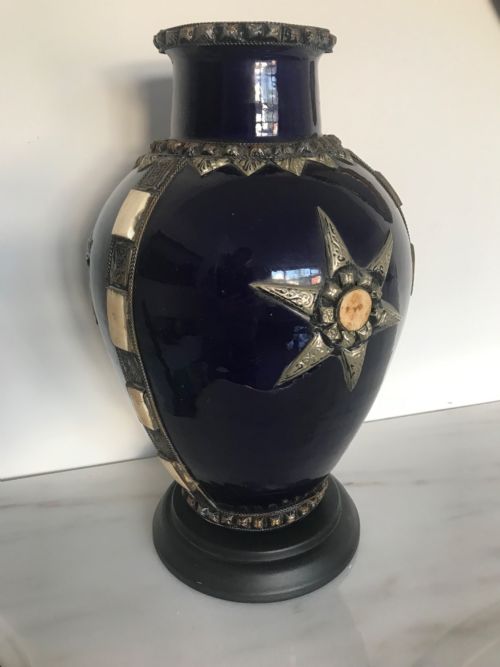
Many examples incorporate metalwork elements, such as ormolu, gilt bronze, and silver cabochon mounts, fitted to the rims and bases of the ceramic bodies. Glass variations utilise moulded blue glass combined with hand-painted enamel decoration or applied metal trim.
Listings feature porcelain, earthenware, glass, and terracotta materials decorated with cobalt glaze, gold leaf, and gilding across the 18th, 19th, and early 20th centuries.
What varies in quality
Quality rests on the depth and evenness of the cobalt glaze, the precision of the hand-painted or gilt ornamentation, and the crispness of the modelled ceramic form. Pieces executed by noted porcelain factories display finer detailing in their reserves and panels.
The integration of mounts, such as gilt bronze or ormolu trim, distinguishes standard production from more ambitious decorative pieces. Preservation of the original gilding and enamel work also governs the standing of an individual vessel.
Royal Crown Derby·Flight Barr and Barr·Fourmaintraux-Courquin at Desvres·Mason's Patent Ironstone·Chamberlain Worcester·Vienna Porcelain Empire·Chelsea Porcelain·Royal Doulton·Coalport·Crown Staffordshire
The Cobalt Blue Urn Vase Glossary
- Imari
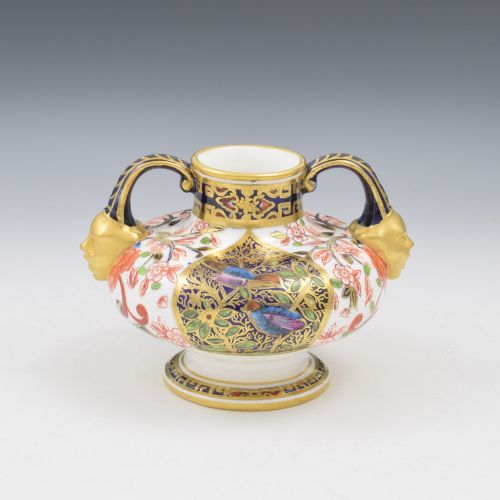
- A style of Japanese porcelain featuring cobalt blue, iron red, and gold, named after the port from which the wares were shipped. These designs often incorporate brocade patterns and floral motifs.
- Campagna
- A classical urn shape characterised by a krater bowl set on a stem and foot, popular in English and European porcelain during the Georgian and Regency periods. The form mimics ancient Roman stone excavations.
- Garniture
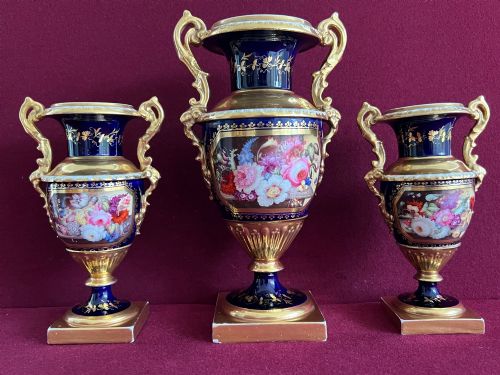
- A set of three or more matching vases and jars designed to be displayed together on a mantelpiece or cabinet. These sets usually feature a central taller vessel flanked by smaller matching pieces.
- Ormolu
- Gilded bronze mounts applied to the rims, handles, and bases of ceramic vases during the 19th century. The technique enhances the decorative presence of French and English decorative pieces.
- Amphora
- A two-handled jar with a narrow neck used in classical antiquity, later adopted as a decorative porcelain form by 19th century European factories. These vessels often display classical figural scenes within painted panels.
Cobalt Blue Urn Vase: Frequently Asked Questions
How do I date a blue urn vase?
Dating relies on factory marks stamped or painted on the base, combined with the style of the cobalt glaze and gilding. Examining the type of ceramic body, whether earthenware or hard-paste porcelain, helps narrow the period.
Secondary clues include the presence of metal mounts, such as ormolu trim, which reflect the aesthetic preferences of 19th century French and English makers. Comparing the painted motifs to documented factory patterns provides further chronological certainty.
Were these vases used for flowers?
Many large lidded jars and covered urns served purely as decorative garnitures or mantel ornaments rather than utilitarian vessels for water and stems. Miniature and bud variants, however, were designed to hold single stems or small floral arrangements.
Over time, collectors have treated most surviving examples as sculptural objects of art. Using antique porcelain with unglazed interiors for water is generally discouraged to protect the ceramic body.
What is the difference between Imari and blue and white?
While both utilise cobalt blue underglaze, Imari wares incorporate contrasting iron red enamel and gold leaf highlights over the white porcelain ground. Traditional blue and white pieces rely solely on shades of cobalt pigment beneath a clear glaze.
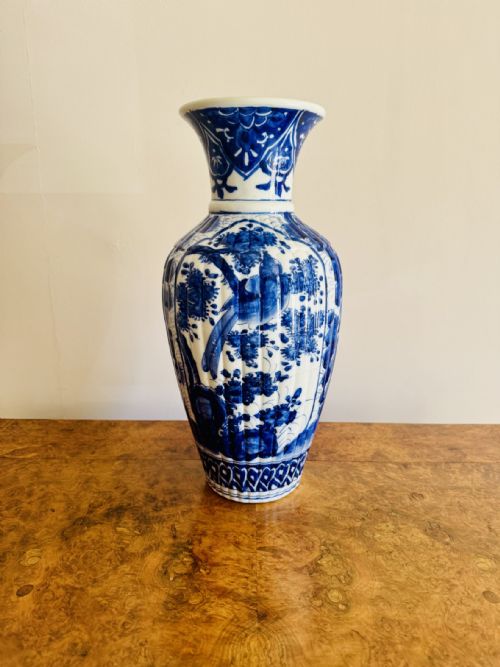
Imari decoration often exhibits dense Japanese brocade patterns and floral panels. Blue and white Chinese and English vessels typically feature naturalistic landscapes or figurative scenes without the added red and gold palette.
How should I display a large floor vase?
Large floor standing vessels and garnitures require stable placement away from high traffic areas to prevent accidental impact. Positioning them on sturdy wooden pedestals or directly on solid flooring highlights their height and form.
Keeping these pieces out of direct sunlight preserves the vibrancy of the enamel colours and prevents the drying out of any internal materials. Grouping matching pairs balances the visual weight within a room.