


Cobalt Blue Staffordshire Figure
A cobalt blue staffordshire figure brings Victorian character to a mantelpiece through vibrant glazes and expressive modelling.
Cobalt Blue Staffordshire Figure
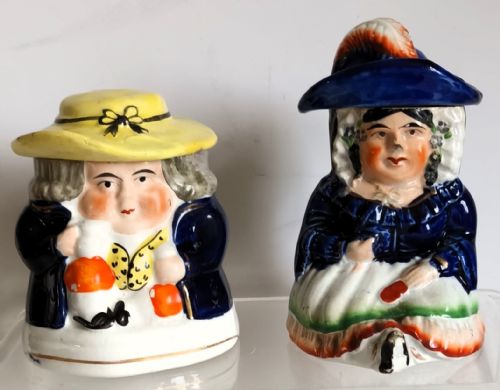
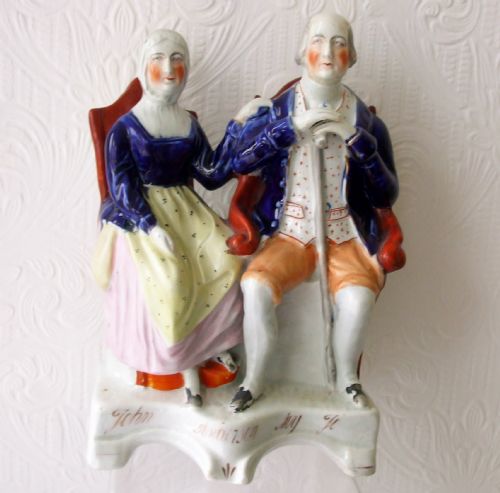
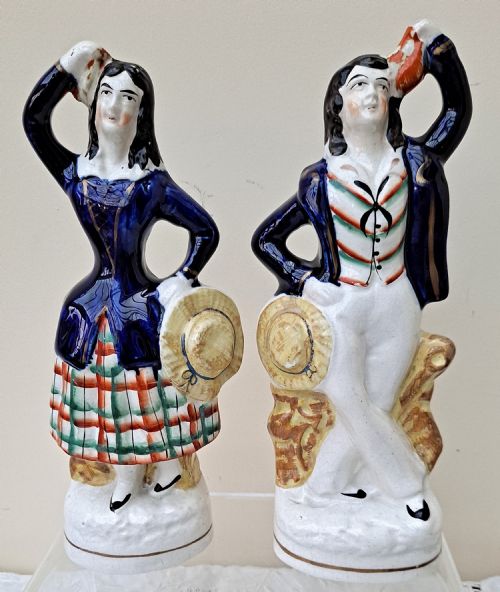
A cobalt blue staffordshire figure encompasses ceramic representations of royals, literary characters, and animals produced during the nineteenth century. Buyers encounter portrait groups, theatrical pairs, and desk accessories like inkwells and quill holders across these listings.
The Victorian era dominates the selection, spanning decades from the mid to late nineteenth century. These earthen figures often depict notable figures such as Queen Victoria, Napoleon III, and historical personalities.
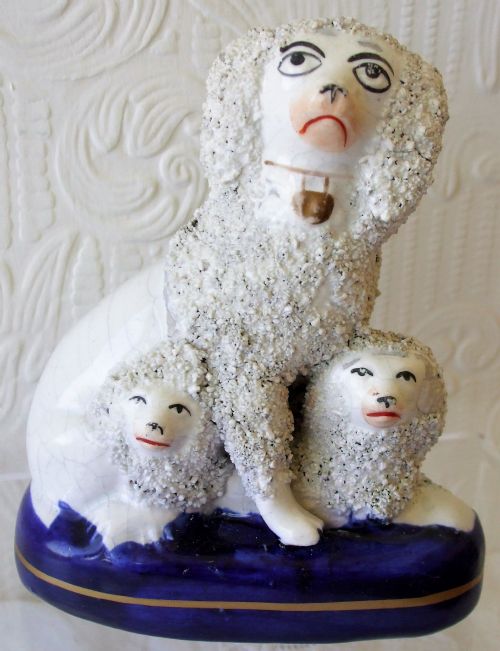
Domestic animals appear frequently, including poodles, greyhounds, and dalmatians modelled singly or in pairs. Many serve a dual purpose as spill vases, watch holders, or tobacco jars alongside standard decorative figurines.
Materials and construction
Potters shaped these objects from earthenware, applying lead glaze to seal the porous ceramic body. Enamel paint and gilt or gold leaf provide surface detail and colour.
Makers utilised press-moulding techniques to form the hollow bodies typical of Victorian flatbacks and figurines. Firing in kilns set the glaze before hand-painting finished the decoration.
Poodles appear with textured clay curls designed to resemble groomed coats, sometimes accompanied by tiny obedient pups.
Judging the work
The vibrancy of the cobalt blue glaze and the preservation of original enamel colours dictate the visual strength of a piece. Uniformity in the glaze finish without excessive firing flaws marks better production.
The Cobalt Blue Staffordshire Figure Glossary
- Flatback
- A Staffordshire figure modelled with a finished front and a plain, unglazed or semi-glazed flat rear designed to stand against a wall.
- Spill vase
- A hollow ceramic cylinder incorporated into a figure group to hold wooden spill sticks used for lighting fires.
- Lead glaze
- A glossy coating containing lead oxide applied to earthenware before firing to create a smooth, waterproof surface.
- Enamel paint
- Coloured vitreous paint applied over the fired glaze and fixed by a secondary low-temperature firing.
- Quill holder
- A desk accessory featuring a modelled figure or animal with integrated channels to rest writing quills.
Cobalt Blue Staffordshire Figure: Frequently Asked Questions
How do I clean my Staffordshire figure?
Dust the ceramic surface gently with a soft dry brush to remove particles without disturbing the old enamel paint.
Avoid immersing the piece in water, as moisture can penetrate hairline cracks in the aged earthenware body.
Were these figures meant for display?
Most decorative figurines and portrait groups sat upon parlour mantelpieces to display patriotic loyalty or literary taste.
Items incorporating inkwells, quill holders, and tobacco jars served practical functions on nineteenth-century desks and tables.
How do I date a Staffordshire figure?
Examine the subject matter, such as historical rulers or political figures, to establish a baseline period from the nineteenth century.
Assess the style of the modelling and the characteristics of the earthenware and glaze to narrow down the decade.
Why do some figures have flat backs?
Potters left the backs unadorned because these ornaments stood directly against walls on mantelpieces or shelves.
This method saved ceramic material and production time while focusing all artistic detail on the visible front.