



Antique English Ceramic Group
An antique English ceramic group brings figural storytelling right into the room, spanning portrait subjects and classical mythological scenes.
Antique English Ceramic Group
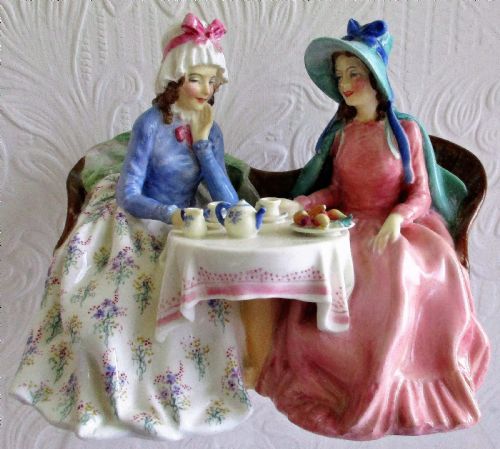
An antique English ceramic group comprises figures, spill vases, and sculptural table pieces produced during the eighteenth and nineteenth centuries. These works range from Georgian Derby biscuit porcelain models to Victorian Staffordshire flatbacks and portrait groups.
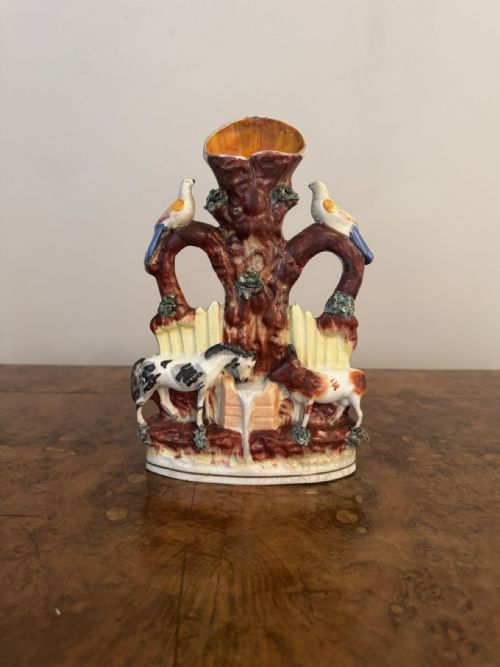
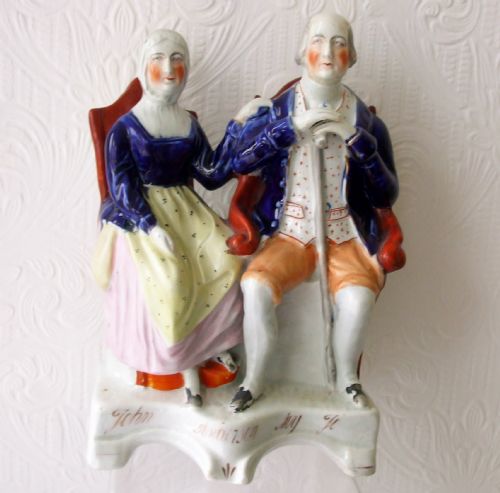
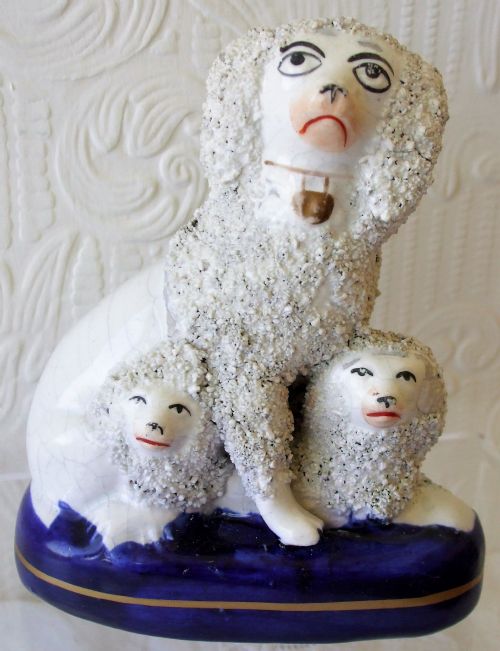
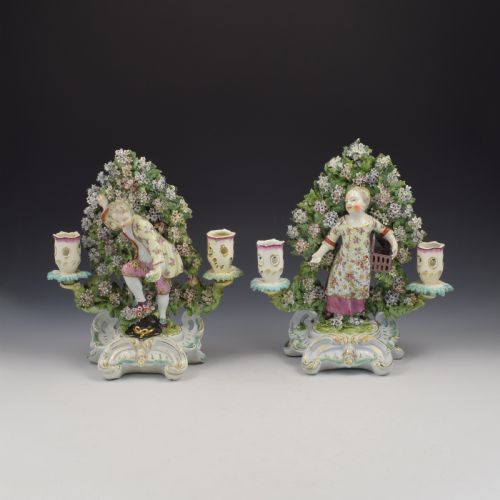
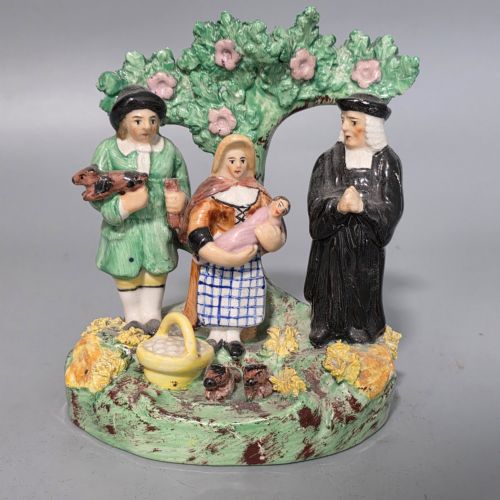
The most common examples on this page are Victorian Staffordshire pottery figures and figure groups, including poodles, spill vases, and historical or literary subjects. Earlier eighteenth-century porcelain pieces from factories such as Derby also appear, featuring bocage backgrounds and mythological themes.
Materials and technique
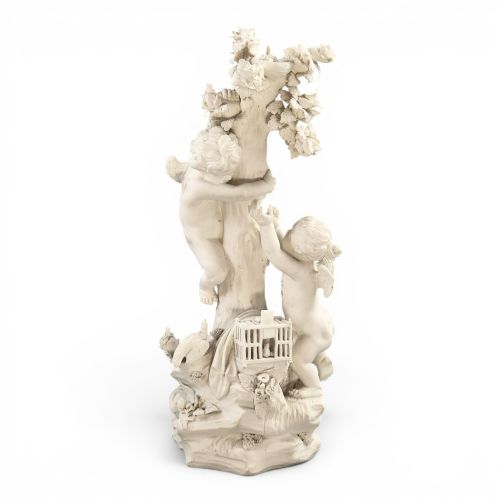
Potters utilised earthenware, pearlware, and porcelain, shaping bodies through moulding and hand-modelling before applying lead glazes and enamel paint. Biscuit porcelain received no glaze, leaving a matte finish akin to carved marble.
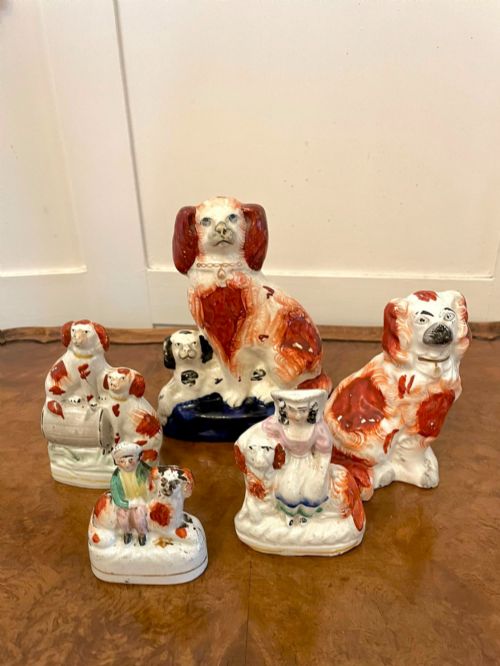
Canines take many forms here, including a collection of six unusual Staffordshire dogs keeping watch from the shelf.
Mould sharpness and painting
Quality rests in the crispness of the original moulding and the precision of the hand-painting. Early strikes from moulds preserve facial expressions and garment details clearly, whereas worn moulds produce softened contours.
The sophistication of the enamel work dictates visual success, from finely brushed court attire on porcelain to bolder, rustic strokes on earthenware flatbacks. Superior modelling shows balance in complex multi-figure compositions.
Derby·Royal Worcester·Copeland·Staffordshire
The Antique English Ceramic Group Glossary
- Bocage
- Applied, pierced porcelain foliage framing a figurine. This technique was popular in eighteenth-century kilns to create a natural background.
- Biscuit
- Unglazed ceramic fired once to a porous, matte state. Derby factories employed this body for classical sculptural groups.
- Flatback
- A figure moulded with a finished front and a plain, unglazed or lightly painted reverse designed for a mantelpiece. These pieces typify nineteenth-century Staffordshire production.
- Pearlware
- A refined earthenware developed in the late eighteenth century featuring a faint bluish glaze in the recesses. It bridged the gap between salt-glazed saltware and later creamware.
- Spill vase
- A hollow figural vessel meant to hold wooden spills for lighting fires. They combine domestic utility with sculptural pottery.
Antique English Ceramic Group: Frequently Asked Questions
What is an antique English ceramic group?
An antique English ceramic group refers to moulded figures, pairs, and multi-character table pieces made in English potteries and porcelain works. These works depict animals, literary characters, historical events, and classical allegories.
They serve primarily as decorative mantel or display objects rather than functional tableware. Their production spans from Georgian porcelain manufactories to nineteenth-century Staffordshire folk potteries.
How do I distinguish eighteenth-century porcelain from nineteenth-century earthenware?
Eighteenth-century pieces typically utilise fine-grained porcelain bodies, sometimes left unglazed as biscuit, often incorporating intricate bocage leafwork. They frequently draw upon classical mythology or theatrical subjects.
Nineteenth-century pieces tend to use heavier earthenware or pearlware bodies with flat backs intended to face a wall. Their subjects lean towards contemporary portraiture, topical events, and domestic animals.
Where were Staffordshire figures displayed?
Victorian Staffordshire pottery figures were designed to sit on cottage mantelpieces, window sills, and chest tops. Their flat backs allowed them to stand flush against walls in modest homes.
Owners arranged them in matched pairs or balanced groupings around a central spill vase or portrait subject. They offered an accessible form of domestic decoration and cultural commentary.
How do I clean antique ceramic figures?
Cleaning requires a dry, soft brush to remove dust from crevices and delicate bocage work. Moisture can damage old enamel paints and fragile repairs, so washing is generally avoided.
Displaying pieces away from direct sunlight and damp conditions helps preserve the original lead glazes and enamel colours. Careful handling protects protruding limbs and applied details from accidental chips.