



Cobalt Blue Lidded Vase
These cobalt blue lidded vases combine rich ceramic grounds with fitted covers, offering striking decorative presence for any interior.
Cobalt Blue Lidded Vase
A cobalt blue lidded vase serves primarily as a decorative garniture or centrepiece, uniting form and function through a ceramic body and matching cover. When you search for a cobalt blue lidded vase, you encounter varied interpretations spanning European porcelain manufactories and Japanese export wares.
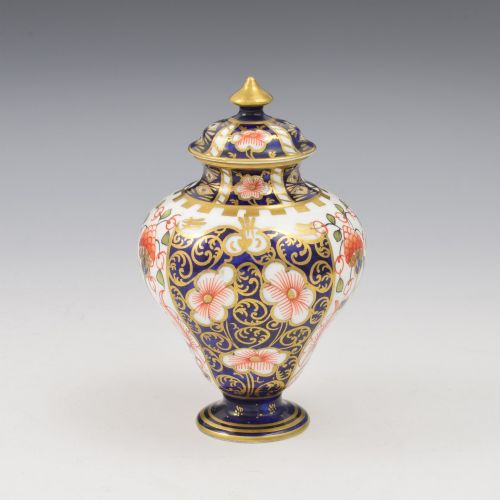
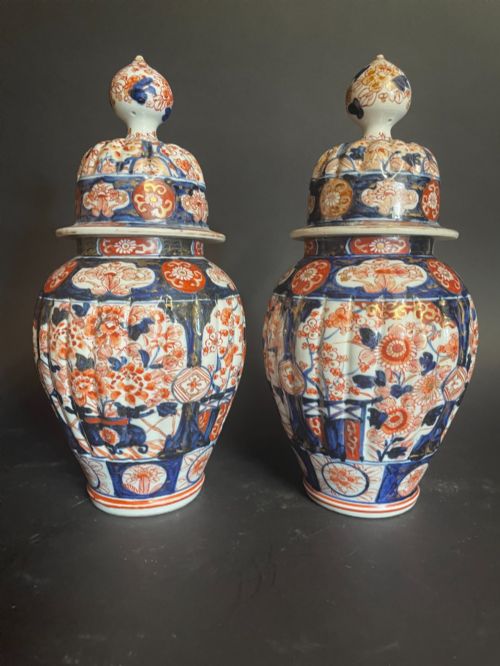
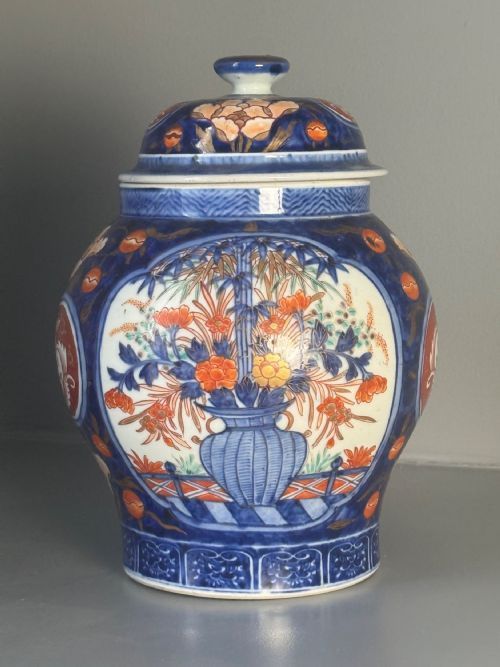
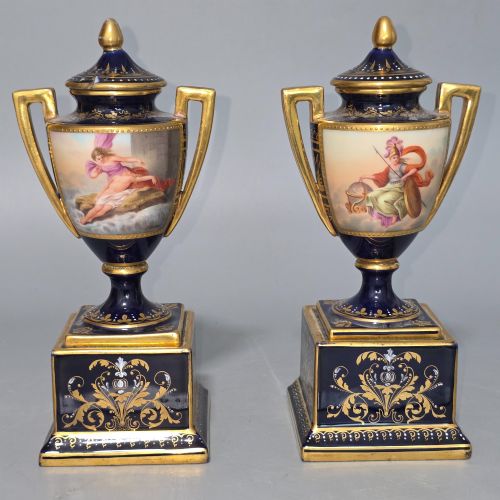
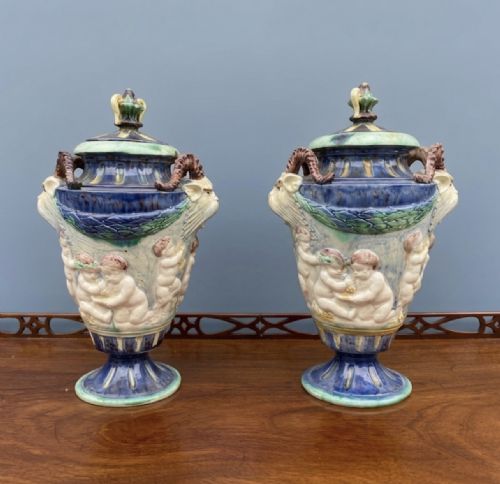
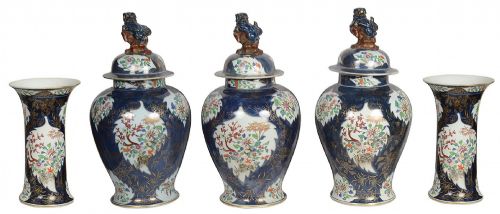
The pieces on this page draw from several distinct traditions, including nineteenth-century French porcelain painted in the Sevres style, English bone china from factories such as Royal Crown Derby, and Japanese Arita wares decorated in the Imari palette.
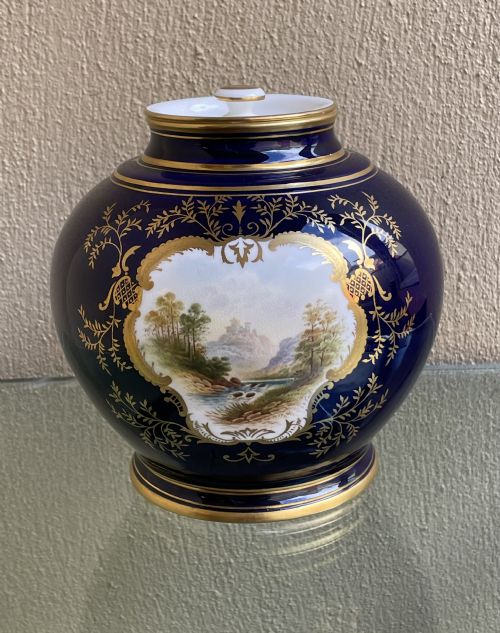
Vessels take many shapes, from baluster jars and amphorae to classical urns and potpourri containers. Most examples date from the nineteenth century, though earlier eighteenth-century Japanese pieces and twentieth-century Edwardian interpretations appear frequently.
Materials and construction
Makers shaped these vessels using hard-paste or soft-paste porcelain, ironstone, and earthenware, applying deep cobalt oxide glazes before the initial firing to achieve a rich blue ground. Artisans frequently enhanced the ceramic surfaces with hand-painted enamel details, gilding, and gold leaf applied over the glaze.
Many European examples incorporate cast gilt bronze or ormolu mounts that frame the ceramic body, securing bases and rims with precision engineering. Lids were thrown or moulded to fit snugly over the neck of each vase, often terminating in a decorative finial.
Several pieces proudly commemorate Napoleon Bonaparte, proving that even tiny porcelain lids sometimes carry giant imperial ambitions.
Distinguishing quality across pieces
Quality reveals itself primarily in the crispness of the hand-painted decoration and the depth of the cobalt ground. Finer pieces display meticulously executed enamel work and heavily burnished gilding rather than flat, printed transfers.
The weight and precision of any metal mounts also indicate standard, as cast ormolu fittings demonstrate superior craftsmanship compared to lightweight brass alloys. Additionally, well-balanced proportions between the main body and the fitted cover separate accomplished studio output from standard commercial production.
Royal Crown Derby·Chamberlain Worcester·Coalport·Fielding’s Crown Devon·Wolfsohn Dresden·Royal Worcester·Mason’s Ironstone
The Cobalt Blue Lidded Vase Glossary
- Imari
- A style of Japanese export porcelain characterised by a palette of cobalt blue, iron red, and gold. This decorative scheme originated in Arita during the Edo period and inspired numerous European copies.
- Garniture
- A set of three or more matching vases or urns designed to be displayed together on a mantelpiece or sideboard. These matched groups often comprise a central taller vase flanked by two smaller covered vessels.
- Ormolu
- Gilt bronze mounted onto furniture and ceramics, created by applying a mercury and gold amalgam to cast bronze. This technique produced a durable, rich metallic lustre popular in French and English decorative arts.
- Baluster
- A vase shape featuring a rounded body that tapers toward the base and swells outward near the middle. The profile resembles a traditional architectural baluster support.
- Enamel
- Opaque vitreous material fused to pottery or porcelain surfaces through firing. Artisans used coloured enamels to build up detailed pictorial scenes over the baseline glaze.
Cobalt Blue Lidded Vase: Frequently Asked Questions
How were lidded vases used historically?
These covered vessels functioned primarily as ornamental garnitures on mantelpieces, credenzas, and large tables within formal reception rooms. Some versions held potpourri or dry spices to scent domestic interiors.
Larger pairs often anchored the visual balance of a room, serving as symbols of wealth and refined taste rather than practical utility.
How do I distinguish Japanese Imari from European copies?
Japanese Arita pieces typically feature heavier potting, slightly irregular iron-spurred bases, and a characteristic greyish-white body beneath the glaze. European factories such as Samson of Paris produced lighter, more uniform porcelain bodies when replicating these Asian designs.
Examining the pigment application under magnification also reveals whether the iron red and cobalt blue sit beneath a soft glaze or lie flat upon it.
How should I display a lidded vase safely?
Position your vessel away from direct sunlight to protect enamel colours and prevent delicate gilding from fading over time. Ensure the display surface remains stable and free from heavy vibrations, especially when housing tall or top-heavy forms.
Keep covers unglued to the base unless structural stability demands gentle, reversible conservation adhesives, allowing safe handling during cleaning.
What is the difference between porcelain and ironstone?
Porcelain is a vitrified ceramic material made from kaolin and petuntse, fired at high temperatures to create a translucent, ringing body. Ironstone is a dense, heavy earthenware developed in the nineteenth century to imitate porcelain durability.
While ironstone remains opaque and thick-walled, porcelain exhibits varying degrees of translucency when held against a strong light source.