




Cobalt Blue Glass Bottle
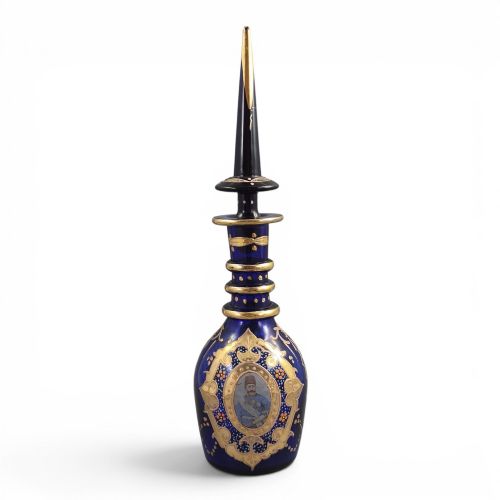
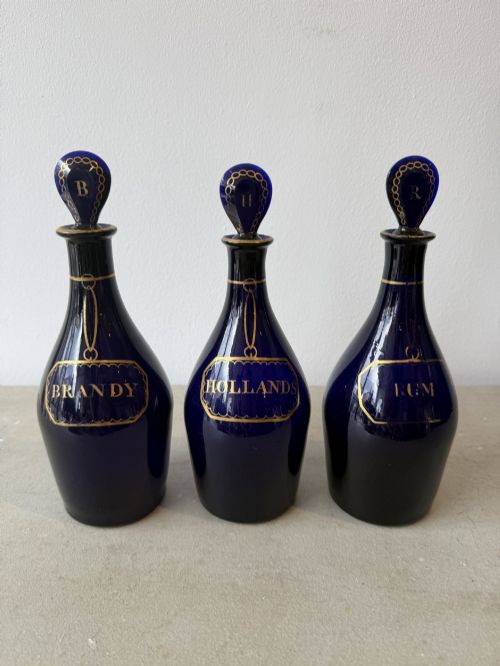
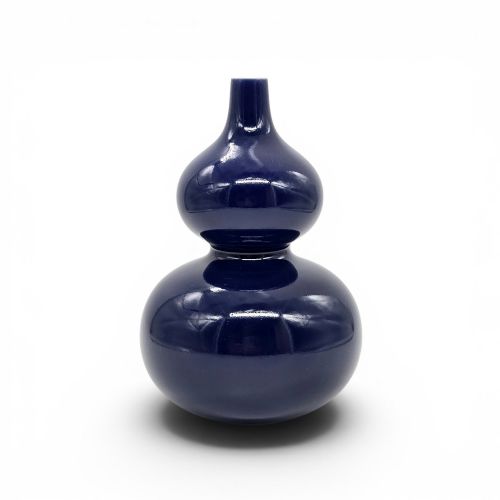
A cobalt blue glass bottle brings intense colour to a room, ranging from deep Bristol tones to rich Persian exports.
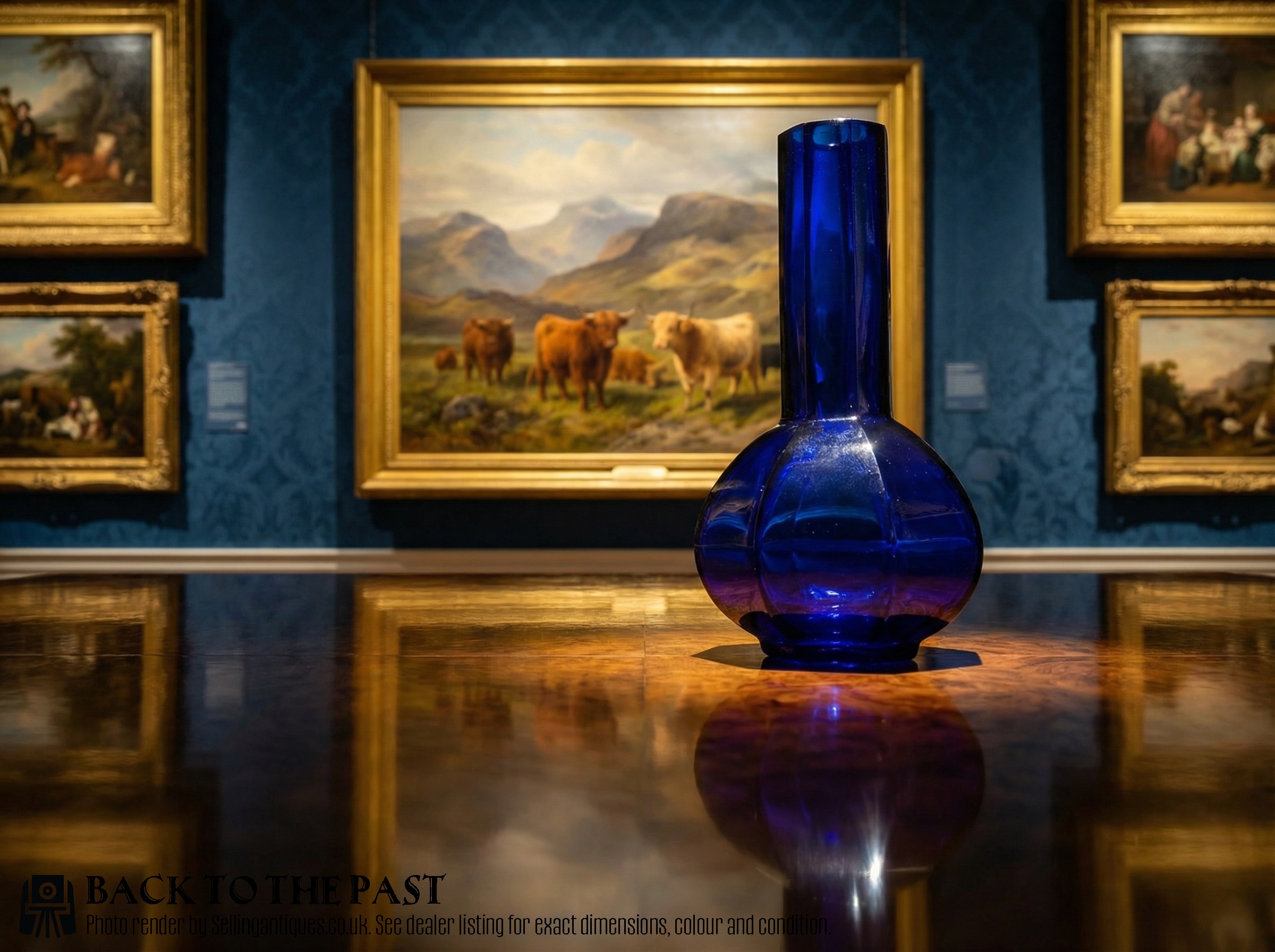
Cobalt Blue Glass Bottle
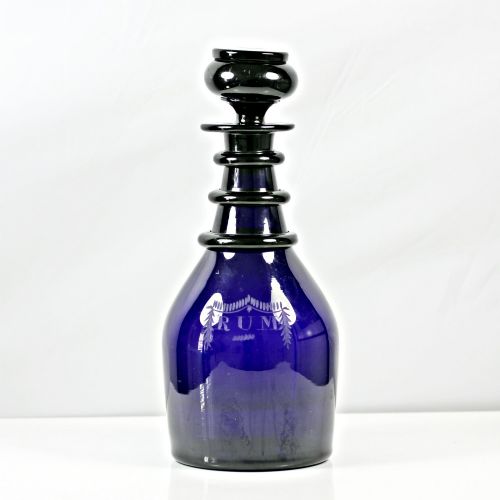
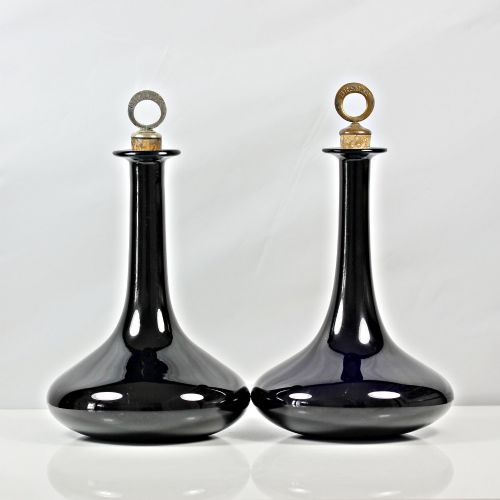
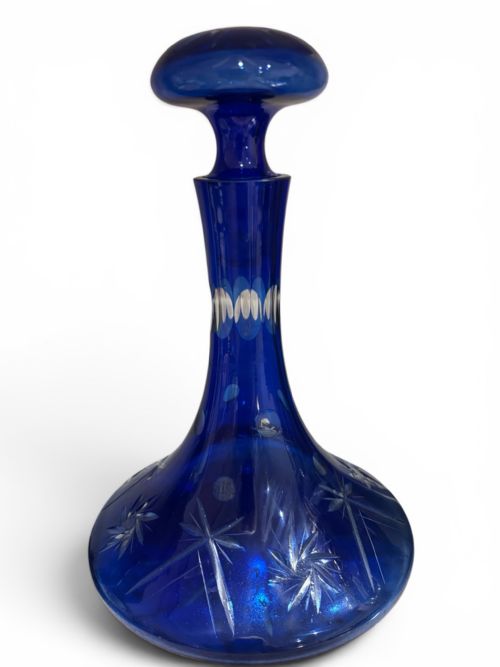
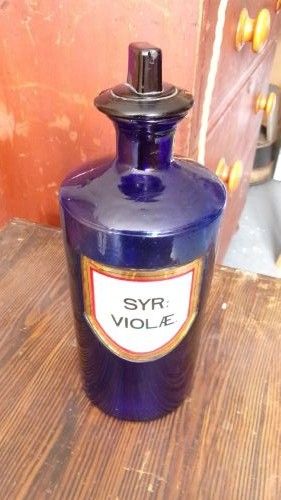
A cobalt blue glass bottle encompasses practical vessels, small scent bottles, and display pieces from the Georgian, Victorian, and later periods. When searching for a cobalt blue glass bottle, collectors encounter functional forms like decanters and apothecary bottles alongside decorative scent bottles and vases.
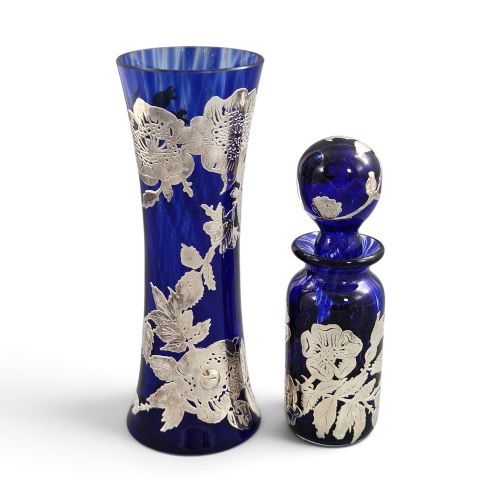
The selection on this page draws heavily from nineteenth-century English Bristol production, Bohemian export work, and later studio glass. Pieces range from large ring-necked spirit decanters to delicate perfume flasks mounted in silver.
How they were made
Glassmakers achieved the characteristic deep colour by adding cobalt oxide to the molten batch during the blowing process. Many pieces utilise hand-blown techniques, evident in pontil marks and subtle surface variations.
Mounts and ornamentation involved applied materials such as sterling silver, silver plate, gold leaf, and white enamel. Overlay techniques required fusing layers of glass together before cutting back to reveal the rich blue underneath.
Listings for this phrase include nineteenth-century English spirit decanters, Bohemian export wares, and twentieth-century studio glass.
What varies in quality
Quality rests on the depth and saturation of the glass colour, the precision of hand-cutting or enamel work, and the integrity of any precious metal mounts. Finer examples display crisp facet cutting and well-fitted stoppers original to the vessel.
The artistry of the decoration marks the distinction between standard commercial wares and exceptional pieces. Hand-painted details, intricate silver overlays, and signed studio pieces demonstrate superior craftsmanship.
Laugharne Glass·Franchini And Bigaglia
The Cobalt Blue Glass Bottle Glossary
- Bristol Blue
- A deep cobalt glass traditionally associated with the English city of Bristol during the Georgian and Victorian eras. It was widely used for spirit decanters and apothecary containers.
- Mell Decanter
- A mallet-shaped decanter with a wide base tapering towards the neck, designed for stability on shipboard or dining tables. These often feature three rings on the neck.
- Chatelaine Scent Bottle
- A small perfume container suspended from a belt hook by chains, popular in the Victorian period. They frequently incorporate silver caps and overlay glass.
- Lollipop Stopper
- A round, flat-topped glass stopper shaped like a confection, commonly found on large nineteenth-century chemist and apothecary bottles.
- Overlay Glass
- A technique involving two or more distinct layers of glass fused together. Artisans cut away portions of the outer layer to expose the contrasting colour beneath.
Cobalt Blue Glass Bottle: Frequently Asked Questions
How do I date a blue glass bottle?
Dating relies on the manufacturing technique, pontil mark, and style of the neck or stopper. Georgian and early Victorian pieces often show heavy hand-blowing and distinct pontil scars.
Later nineteenth and twentieth-century examples introduce machine-moulded elements, different mount metals, and varied decorative styles such as Art Deco or studio glass.
Are these bottles safe for holding liquids?
While many historic decanters and bottles were made for spirits, wine, or medicines, original contents can leave residues. Collectors generally treat them as decorative objects rather than utilityware.
Ground glass stoppers fit individual necks uniquely, meaning stoppers are rarely interchangeable across antique bottles.
What is Bristol blue glass?
Bristol blue is a deeply saturated cobalt glass produced in England during the eighteenth and nineteenth centuries. The colour comes from cobalt oxide added to the glass batch.
It was favoured for decanters, finger bowls, and apothecary wares because the dark glass protected contents from light degradation.
Why do some bottles have silver mounts?
Silver mounts, collars, and hinged caps were added to enhance the luxury appeal of perfume bottles and decanters. Sterling silver and silver plate protected vulnerable rims from chipping.
Hallmarks on these mounts frequently provide a precise year of manufacture for the piece.