
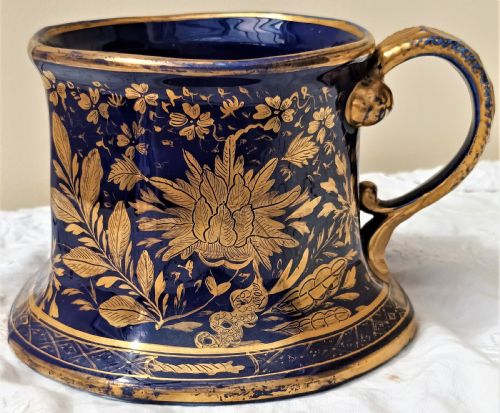


Cobalt and Gold Cup
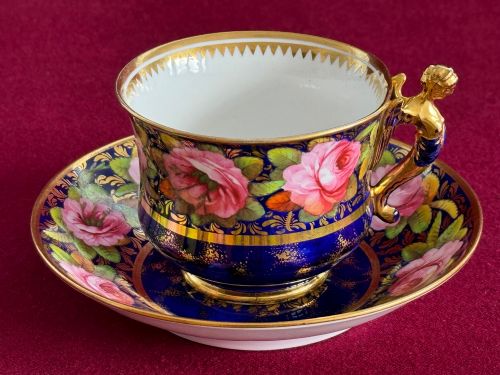
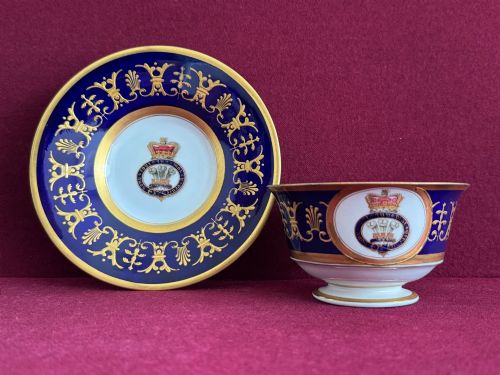
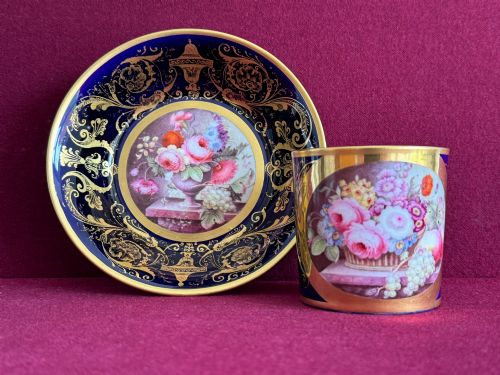
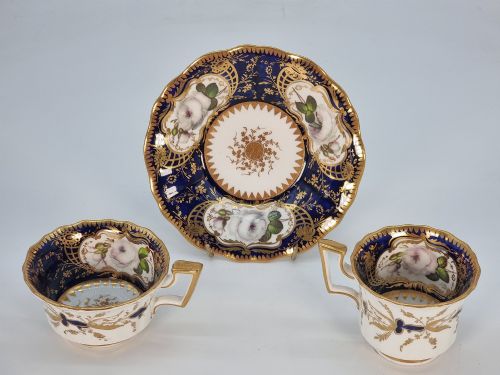
These cobalt and gold cups combine deep blue enamel with rich gilding, offering both visual weight and cabinet presence.
Cobalt and Gold Cup
A cobalt and gold cup is primarily found in forms such as teacups and saucers, coffee cans, chocolate cups, and tea bowls spanning the eighteenth, nineteenth, and early twentieth centuries. These vessels were produced by major English and European factories during periods including the Georgian, Regency, Victorian, and Edwardian eras. Buyers searching this phrase encounter decorative ceramics intended for display or refined service rather than everyday utility.
The English examples on this page range from early nineteenth century Coalport trios and Mason's ironstone mugs to Flight, Barr and Barr Worcester pieces and Minton coffee cans. Continental pieces also appear, including Royal Vienna chocolate cups and Meissen topographical examples from the broader nineteenth century. These forms reflect the prevailing neoclassical revival and traditional decorative styles of their respective periods.
Teaware and coffee service components dominate the available selection, often featuring deep cobalt grounds paired with intricate gold leaf or gilding. Buyers will find individual cabinet pieces alongside matched or partial sets, each demonstrating the high standards of ceramic production from these historical workshops.
Materials and Manufacture
The foundational bodies of these vessels utilise porcelain, bone china, and ironstone, each providing a stable white or pale ground for subsequent decoration. Manufacturers applied deep cobalt enamel to create contrasting panels or solid backgrounds before firing the pieces to fix the colour. This intensive process required precise temperature control to prevent the cobalt from running into the surrounding glaze.
Gold leaf and burnished gilding were applied over the fired glaze or enamel, then heated again to bond the metal to the ceramic surface. Artisans often hand-painted additional details in enamel colours or built up raised gold borders to frame the cobalt fields. The resulting combination of cobalt and gold defines the rich aesthetic of these historical ceramics.
Some nineteenth-century chocolate cups came with matching covers so the rich drink stayed warm while gossip at the breakfast table ran cold.
Assessing Quality and Execution
Quality in a cobalt and gold cup rests on the crispness of the hand-painting and the purity of the cobalt ground. Finer examples display even saturation without mottling in the blue enamel, alongside precise, unrubbed application of the gold leaf. The delicacy of the porcelain body and the refinement of any moulded details further distinguish standard production from top-tier cabinet pieces.
The prestige of the maker and the complexity of the decorative scheme elevate certain vessels above ordinary domestic ware. Pieces bearing specific topographical scenes, allegorical paintings, or attribution to notable decorators command greater attention than standard factory patterns. The survival of crisp gilding across high-handling areas indicates both initial manufacturing excellence and careful subsequent preservation.
Coalport·Mason's Ironstone·Flight Barr and Barr·Royal Vienna·Spode·Minton·Royal Worcester·Meissen
The Cobalt and Gold Cup Glossary
- Cobalt Enamel
- A deep blue metallic oxide pigment fused into the ceramic glaze during firing. It provides the characteristic rich background colour seen on these cups.
- Gilding
- The application of gold leaf or gold powder to the surface of the ceramic. Burnished gilding is polished to a bright, reflective finish.
- Ironstone
- A dense, durable type of earthenware patented in the nineteenth century. It offered a robust alternative to porcelain while accepting enamel and gold decoration.
- Coffee Can
- A cylindrical, handleless cup designed specifically for drinking strong coffee in the eighteenth and nineteenth centuries. They are frequently found paired with matching saucers.
Cobalt and Gold Cup: Frequently Asked Questions
How were these cups used?
These vessels were utilised for serving tea, coffee, or chocolate among affluent households during the Georgian and Victorian periods. Many were also kept as cabinet pieces rather than used daily.
Their decorative nature meant they formed part of larger tea and coffee services displayed in formal reception rooms.
How do I date a piece?
Dating relies on factory marks, ceramic body composition, and stylistic markers such as neoclassical shapes or Regency patterns. Examining the foot ring and glaze characteristics also helps determine the period.
Comparative analysis with documented factory output from makers like Coalport or Worcester provides a reliable timeframe.
Are these pieces safe for daily use?
Historic ceramics with gold leaf and enamel decoration are generally intended for display or careful collection rather than regular consumption. Hand-washing in lukewarm water is essential to preserve the fragile surface.
Thermal shock from hot liquids can also stress eighteenth and nineteenth-century porcelain bodies.
What is a chocolate cup?
A chocolate cup is a specialised drinking vessel, often featuring two handles and a matching cover to keep thick hot chocolate warm. They are typically larger than standard teacups.
Examples often showcase elaborate painted scenes or rich cobalt and gold borders suited for formal dining.