



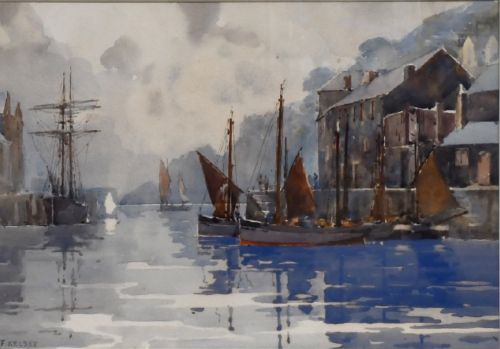


Coastal Scene Watercolour Painting
When you search for a coastal scene watercolour painting, you are looking at works on paper that capture harbours, shorelines and seafaring life from the nineteenth and twentieth centuries.
Coastal Scene Watercolour Painting
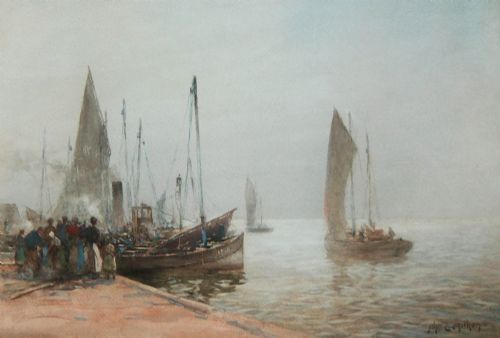
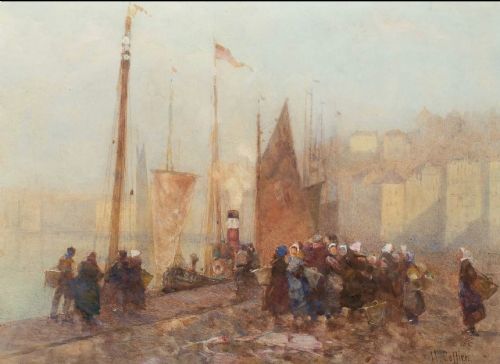
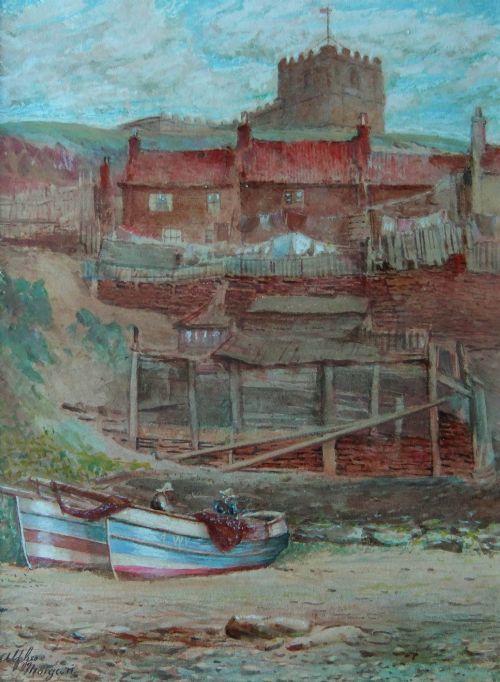
A coastal scene watercolour painting typically depicts maritime life, fishing ports, and tidal estuaries across Britain and continental Europe. These works range from late nineteenth-century Victorian views of Yorkshire and Cornish harbours to early twentieth-century depictions of Dutch canals and Mediterranean ports.
The most common pieces on this page are framed watercolours on paper produced during the Victorian and Edwardian periods, often signed by regional artists associated with coastal art colonies. Subjects frequently include local fishing fleets, slipways, piers, and daily harbour activities rendered in soft washes of pigment.
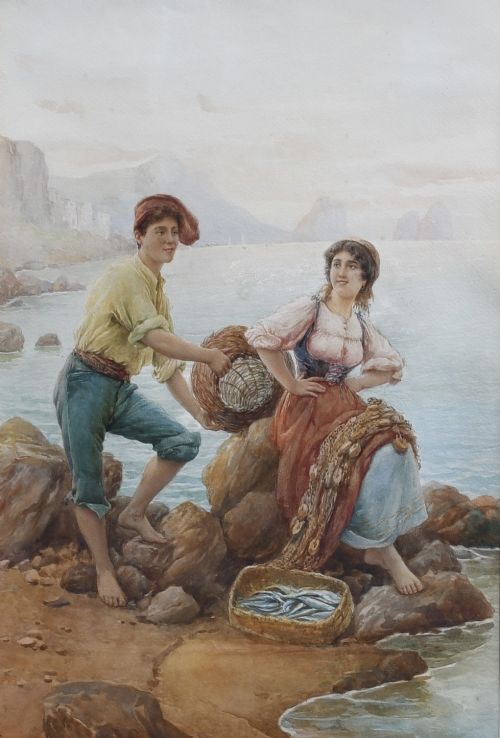
Beyond British coastal villages, the selection extends to occasional Orientalist views of Arabian shores and continental scenes from France and Italy. Formats vary from intimate village studies to larger framed exhibition pieces protected under glass.
Materials and Technique
Artists executed these watercolours using finely ground pigment suspended in water, applied directly to absorbent paper supports. Many works incorporate touches of gouache for opaque highlights, particularly on cresting waves, sails, and white foam.
Support materials generally consist of heavy wove paper housed within period wood or ebonised frames, frequently protected beneath glass. Some compositions also utilise subtle pencil or ink underdrawing to define architectural details and rigging before the colour washes are applied.
Listings span from Victorian harbour scenes of the late nineteenth century through to modernist coastal views from the 1940s.
Quality and Execution
Quality rests upon the artist's handling of translucent washes and the atmospheric control of light across water and sky. Stronger examples demonstrate confident brushwork that captures the transient effects of weather, tide, and coastal gloom without overworking the paper.
The sophistication of the composition and the precision of maritime detail set finer professional works apart from simpler topographical sketches. Additionally, the preservation of vibrant pigment against fading and the original integrity of the framing contribute to a piece's standing.
James Orrock·Thomas Bush Hardy·William Lee Hankey·Sir William Russell Flint·Paul Delvaux
The Coastal Scene Watercolour Painting Glossary
- Watercolour pigment
- Finely ground colour particles mixed with a water-soluble binder, forming translucent washes on paper.
- Wove paper
- Machine or hand-moulded paper with a uniform, smooth surface lacking distinct chain lines, commonly used for fine watercolours.
- Gouache
- An opaque water-based paint often added to watercolours to create solid highlights and dense opaque passages of light.
- Ebonised frame
- Wood finished to resemble ebony, frequently utilised for framing nineteenth-century works on paper to provide a dark, contrasting border.
- British Impressionism
- A late nineteenth and early twentieth-century painting style focusing on natural light, outdoor settings, and loose brushwork.
Coastal Scene Watercolour Painting: Frequently Asked Questions
How should I display a vintage watercolour?
Keep framed watercolours away from direct sunlight to prevent the pigments from fading over time. Maintaining stable indoor humidity levels also protects the paper support and prevents the development of foxing spots.
Ensure the artwork remains sealed behind glass with appropriate acid-free backing materials to safeguard the paper from atmospheric pollutants and moisture damage.
Are these paintings signed by the artists?
Many of the watercolours feature visible signatures, monograms, or studio inscriptions by the original hand, often located in the lower corners of the sheet. Some pieces also retain period gallery labels or handwritten titles on the reverse.
Unsigned works do appear, typically attributed through stylistic comparisons, contemporary exhibition records, or known artist addresses noted on old framing papers.
What subjects are most common?
Harbour scenes featuring fishing luggers, incoming tides, and daily maritime labour dominate the selection. Coastal villages in Yorkshire, Cornwall, and Normandy appear frequently across the regional works.
Other recurring subjects include lighthouses, estuaries, and continental canal views from Venice and the Mediterranean.
How can I tell the period of a watercolour?
Dating relies upon stylistic markers, costume details of figures depicted on the shore, and framing materials. Victorian works often display heavier Victorian mounts and ornate gilt frames, whereas 1920s and 1930s pieces lean towards simpler mouldings.
Artist biographical dates and written inscriptions on the reverse of the paper or frame provide definitive chronological anchors for specific watercolours.