

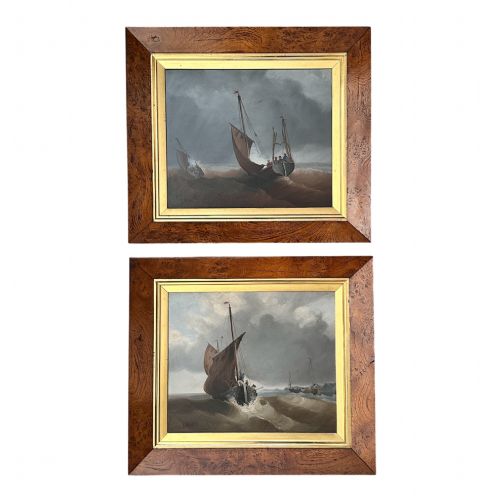
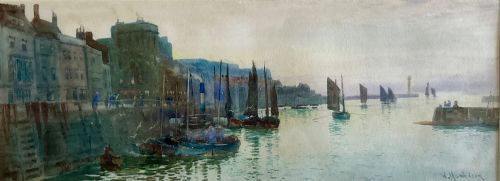
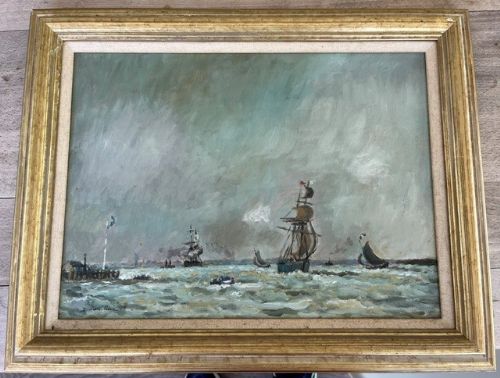
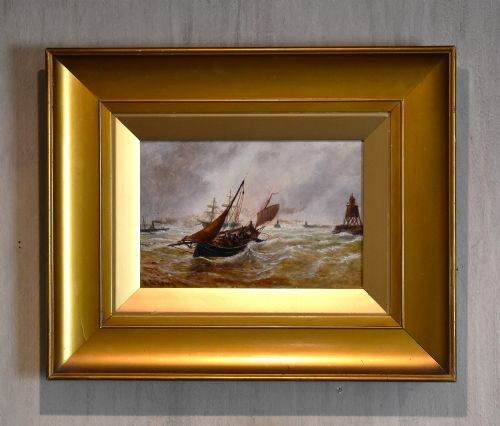
Coastal Sailing Boat Artwork
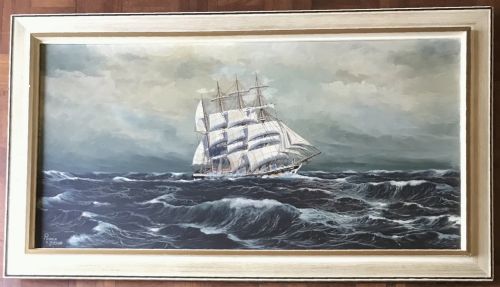
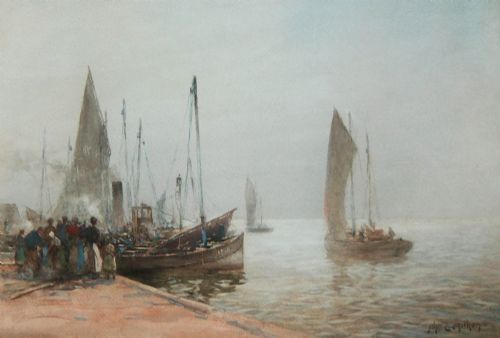
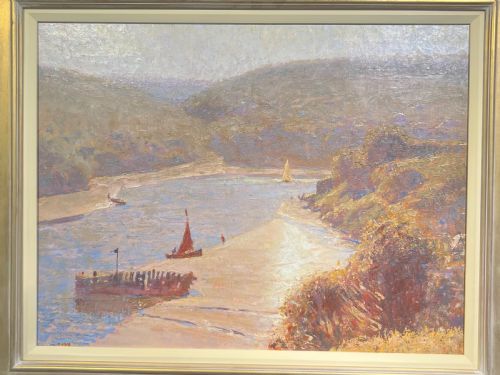
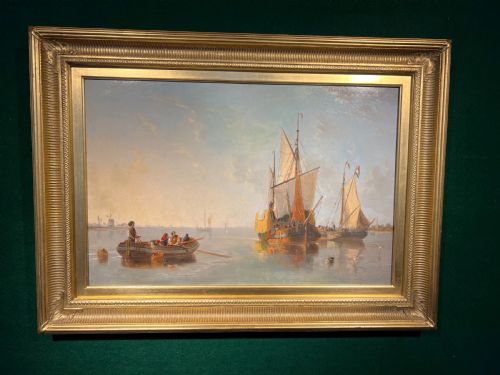
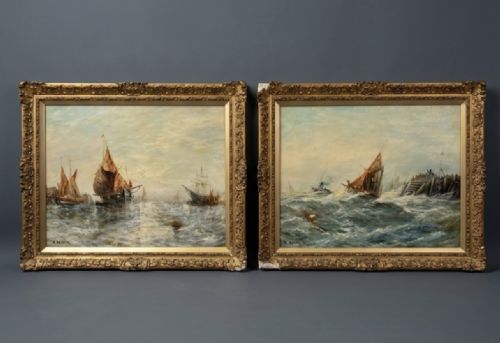
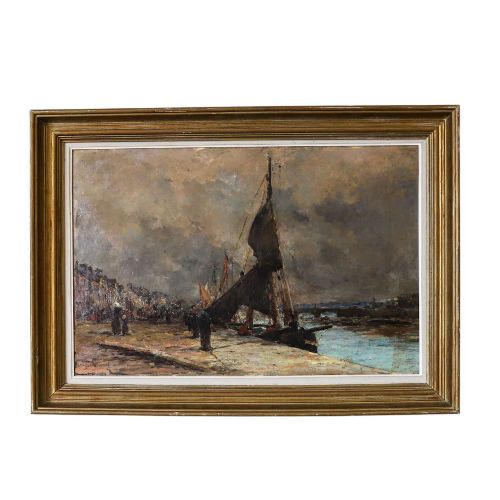
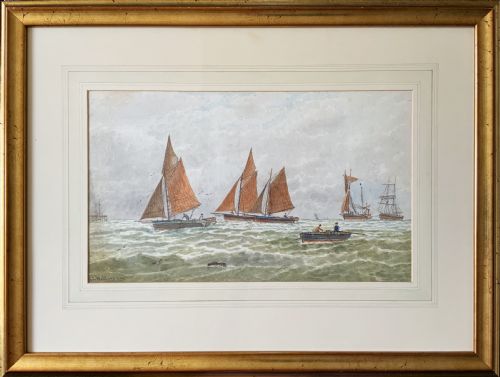
Coastal sailing boat artwork captures the movement of vessels at sea, offering maritime scenes created in oil and watercolour.
Coastal Sailing Boat Artwork
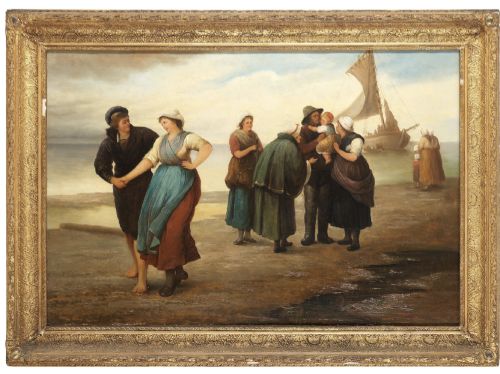
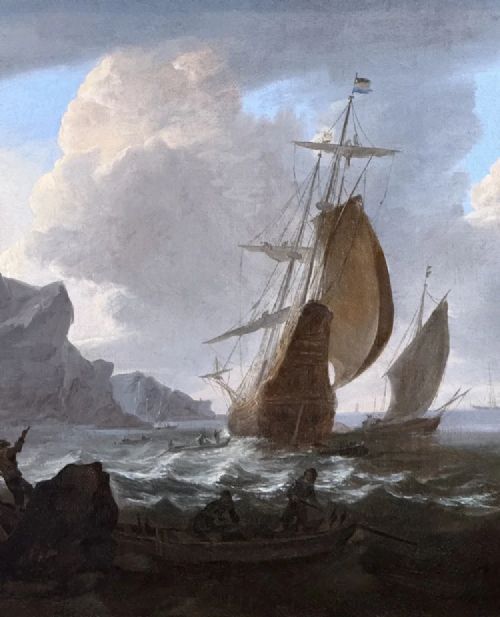
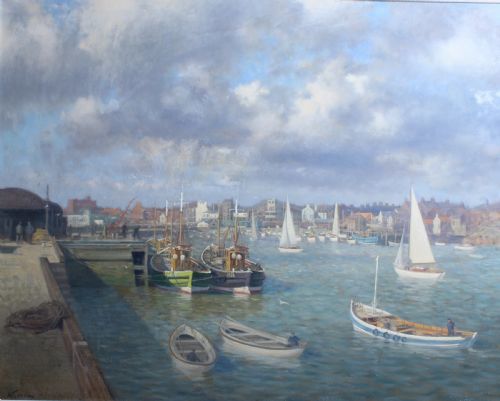
When searching for coastal sailing boat artwork, collectors encounter framed paintings depicting harbours, stormy seas, and marine vessels. These works record maritime activity across the nineteenth and twentieth centuries.
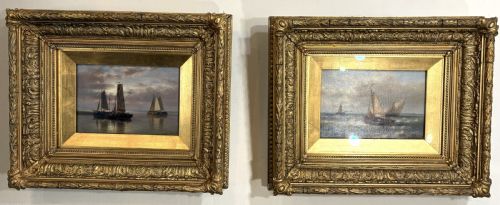
The selection includes Victorian marine watercolours alongside British Impressionist oil paintings on canvas and board. Smaller harbour scenes sit alongside large framed depictions of shipping vessels.
Originating largely from British and European schools, these pieces reflect local coastal traditions and maritime trade. Works span periods from the early nineteenth century through to post-war twentieth-century interpretations.
Materials and Technique
Artists painted primarily in oil or watercolour, applying pigment to canvas, prepared board, card, or heavy paper. Canvases were stretched over wooden frames, while watercolours were mounted under glass within gilt wood surrounds.
Brushwork ranges from tight, detailed academic recording of rigging and hull construction to looser, expressive marks capturing wind and water. Gilt frames protect the edges and complement the tonal palette of the maritime subject matter.
Several paintings record choppy northern waters, proving artists willingly braved sea spray just to capture a passing ketch.
Assessment of Quality
Quality rests in the handling of light, atmosphere, and the convincing depiction of water movement around sailing hulls. Superior examples demonstrate a confident command of proportion and spatial depth rather than merely recording vessel details.
The integration of the painted surface with its period frame influences the overall integrity of the piece. Works retaining original stretchers, glass, and gilt wood surrounds command greater attention.
James E. Aitken·John Wilson Carmichael·John Moore of Ipswich·Bernard Benedict Hemy·George Stanfield Walters·Abraham Hulk I·Charles Napier Hemy·Thomas Bush Hardy·Edward Seago·Stephen J. Renard
The Coastal Sailing Boat Artwork Glossary
- Oil on canvas
- Pigment suspended in drying oil applied to a woven fabric support. This technique allows for rich colour blending and textured brushwork.
- Watercolour
- Pigment ground in a water-soluble binder applied to paper. It yields transparent washes well-suited to capturing coastal light and skies.
- Gilt wood
- Timber frames finished with a thin layer of gold leaf or metallic gilt. They provide traditional decorative housing for maritime paintings.
- Board
- A rigid flat wooden panel or thick card used as a painting support instead of stretched fabric. It offers a stable surface for smaller plein-air works.
- Seascape
- A work of art depicting the sea, coastal views, or marine vessels in motion. It forms the primary genre for coastal sailing boat artwork.
Coastal Sailing Boat Artwork: Frequently Asked Questions
How do I date an old maritime painting?
Dating relies upon examining the canvas type, stretcher construction, and framing materials alongside stylistic clues in the rigging and clothing of figures. Pigment analysis and artist signatures provide further chronological anchors.
Comparison with documented works by the same hand helps narrow the decade of creation. Period framing often matches the era in which the artwork was produced.
Are these paintings original works?
The selections consist of hand-painted original oils and watercolours rather than modern mass-produced prints. Each piece represents a unique artistic observation of maritime life.
Signatures, brush texture, and medium examination confirm the hand-rendered nature of these historical artworks.
How should I display maritime art at home?
Hang paintings away from direct sunlight and excessive moisture to protect paper supports, canvas integrity, and gilt frames. Stable room temperatures prevent warping of wooden panels and stretcher bars.
Pairing pieces with traditional decor highlights the maritime subject matter and period framing.
What defines a British School painting?
British School works reflect the stylistic approaches, palette preferences, and training methods prevalent within British artistic communities. These pieces often capture local coastal weather and specific regional harbours.
Such works document the historical relationship between British artists and surrounding maritime trade routes.