





Coastal Portrait Painting
A coastal portrait painting captures human figures and maritime settings in oil paint, offering a glimpse into nineteenth-century coastal life.
Coastal Portrait Painting
A coastal portrait painting centres on human subjects positioned near the sea, often depicting fishermen, fisher girls, and domestic scenes by the shore. Buyers encounter works originating from periods such as the nineteenth century, the Edwardian era, and the nineteen-twenties.
The selections on this page feature oil paintings on canvas and panel, alongside watercolours and charcoal works. Styles range from Victorian marine art and the Newlyn School to the British School and Art Deco.
Subjects extend from figures on cliffs and harbour views to specific character studies like Dutch fisher girls and children by the water. These works combine portraiture with maritime and coastal landscape elements.
Materials and technique
Works utilise oil paint applied to canvas, wood panels, or unframed canvas supports. Painters also worked in watercolour and charcoal on paper.
Framing often incorporates wood, gilt, and giltwood to enclose the finished artworks. The combination of oil on canvas and ornate wooden framing defines the physical structure of these pieces.
Listings feature works spanning the nineteenth century, Victorian period, Edwardian era, and the nineteen-twenties, utilising wood, canvas, paper, and gilt.
Variations in quality
Quality rests upon the artist's ability to render the human form and the atmospheric conditions of the sea with precision. Works associated with recognised circles or specific schools display superior brushwork and compositional depth.
The integration of the figure within the coastal or maritime setting distinguishes finer examples from simpler decorative pieces. Preservation of the original canvas, panel, and period frame also influences the standing of the work.
Raymond Moritz·Francesco Guardi·Ralph Todd·Manuel Azpiroz·Johan Jens Neumann·Ralph Hedley·Charles Jones·John Mc Ghie·Harry John Pearson
The Coastal Portrait Painting Glossary
- Newlyn School
- An art colony based in Cornwall that focused on realistic depictions of fishermen and coastal life. Artists in this circle often painted en plein air.
- Oil paint
- A slow-drying paint made from pigment suspended in a drying oil, commonly linseed. It allows for rich colour blending and texture.
- Giltwood
- Wood carved and covered with a thin layer of gold leaf or gold paint. It frequently appears on traditional antique frames.
- Capriccio
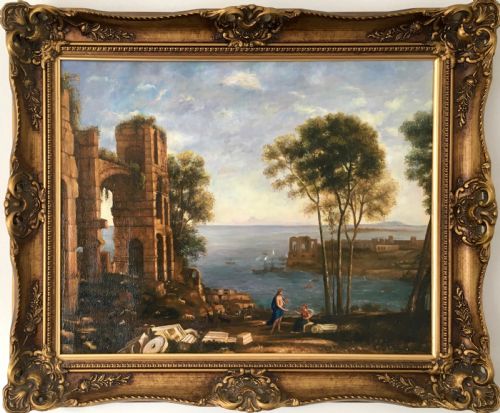
- An architectural fantasy combining buildings, archaeological ruins, and other architectural elements in a fictional compositional arrangement. These scenes often include coastal backdrops.
- Panel
- A flat piece of wood used as a rigid support for painting instead of stretched canvas.
Coastal Portrait Painting: Frequently Asked Questions
What is a coastal portrait painting?
A coastal portrait painting combines human subjects with a seaside setting, such as fishermen, children by the shore, or figures on cliffs. These works merge traditional portraiture with maritime and landscape elements.
They appear across various periods including Victorian, Edwardian, and the early twentieth century, utilising mediums like oil on canvas, watercolour, and charcoal.
How do I display these paintings?
Most works are housed in traditional wood, gilt, or giltwood frames that suit period interiors. Hanging them on walls with stable humidity away from direct sunlight protects the canvas and paint.
Matching the frame style to your interior decor helps integrate nineteenth and early twentieth-century pieces into modern or traditional rooms.
How are different periods told apart?
Victorian and nineteenth-century pieces often showcase dramatic maritime backdrops, heavy gilt frames, and romanticised realism. Edwardian and later twentieth-century works, including those from the Newlyn School or Art Deco period, introduce looser brushwork and different dress styles.
Examining the materials, stretcher bars, canvas type, and any artist signatures assists in dating the piece accurately.
What subjects are most common?
Fishermen, fisher girls, children with nets, and figures on cliffs dominate the available subjects. Coastal vessels, harbours, and domestic scenes by the sea also frequently recur.
These subjects reflect a fascination with rural and coastal working life during the nineteenth and early twentieth centuries.