




Coastal Ocean Wall Art
Coastal ocean wall art captures the restless energy of the sea through historic oil paintings and watercolours.
Coastal Ocean Wall Art
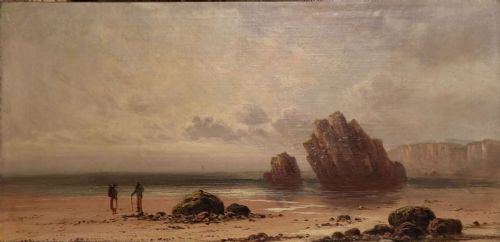
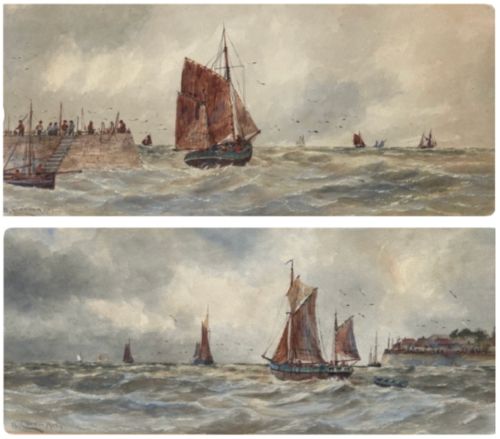
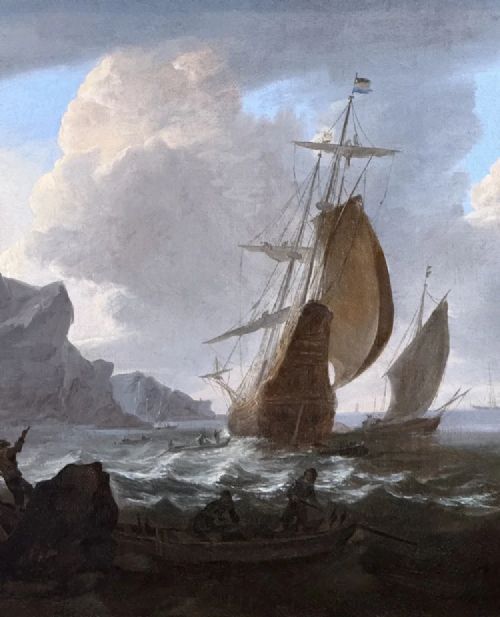
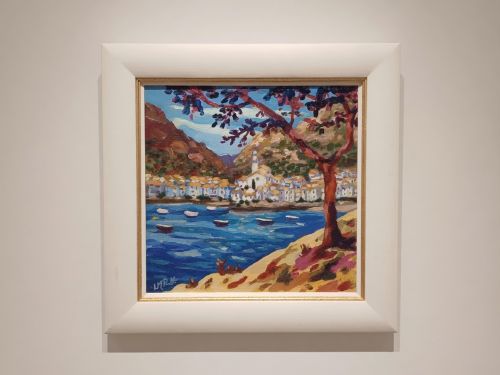
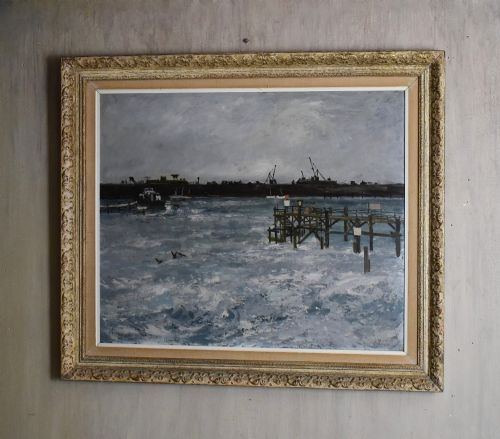
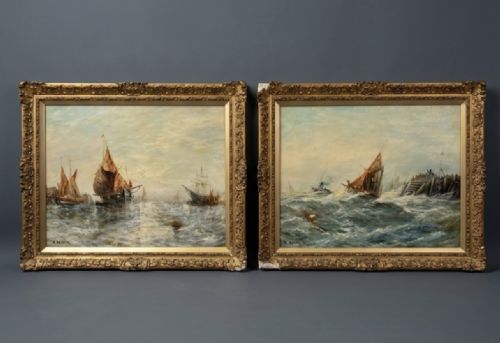
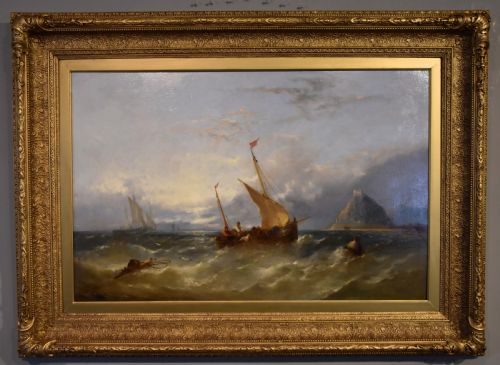
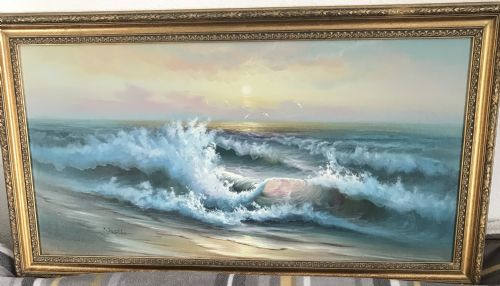
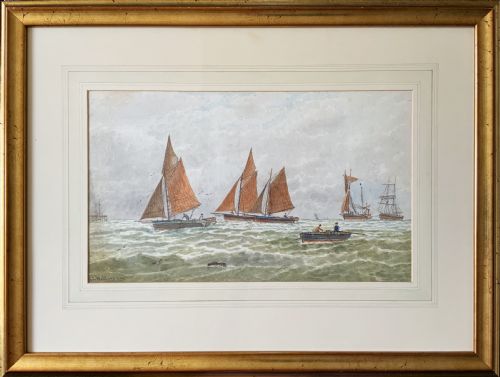
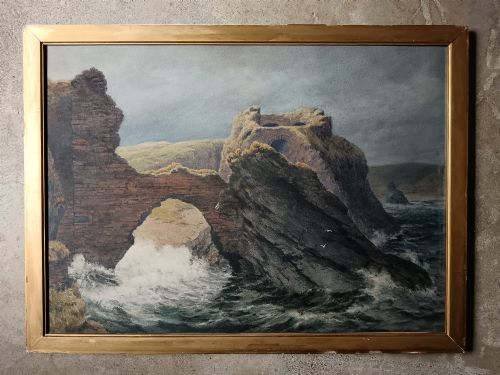
These works focus on maritime scenes, shorelines, and harbour views executed in oil and watercolour across the nineteenth and twentieth centuries. The selection on this page relies heavily on Victorian marine watercolours and early twentieth-century oil paintings depicting fishing vessels, rough gales, and quiet sandy bays.
Makers and painters of this genre frequently captured specific British and European coastal locations, from Cornish harbours to Dutch waters. Buyers encounter framed pieces ranging from small en plein air studies to large scale canvas representations of sailing ships.
Materials and Techniques
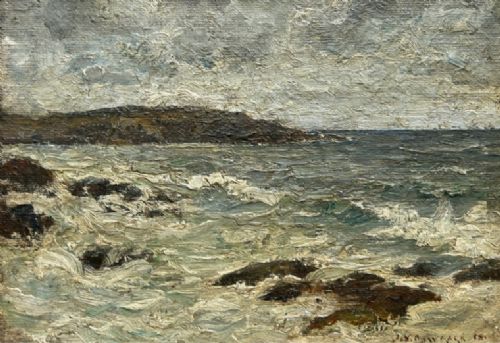
Artists utilised oil paint on canvas or board to build rich impasto textures representing churning waves and dramatic skies. Watercolours on paper offered a lighter medium for capturing translucent coastal light and tranquil harbour atmospheres.
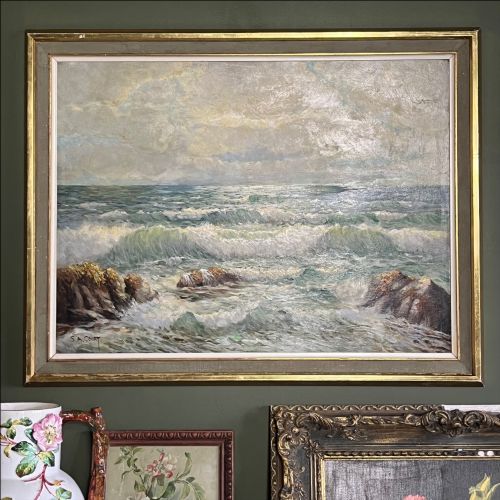
Finished paintings were commonly housed in period gilt wood frames that complemented the maritime subject matter. Gilt frames enhanced the visual depth of the compositions, particularly in Victorian oil paintings of ships and coastal views.
Several artists braved stormy Dutch gales and Cornish shipwrecks with nothing more than a box of watercolours and a sturdy easel.
Judging Quality
Quality rests upon the artist's ability to render light, movement, and atmospheric conditions convincingly across the water and sky. Stronger examples display confident brushwork and precise draughtsmanship in the depiction of rigging, hulls, and coastal geology.
The choice of medium and the preservation of the original surface condition also influence the standing of a piece. Well-maintained paper and stable canvas surfaces without excessive overpainting represent the upper tier of surviving works.
William Cannon·Sidney A Court·William Banks Fortescue·Bonaventura Peeters·Peter Brannan·William Henry Williamson·George Stanfield Walters·John Moxon·Charles William Adderton·Charles Napier Hemy·Norman Lloyd·Gustave De Bréanski·Thomas Bush Hardy·William Greaves·Abraham Hulk Snr·Charles Sim Mottram·Roger de la Corbiere·Claude Thomas Stanfield Moore·Samuel Owen·George Gregory·George Henry Knight·Sir David Murray·E Tucker·Percy Brooke
The Coastal Ocean Wall Art Glossary
- En plein air
- Painting outdoors directly from nature to capture transient effects of light and weather. This method was widely practiced by nineteenth-century landscape and marine artists.
- Impasto
- Paint applied thickly to a canvas or board so that it stands out from the surface. This technique allows artists to build tactile texture in representations of rough seas and foaming waves.
- Seascape
- A work of art depicting the sea, coastlines, ships, or maritime activity. These subjects formed a major category of academic and commercial painting through the Victorian era.
- Watercolour
- A paint consisting of pigment suspended in a water-based solution, typically applied to paper. It allows for delicate washes and luminous depictions of coastal skies.
Coastal Ocean Wall Art: Frequently Asked Questions
How do I hang coastal art?
Hang these framed works at eye level on a neutral wall to let the maritime colours stand out without competition.
Keep them away from direct sunlight and damp coastal environments to protect the historic canvas, paper, and gilt frames.
What periods do these pieces span?
The inventory covers nineteenth-century Victorian works through to mid-twentieth-century modernist interpretations.
Earlier nineteenth-century pieces often focus on traditional maritime documentation, while later twentieth-century examples embrace impressionistic and expressive handling.
Are watercolours fragile?
Watercolours on paper require protection behind glass to prevent atmospheric damage and fading from light exposure.
Original backing boards and proper framing materials help preserve the integrity of these sensitive nineteenth-century sheets.
How do I identify a location?
Many artists inscribed titles, signatures, or location names directly onto the reverse of the canvas, the frame, or the margin of the paper.
Contemporary listings often reference specific ports, castles, and coastal landmarks recorded by the painter during their travels.