



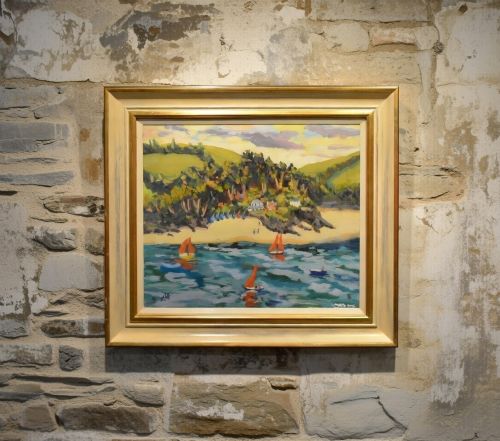
Coastal Nautical Painting
Coastal nautical painting captures the shifting moods of the sea and shore, offering buyers a window into maritime history through traditional oil and watercolour works.
Coastal Nautical Painting
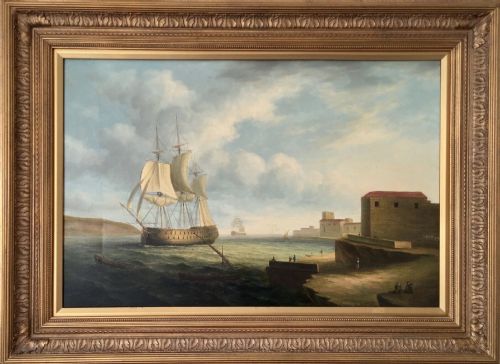
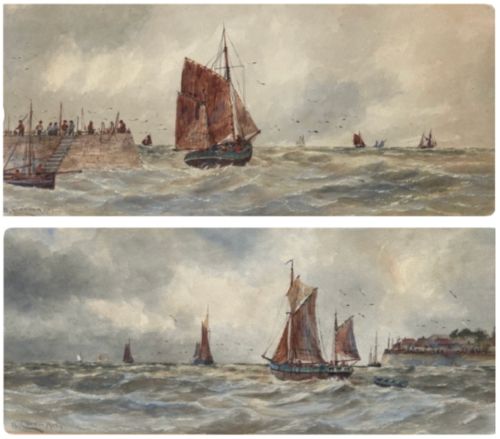
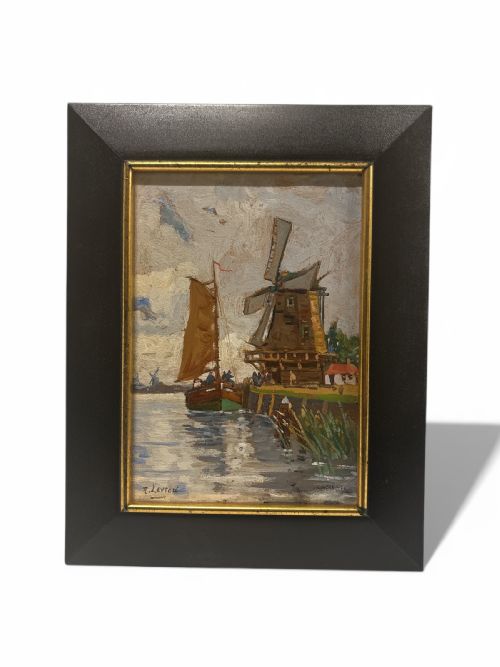
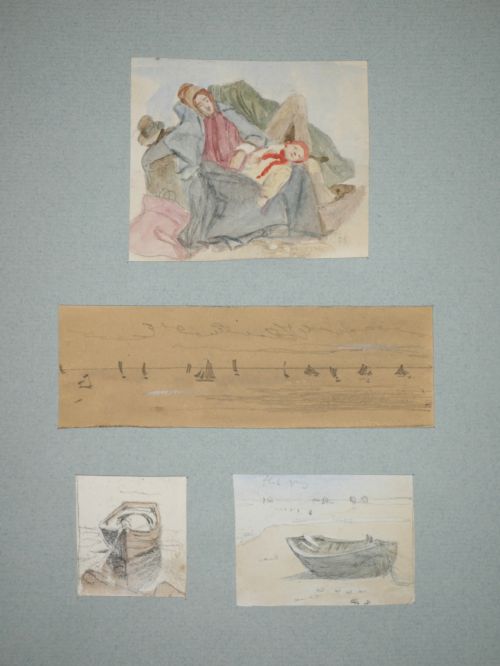
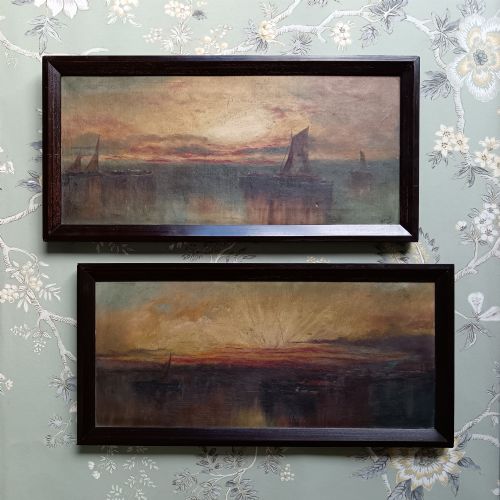
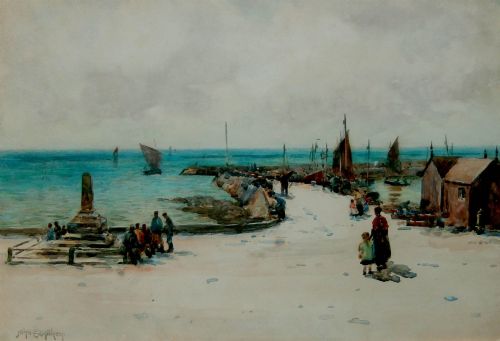
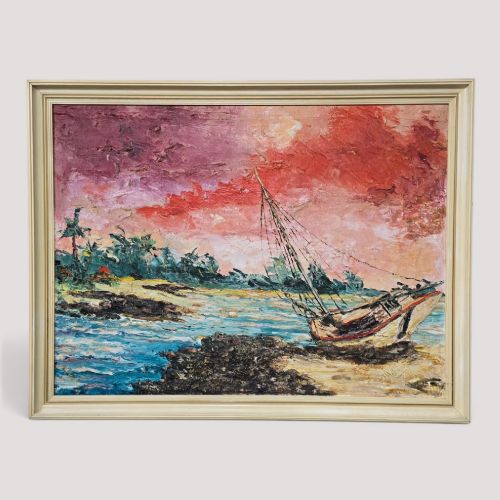
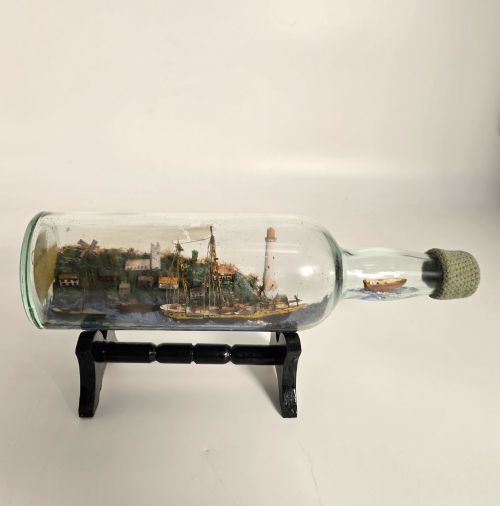
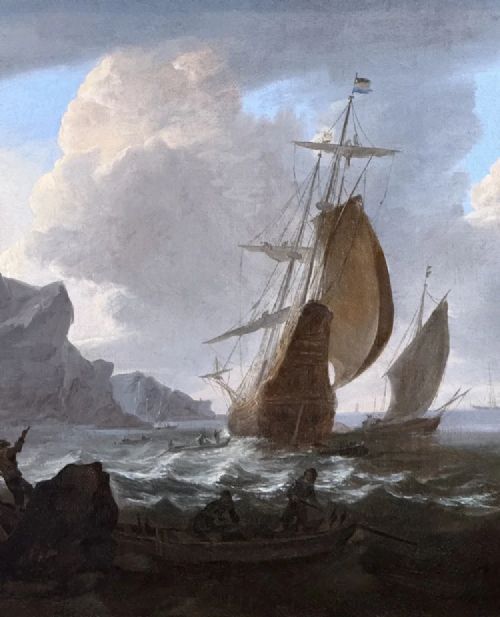
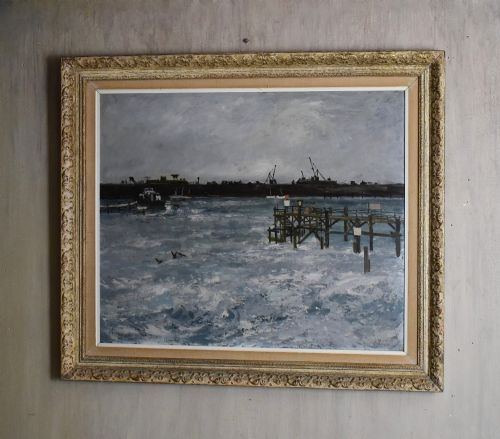
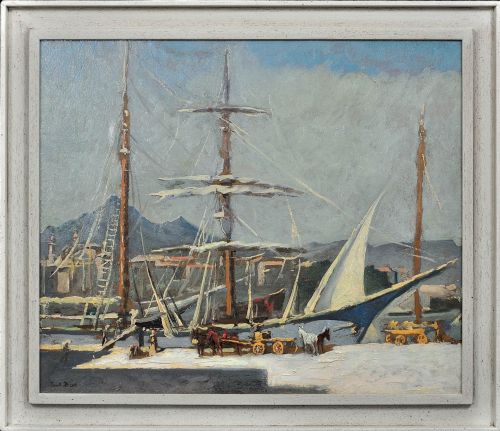
When searching for a coastal nautical painting, a buyer encounters framed artworks depicting harbours, fishing vessels, and open seas created across the nineteenth and twentieth centuries. The selection spans detailed Victorian marine art, Edwardian coastal watercolours, and mid-century oil paintings on canvas or board.
Most pieces on this page originate from British and European schools, recording local shipping trade, coastal communities, and specific waters like the North Sea or the Mediterranean. Styles range from tight academic harbour portraits to looser British impressionist interpretations of wind and water.
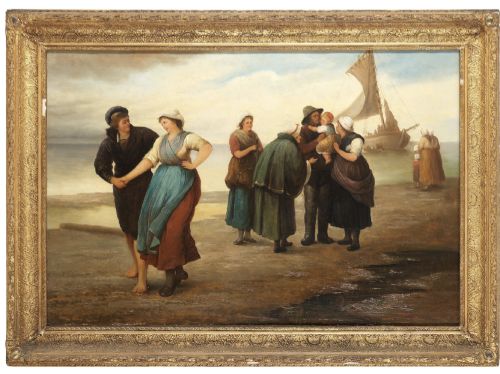
Forms vary from intimate watercolour sketches on paper to large oil paintings housed in original gilt wood frames. Buyers select these works for their historical record of maritime life as well as their decorative presence.
How They Were Made
These works rely on traditional painting supports, predominantly canvas stretched over wooden frames, sturdy wooden panels, or heavy paper for watercolours. Artists applied oil paints for rich colour depth and luminosity, or watercolours for translucent atmospheric effects.
Many surviving pieces retain their period gilt wood frames, which complement the maritime subject matter and protect the edges of the canvas or paper. Pigments were worked with brushes and sometimes palette knives to capture the texture of waves, sails, and stone harbour walls.
Listings feature works spanning the nineteenth century, the Edwardian era, and the mid-twentieth century.
What Varies in Quality
Quality rests upon the artist's command of light, atmospheric perspective, and maritime architecture, separating competent record-keeping from genuine artistic achievement. Superior works capture the weight of a hull, the movement of a swell, and the specific quality of coastal light with economy and precision.
The preservation of the medium also distinguishes the range, with stable oil surfaces and unfaded watercolours commanding greater appreciation. Original period framing contributes further to the integrity and visual impact of the piece.
James Hardy·Kenneth Cozens·James Orrock·William Cannon·R Leyton·James Smetham·B Nash·John E Aitken·Bonaventura Peeters·Peter Brannan·Paul Bret·Lucy Pratt·TB Hardy·John Wilson Carmichael·John Moore·William Henry Williamson·Bernard Benedict Hemy·George Stanfield Walters·Frank Kelsey·Abraham Hulk I·Henry Barlow Carter·William Frederick Settle·Charles Napier Hemy·Richard Harry Carter·William Lee Hankey
The Coastal Nautical Painting Glossary
- Watercolour
- A painting method where fine pigment is suspended in a water-based solution and applied to paper. It relies on the white of the paper to provide luminosity.
- Gilt Wood
- Wood carved and coated with a thin layer of gold leaf or metallic paint. This finish was standard for framing fine maritime art.
- Seascape
- A work of art depicting the sea, ships, or coastal views. It forms the primary category for marine painting.
- Lugger
- A small fishing vessel carrying lug sails set on one or more masts. These boats frequently appear in nineteenth-century British coastal art.
Coastal Nautical Painting: Frequently Asked Questions
What subjects appear in coastal nautical paintings?
These works typically depict sailing ships, fishing boats, busy harbours, and open coastal waters under various weather conditions. Artists recorded specific locations, from local British fishing ports to Mediterranean harbours.
Scenes range from calm coastal anchorages to dramatic depictions of vessels navigating rough seas and gales. The focus often centres on the interaction between human seafaring activity and the natural environment.
How do I date a nautical painting?
Dating relies on stylistic evidence, costume details of figures on the shore or decks, and the riggings of the vessels shown. Victorian and Edwardian works often display specific maritime architecture and clothing fashions that help narrow the period.
Signatures, artist biographies, and framing styles also provide reliable clues to the decade of creation. Many pieces carry inscriptions on the reverse identifying the ship or port.
Are watercolours as durable as oils?
Waterworks require protection from direct sunlight to prevent fading of the pigments and paper. When kept behind glass away from moisture, they survive in stable condition for centuries.
Oil paintings on canvas or board offer greater resistance to environmental factors but still benefit from stable indoor humidity and temperature. Both mediums require careful handling of their respective frames.
How should I display a maritime painting?
Display these works on walls with indirect lighting to prevent glare on the glass of watercolours or the varnished surface of oils. Matching the painting to a sympathetic period frame enhances its visual integration into a room.
Positioning pieces away from direct heat sources protects both the wooden supports and the paint layers from cracking. Hanging works at eye level allows the viewer to appreciate the fine details of the rigging and brushwork.