

Coastal Marine Watercolour
A coastal marine watercolour captures the salt air and shifting light of Britain's harbours, offering an intimate window into nineteenth and twentieth-century maritime life.
Coastal Marine Watercolour
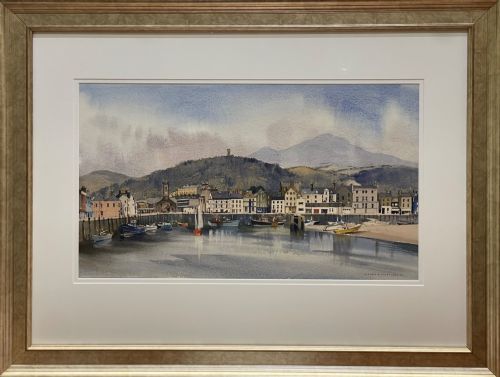
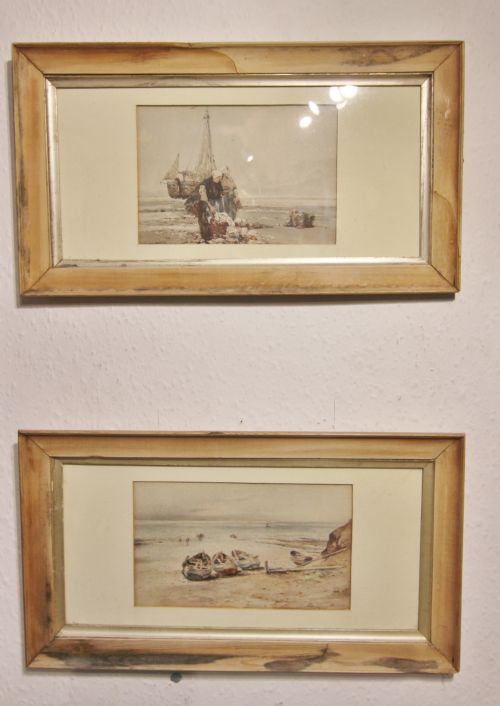
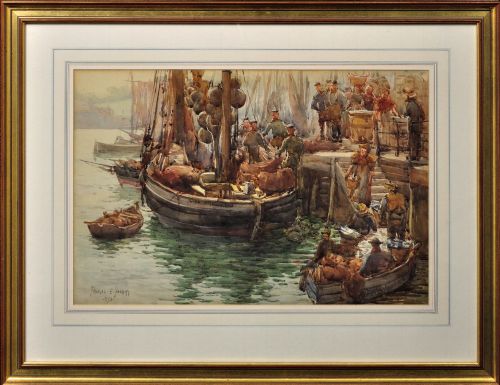
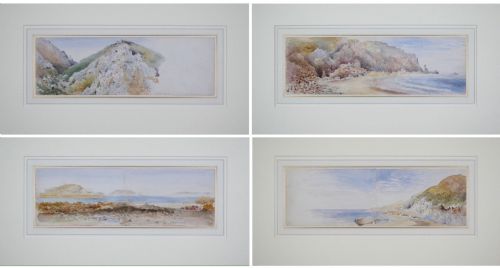
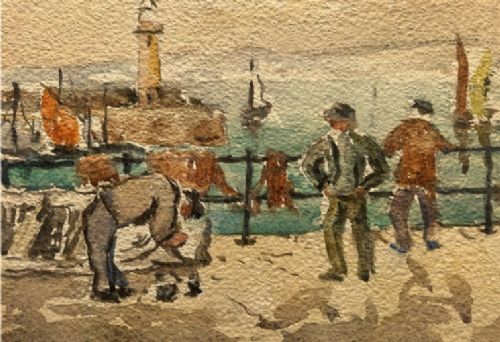
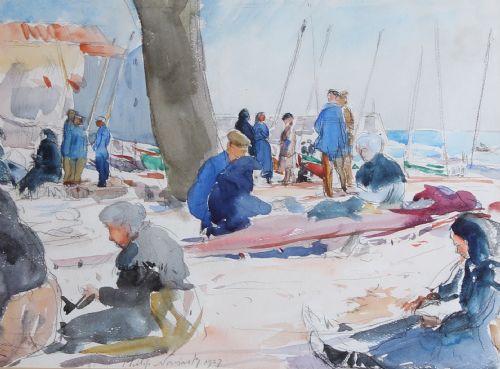
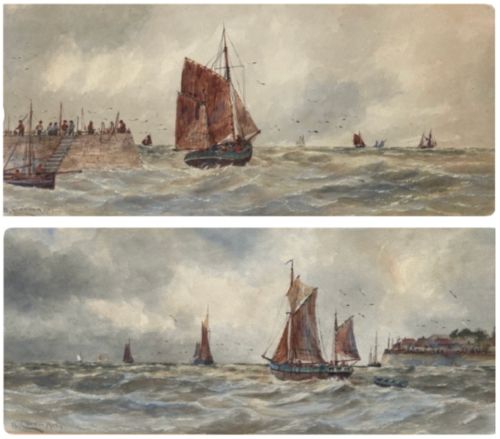
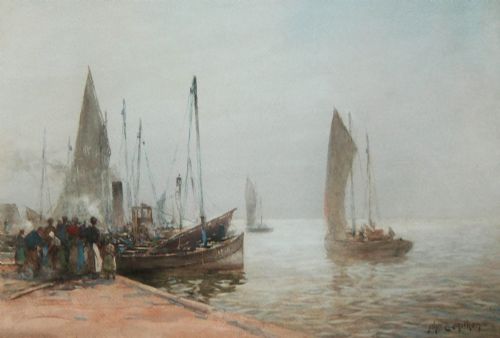
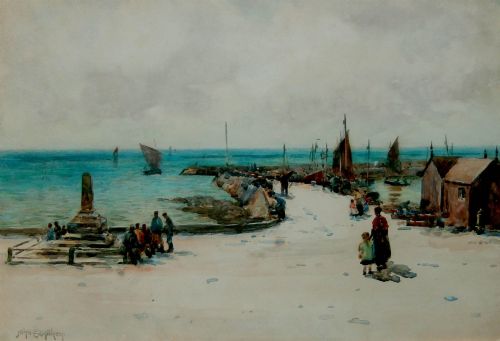
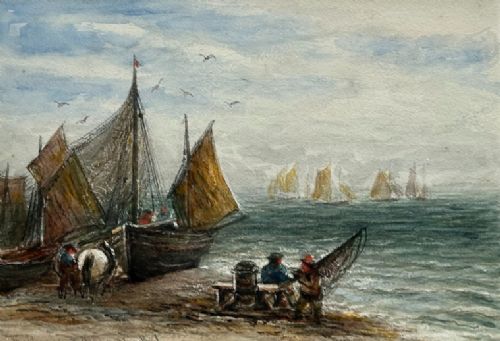
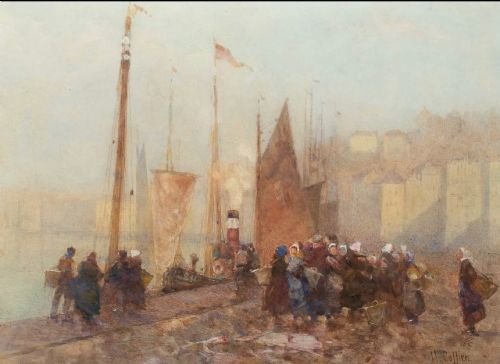
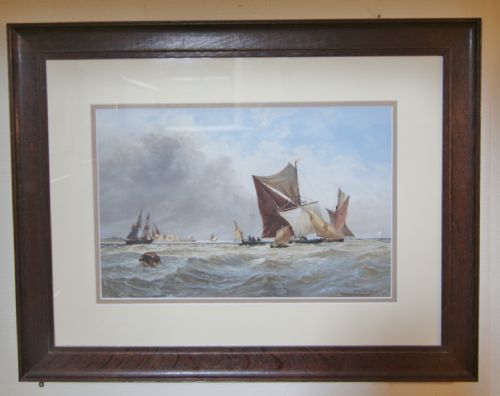
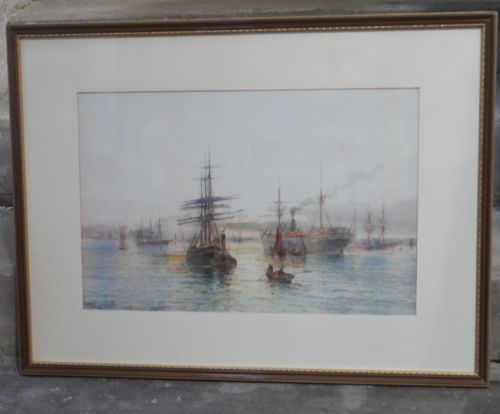
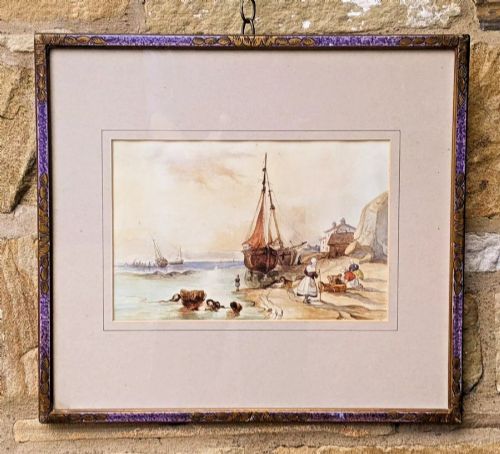
A coastal marine watercolour records the daily labours and sheltered havens of the British and European seaboard, ranging from bustling fishing docks to quiet estuaries. These works focus on working vessels, from trawling luggers to coastal barques, rendered against changing tides and open skies.
The pieces on this page span the Victorian era, the Edwardian period, and into the mid-twentieth century, capturing shifts in artistic perception from traditional maritime documentation toward looser British Impressionism and post-impressionist handling.
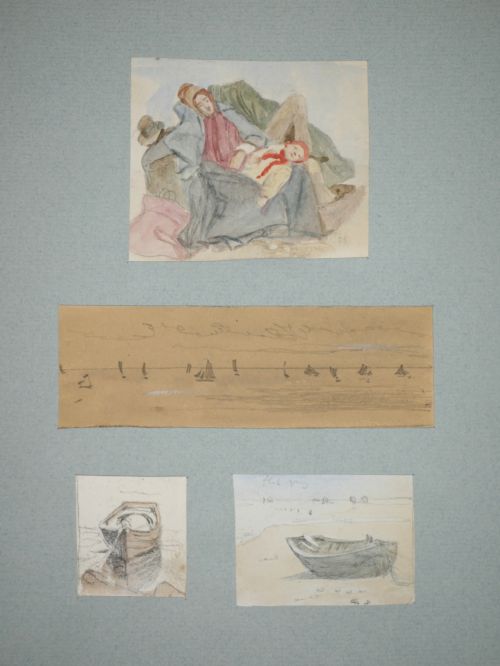
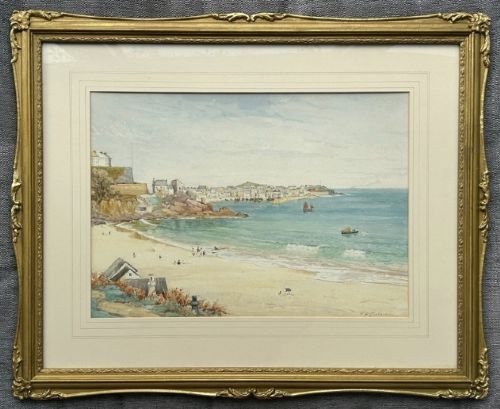
Most examples present framed works on paper, often showing specific locations such as Whitby, Scarborough, St Ives, or continental ports like Boulogne and Honfleur. Collectors encounter both finished exhibition pieces and direct field sketches signed by notable regional artists.
Materials and execution
Artists executed these works using watercolour pigment applied to paper supports, frequently employing gum arabic to deepen tones and heighten the luminosity of water and sky. Painters built the image through transparent washes combined with bodycolour for highlights on foam and sails.
The finished works are typically presented beneath glass within period wood frames, often accented with gilt mouldings that complement the palette of the painting. Paper supports from this era rely on rag or early wood-pulp mixtures, which respond sensitively to humidity and light.
Coastal Marine Watercolour Retail Price Guide 2026
Typical asking prices for coastal marine watercolour among the pieces listed under this phrase on Sellingantiques today, from the lower quarter to the upper quarter. They describe what is for sale here now, not the wider market.
Listings feature works executed on paper using watercolour pigment, housed in period wood and gilt frames from the nineteenth and twentieth centuries.
Judging quality in marine works
Quality rests upon the artist's command of atmospheric perspective and the convincing depiction of moving water, where confident brushwork separates a mechanical record from a living scene. Superior examples demonstrate a secure grasp of nautical architecture and rigging alongside a sensitive handling of shifting maritime light.
The strength of the composition and the preservation of the paper support dictate the standing of a piece within the field. Strong provenance, legible signatures, and original framing configurations further distinguish the finest examples from standard commercial sketches.
Thomas Bush Hardy·William Lee Hankey·Edward Seago·James Orrock·Ernest Dade
The Coastal Marine Watercolour Glossary
- Watercolour pigment
- Finely ground colour mixed with a water-soluble binder. This medium allows artists to achieve luminous, translucent effects across paper supports.
- Bodycolour
- Watercolour mixed with a white pigment to render it opaque. Painters use this technique to add highlights to crashing waves and billowing sails.
- Coble
- A traditional type of open fishing boat native to the north-east coast of England. These flat-bottomed vessels appear frequently in regional marine watercolours.
- Lugger
- A small fishing boat carrying one or more lug sails. These craft feature prominently in nineteenth-century West Country and Yorkshire coastal scenes.
- Provenance
- The documented history of ownership for an artwork. A clear lineage connects the piece back to the artist or its original exhibition.
Coastal Marine Watercolour: Frequently Asked Questions
What periods do these watercolours cover?
The selection spans from the late nineteenth century through the Edwardian era and into the mid-twentieth century. This period saw a strong focus on maritime subjects among British artists.
Victorian and Edwardian painters frequently travelled to working fishing ports to record maritime life before industrial changes altered the coastline.
How should I hang a antique watercolour?
Protect the paper by keeping the framed work away from direct sunlight and damp environments. UV-filtering glass helps prevent the delicate water-soluble pigments from fading over time.
Position the piece on an interior wall where room temperature remains stable to preserve both the paper support and the period frame.
Are these works signed by the artist?
Many examples feature signatures, monograms, or studio inscriptions by the hand of the painter. Documentation on the reverse or contemporary exhibition labels often confirms the authorship.
Unsigned works appear as well, frequently attributed to specific regional schools based on technique, subject matter, and paper type.
What subjects appear most often?
Harbour scenes, fishing boats, coastal cliffs, and shipping vessels dominate the inventory. Artists favoured locations with active maritime trade and dramatic tidal shifts.
Specific regional harbours such as Whitby, St Ives, and Scarborough recur frequently across the works of this era.