


Coastal Landscape Watercolour Picture
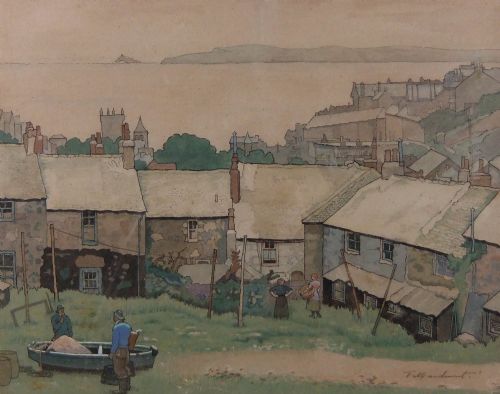
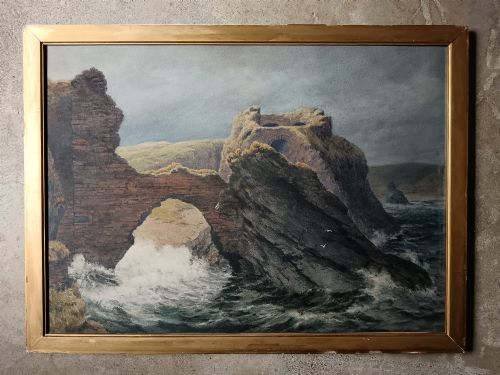
A coastal landscape watercolour picture captures harbours, cliffs and tides through the fluid medium of pigment on paper.
Coastal Landscape Watercolour Picture
A coastal landscape watercolour picture depicts maritime scenes, fishing harbours, and seaside views rendered on paper through the nineteenth and twentieth centuries. These works range from intimate depictions of local quays by regional artists to expansive seascapes produced during the Victorian and Edwardian eras. Buyers encounter framed artworks representing specific British and continental locations, including Yorkshire ports, Scottish shores, and Channel views.
The pieces appearing on this page span several stylistic movements such as British Impressionism, Victorian realism, and Modern British painting. Works frequently portray recognisable geographic landmarks, from Whitby Abbey to the Firth of Forth, alongside everyday maritime labour such as hauling seaweed or spreading nets. Collectors will find both single compositions and period pairs framed in glass and wood.
How they were made
A coastal landscape watercolour picture relies primarily on watercolour pigment applied to paper surfaces, often framed behind glass within wooden or gilded surrounds. Artists manipulate water-soluble pigments to achieve translucent washes for skies and sea, alongside opaque highlights where bodycolour is introduced. The combination of paper support and fluid pigment demands precise brushwork without the margin for correction inherent in oil paints.
Framing forms an integral part of these works, utilising period gilt wood and standard timber mouldings designed to protect delicate paper surfaces from atmospheric moisture. Many examples incorporate glass glazing that preserves the fugitive watercolours from fading under exposure to light. The backing boards and mounts associated with these paintings reflect traditional Victorian and Edwardian framing techniques.
The inventory records coastal scenes spanning the Victorian era, Edwardian period, and mid-twentieth-century British art movements.
What varies in quality
A coastal landscape watercolour picture varies in quality according to the artist's command of light, atmosphere, and spatial depth within the medium. Superior examples demonstrate confident handling of translucent washes and rapid notation that convey the movement of tides and changing weather without overworking the paper. Lesser works often rely on rigid outlines and flat colour application that fail to capture atmospheric nuance.
The sophistication of the composition and the historical specificity of the subject matter further distinguish finer examples from standard decorative pieces. Works by recognised regional painters or members of established artistic bodies typically display superior draughtsmanship and more stable preservation of the underlying pigments. The integration of the period frame with the artwork also influences the overall integrity of the piece.
Thomas Maidment·John Moxon·William Frederick Settle·Alfred George Morgan·John Bedloe Goddard·William Lee Hankey·Sir Thomas Newenham Dean·Arthur Tucker·William Tuck·Fred Waugh·John McDougal·James Watson·Robert Buchan Nisbet·Frederick William Hattersley·Frank Wood·James Thomas Watts·John Mitchell·Frederick William Booty·Leslie Rackham·Kate E Booth·R P Noble·Sir Herbert Hughes-Stanton·John Hobson Nicholson·Frederick Stuart Richardson·Frederick Williamson
The Coastal Landscape Watercolour Picture Glossary
- Watercolour
- A painting method in which the paints are made of pigments suspended in a water-based solution. This medium allows for transparent layers of colour that reveal the reflective qualities of the paper beneath.
- Gilt wood
- Wood that has been treated with a thin layer of gold leaf or metallic gilt finish. Such frames are frequently found enclosing nineteenth-century and Edwardian paintings.
- Seascape
- A work of art that depicts the sea, coastal views, or marine shipping. These subjects formed a primary focus for British artists working along coastal towns and harbours.
- British Impressionism
- A painting style adopted by British artists who embraced broken brushwork and natural light. This movement influenced late nineteenth and early twentieth-century depictions of coastal atmospheres.
- Bodycolour
- Watercolour pigment mixed with a white base to render it opaque rather than transparent. Artists use this technique to highlight breaking waves or clouds in maritime scenes.
Coastal Landscape Watercolour Picture: Frequently Asked Questions
What subjects do these watercolours show?
These works depict maritime and coastal scenes, including fishing harbours, sailing ships, cliffs, and tidal estuaries across Britain and Europe.
Artists frequently recorded specific locations such as Yorkshire fishing ports, Scottish castles, and English coastal towns during the nineteenth and twentieth centuries.
How should I frame and display them?
Watercolours require protection behind glass to prevent atmospheric damage and fading of the delicate pigments on paper.
Displaying them away from direct sunlight preserves the paper support and maintains the integrity of the original period frame.
How do I identify the period of a piece?
Dating relies on stylistic clues, framing materials, artist signatures, and inscriptions detailing specific locations or dates on the mount or reverse.
Victorian and Edwardian works often feature distinctive period gilt wood frames and specific paper weights characteristic of nineteenth-century production.
Were these painted outdoors or in studios?
Many artists produced initial watercolours or pencil sketches on location along the shoreline to capture immediate weather conditions and light.
Finished works were frequently completed in studios using these observational studies to guide the final composition on paper.