




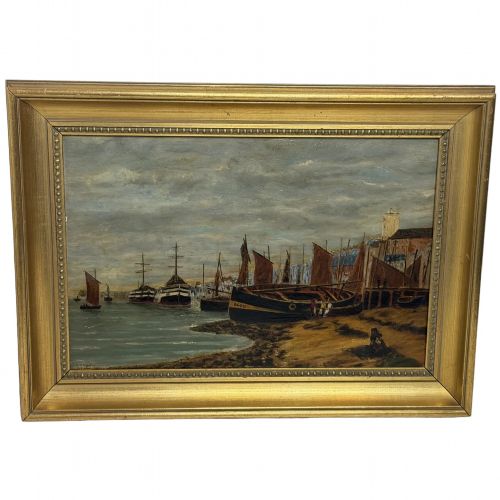
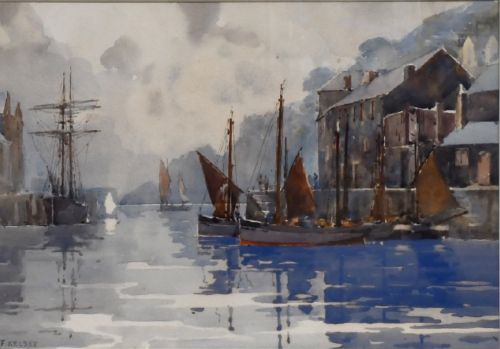
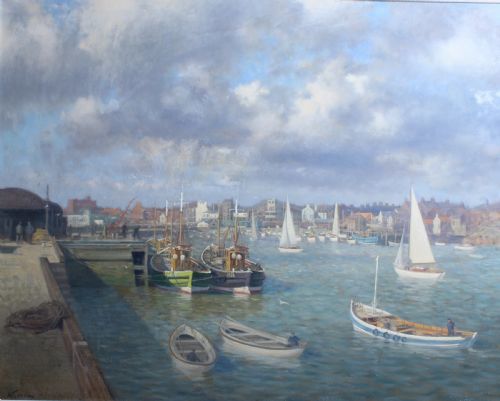

Coastal Harbour Seascape
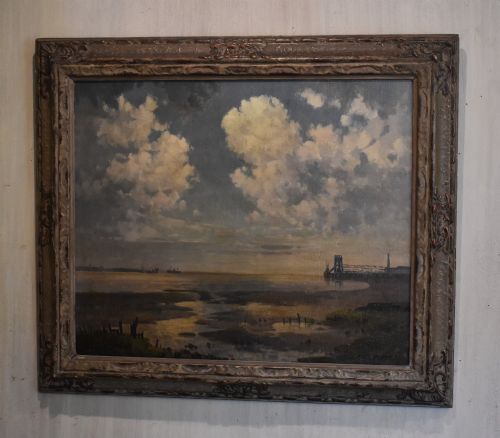
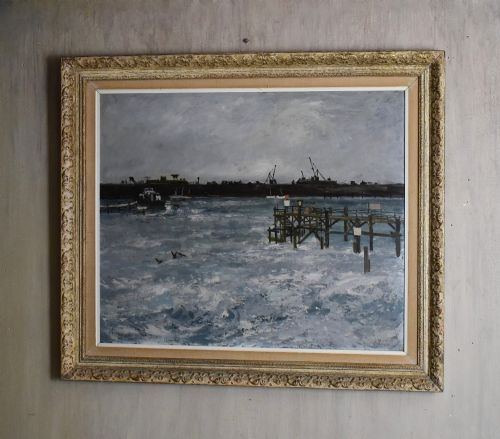
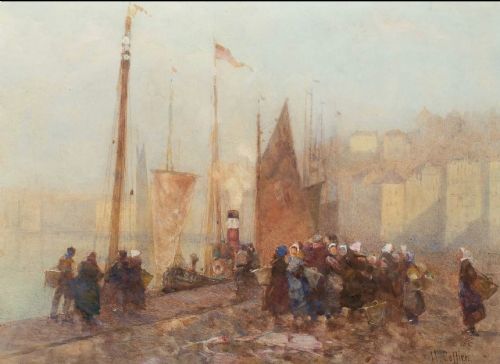
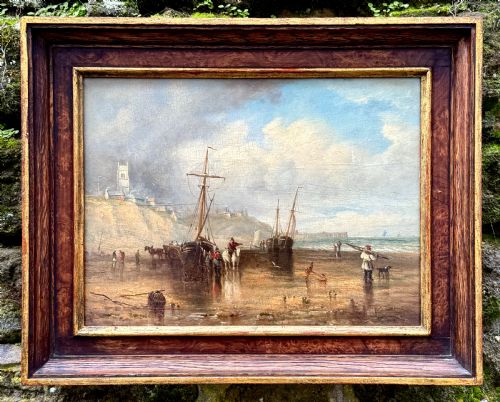
Coastal harbour seascape works capture maritime life and sheltered waters, bringing the atmosphere of bustling ports and quiet shores directly into a room.
Coastal Harbour Seascape
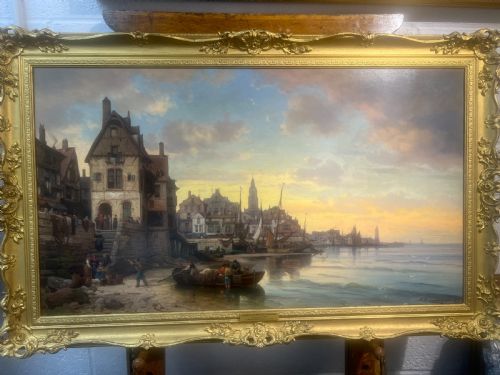
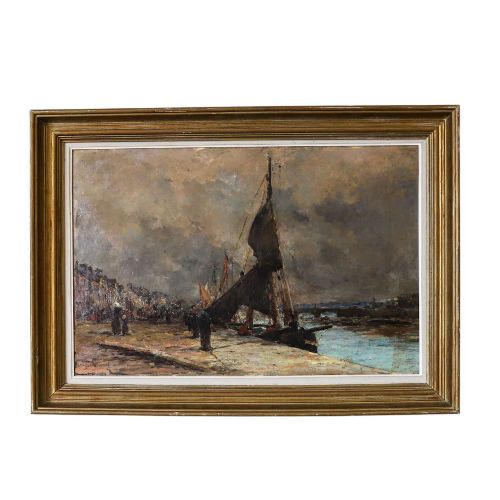
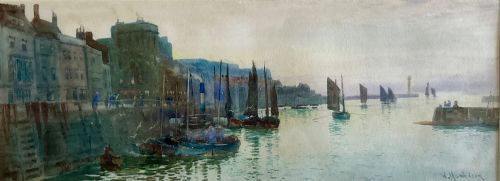
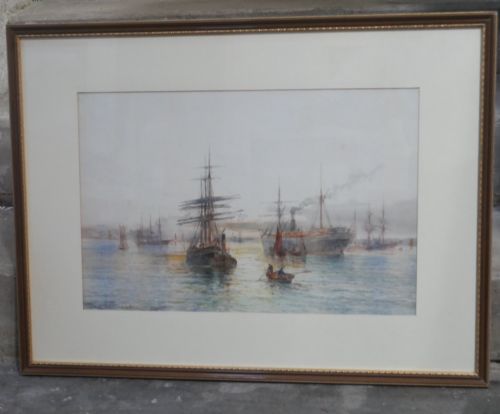
A coastal harbour seascape brings together the energy of maritime trade, fishing fleets, and coastal architecture within framed paintings.
The selections here span from the 18th century through the Victorian era into mid-20th-century interpretations, showing working boats, quaysides, and tidal estuaries.
Most examples originate from British and continental European artists working in oil or watercolour, recording specific locations from Cornwall to the Mediterranean.
Materials and methods
Painters relied primarily on oil paint applied to canvas or wood panel, or fluid watercolours brushed onto paper, often housed within gilt wood frames.
Artists built up coastal scenes using layered pigments to render shifting light on water, atmospheric haze over harbours, and the detailed rigging of vessels.
Represented periods span from the 18th century through the Victorian era into mid-20th-century post-impressionism.
Factors determining quality
Quality rests on the artist's handling of natural light and atmospheric depth, distinguishing a perceptive observation of a harbour from a formulaic commercial view.
The strength of the composition, the accurate depiction of maritime architecture and rigging, and the preservation of the original surface all elevate an individual work.
James Hardy·Kenneth Cozens·Edward Mills·William Banks Fortescue·Clive Browne·Peter Brannan·Hector Caffieri·Thomas Creswick·Charles Euphraisie Kuasseg·William Matthison·Frank Kelsey·Walter Goodin·Paul Delvaux·Lokre·William Edward Webb·Edward Matthew Elliott·Richard Harry Carter·Gyrth Russell·Jean-Baptiste Olive·Raymond Picque·William Lee Hankey·George Turland Goosey·Thomas Bush Hardy·Ernest Dade·Adrian Van Porten
The Coastal Harbour Seascape Glossary
- Seascape
- A work of art depicting the sea, coastal views, ships, or harbour activities.
- Watercolour
- A painting method where fine pigments are suspended in a water-based solution, typically applied to paper.
- Gilt wood
- Wood coated with a thin layer of gold leaf or gold-coloured finish, frequently used for traditional picture frames.
- Provenance
- The documented history of a piece, tracing its previous ownership and origin.
Coastal Harbour Seascape: Frequently Asked Questions
How do I identify the location in a painting?
Artists often inscribed the port or coastal village name directly onto the reverse of the canvas, the stretcher, or the original mount.
Matching architectural landmarks, lighthouse designs, or local vessel types depicted in the scene can also reveal the specific harbour.
Are watercolours as durable as oils?
Works on paper require careful protection from direct sunlight and excessive humidity to prevent fading and paper degradation over time.
When properly glazed and framed away from moisture, watercolours maintain their vibrant tones for generations.
What framing is appropriate for these works?
Many Victorian and early 20th-century pieces are found in their original gilt wood frames, which complement the tonal range of the painting.
Replacing a damaged period frame with a sympathetic traditional moulding helps preserve the historical context of the artwork.
How do I date a coastal painting?
Stylistic clues such as the clothing of figures on the quayside, the presence of steam vessels alongside sailing luggers, and artist signatures provide reliable chronological markers.
Examine the back of the panel or canvas for old exhibition labels, dealer stamps, or handwritten dates left by the creator.