


Coastal Cliff Seascape Painting
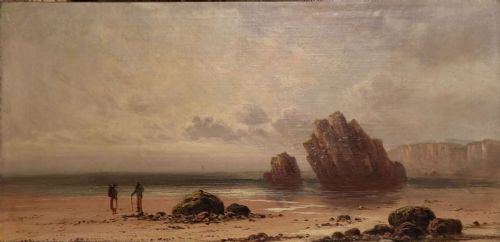
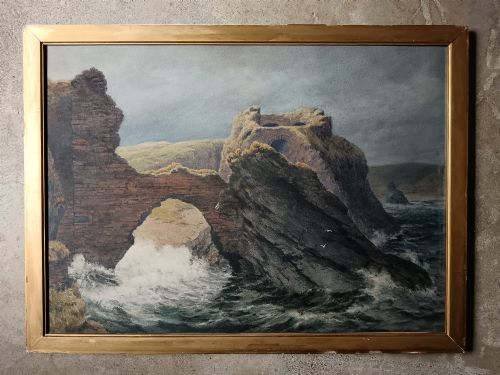
A coastal cliff seascape painting captures the rugged drama of shores and crashing waves, offering an enduring window into maritime topography.
Coastal Cliff Seascape Painting
A coastal cliff seascape painting depicts shoreline views dominated by dramatic rock formations, crashing tides, and maritime activity. These works range widely in geographic focus, spanning British coastal locations like the Isle of Man, Cornwall, and Devon, as well as continental shores such as the French Riviera.
The selections available here span from the nineteenth century into the mid-twentieth century, encompassing Victorian marine art and later impressionist interpretations. Buyers encounter varying scales, from intimate round watercolours to large oil compositions on canvas and board.
Many pieces anchor themselves in specific locations, recording named landmarks like Dunbar Castle, Hastings Castle, or the chalk cliffs at Beer. Others capture anonymous figures on rocky beaches, fishing boats near cliffs, and pleasure piers along the south coast.
Materials and methods
Artists record these maritime scenes using oil paint or watercolour pigment applied to canvas, wood panels, paper, and gesso. Oil paints on canvas or board provide heavy texture and depth for churning water and imposing cliff faces, while watercolour works on paper capture lighter atmospheric conditions.
Support materials vary by period, with traditional stretched canvas and wooden panels dominating nineteenth-century works. Later twentieth-century compositions continue these established traditions of applying oil and watercolour directly to prepared surfaces.
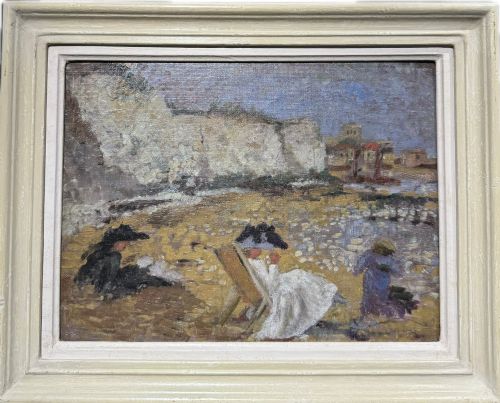
Several canvases faithfully record Victorian holidaymakers enjoying pebble beaches right beneath looming chalk cliffs.
Distinctions in quality
Quality rests upon the artist's command of light, atmosphere, and topographical accuracy when rendering complex coastal geology. Masterful handling of water movement and cliff illumination separates standard topographical records from compelling artistic achievements.
The precision of brushwork and the structural stability of the underlying canvas, wood, or paper support define the physical standing of each work. Contextual provenance, including documented attribution to named painters, elevates the significance of individual pieces.
John Moxon·Sir Thomas Newenham Dean·Stephen John Batchelder·Thomas Rose Miles·Joseph Newington Carter·Herbert James·William Edward Webb·Edward T Jones·George Marks·Alfred Egerton Cooper
The Coastal Cliff Seascape Painting Glossary
- Oil on canvas
- Pigment suspended in drying oil applied to a woven fabric stretched across a wooden frame. This combination allows for rich colour blending and textured impasto work.
- Watercolour
- Paint consisting of water-soluble pigment applied to paper surfaces. It yields translucent washes well suited to luminous skies and sea spray.
- Gesso
- A primer mixture consisting of a binder mixed with chalk, gypsum, or pigment. It prepares wooden boards or canvas surfaces to receive oil paint.
- Impressionism
- An art movement focusing on the visual impression of the moment, particularly shifting light and colour. Works in this style employ visible brushstrokes and unblended pigments.
Coastal Cliff Seascape Painting: Frequently Asked Questions
What subjects appear in these paintings?
These works primarily depict rocky coastlines, sea stacks, sandy or pebble beaches, and chalk cliffs. Many feature human elements, including fishermen, families, and sailing vessels.
Specific topographical landmarks, lighthouses, and Victorian pleasure piers also frequent the compositions, anchoring the marine views in recognisable coastal geography.
How do I care for these paintings?
Keep works away from direct sunlight and areas prone to high humidity to protect the paint and support materials. Canvas and paper are sensitive to drastic environmental shifts.
Dust surfaces gently with a soft, dry brush and avoid liquid cleaners. Framed works behind glass require careful handling to prevent moisture accumulation.
How can I tell the period of a painting?
Examine the materials, framing, and stylistic conventions visible in the brushwork. Nineteenth-century pieces often lean towards academic realism or Victorian marine art, whilst later works adopt impressionist tendencies.
Signatures, artist dates, and inscriptions on the reverse or frame frequently provide direct clues to the exact decade of creation.
Where were these coastal scenes painted?
The locations span diverse European shores, with a strong emphasis on British coastal regions such as Cornwall, Devon, Dorset, and Scotland. Some pieces extend further afield to continental destinations like the French Riviera.
Artists frequently set up along popular beaches, cliffs, and castle ruins to capture authentic maritime light and topographical details.