


Coastal Cliff Landscape
A coastal cliff landscape captures the raw edge of land and sea through the eyes of artists working from the nineteenth century into the mid-twentieth.
Coastal Cliff Landscape
A coastal cliff landscape brings together dramatic geological formations, crashing seas, and shoreline activities across a range of periods. Buyers seeking these pieces encounter works spanning the nineteenth century, Victorian era, Edwardian period, and twentieth-century decades up to nineteen fifty.
The selections on this page rely heavily on paintings, wall art, and fine art, with oil and watercolour serving as the primary mediums. Most examples portray specific British and French coastal locations, from Yorkshire and Cornwall to the Riviera and Normandy.
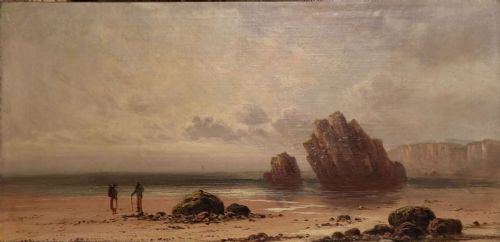
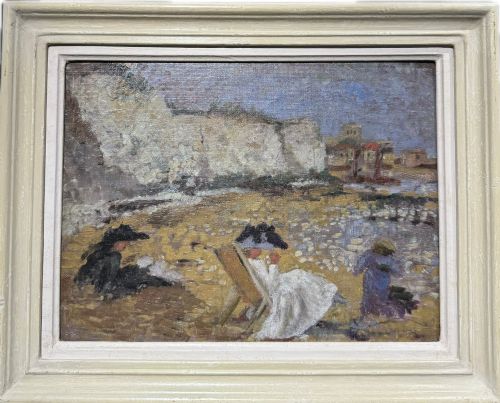
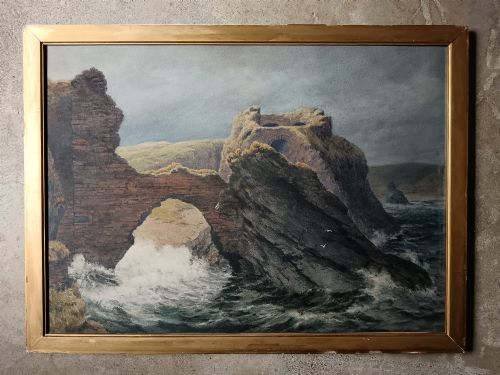
The forms vary from large exhibition-scale canvases to intimate framed watercolours on paper. Viewers frequently encounter figures on beaches, fishing boats, and historic structures such as castles and piers set against chalk cliffs and rocky shores.
Materials and techniques in the creation of these views
Artists captured these coastal scenes primarily through oil paint on canvas or board, and watercolour pigment applied to paper. Canvas provides a robust textured support that handles heavy oil applications for turbulent seas and rugged rock faces.
Watercolour allowed painters to record transient light and atmospheric marine weather quickly on paper. Wood also appears as a solid backing board for specific oil paintings from the early twentieth century.
Framing often preserves these works, utilising wood to protect the delicate edges of canvas and paper alike. Pigments deployed in these periods capture natural coastal light, from the bright chalk of Devon to the deeper tones of Scottish and Irish waters.
Materials documented in these listings include canvas, paper, wood, oil paint, and watercolour pigment across multiple decades.
Distinctions in quality across the range
Quality in a coastal cliff landscape rests upon the artist's ability to render light, atmosphere, and geological weight convincingly. Superior examples demonstrate confident handling of paint or pigment that conveys the moisture in sea air and the solid mass of stone.
Compositional strength separates standard topographical records from masterful artistic interpretations. Stronger pieces balance the vast scale of cliffs and ocean with human or architectural elements without losing the sense of place.
The depth of provenance and the specific identification of location add substance to individual works. Pieces executed by established regional artists or members of artistic bodies display a surer grasp of colour harmony and brushwork.
John Moxon·Sir Thomas Newenham Dean·Stephen John Batchelder·Thomas Rose Miles·William Edward Webb·Rowland Henry Hill·Charles Jones·Joseph William Carey·George Marks·Alfred Egerton Cooper
The Coastal Cliff Landscape Glossary
- Oil on Canvas
- A painting technique where oil paint is applied to a stretched woven fabric support. This method permits rich blending and textured impasto, particularly suited to depicting churning waves.
- Watercolour
- A paint consisting of colour pigments suspended in a water-soluble vehicle, typically applied to paper. It allows for translucent washes that capture the pale light of coastal skies.
- Sea Stack
- A geological landform consisting of a steep and often vertical column or columns of rock in the sea. Artists frequently used these dramatic formations to anchor the composition of a coastal scene.
- Post-Impressionism
- An art movement developing roughly from the eighteen eighties that extended impressionism while rejecting its limitations. Works in this style emphasise symbolic content and expressive use of paint.
- Victorian Marine
- A genre of painting focused primarily on ships, shipping, and coastal views produced during the reign of Queen Victoria. These works often combine topographical accuracy with dramatic sea conditions.
Coastal Cliff Landscape: Frequently Asked Questions
What periods do these coastal paintings represent?
The works span from the nineteenth century through the Victorian and Edwardian eras into the nineteen twenties and nineteen fifties. This timeline reflects shifting artistic movements including realism, impressionism, and post-impressionism.
Creators utilised traditional oil and watercolour mediums across these decades to document changing British and European seaside environments.
Where are most of these locations situated?
Depicted sites focus heavily on British coasts, including Yorkshire, Cornwall, Norfolk, Dorset, and the Isle of Man. French coastal locations such as Normandy and the Riviera also appear frequently.
Artists often recorded specific regional landmarks like castles, piers, and chalk cliffs that defined these coastal destinations.
How should I care for antique watercolours?
Watercolours on paper require protection from direct sunlight to prevent fading of the delicate pigments. Framing under appropriate glass with acid-free mounts safeguards the paper from environmental moisture and damage.
Displaying these works in rooms with stable temperature and humidity levels ensures their preservation over time.
How can I distinguish oil paintings from watercolours?
Oil paintings feature a heavier, sometimes textured surface on canvas or wood panels where pigments sit with visible body. Watercolours present a flatter appearance on paper, often showing the texture of the sheet through translucent washes.
Oils generally require no protective glass cover, whereas watercolours must be glazed to protect the paper surface.