


Muted Brown Watercolour Artwork
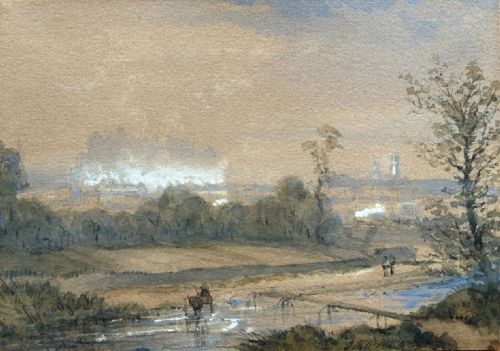
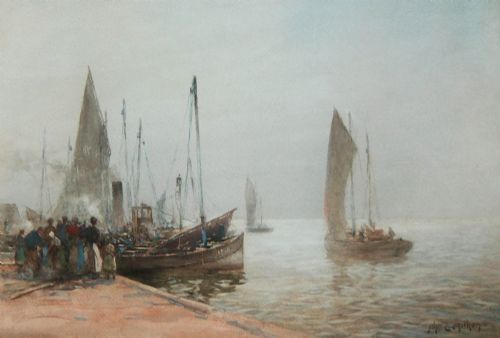
These pieces of muted brown watercolour artwork offer a glimpse into British and European scenes through pigment on paper.
Muted Brown Watercolour Artwork
Muted brown watercolour artwork brings together landscape paintings, architectural views and figurative compositions created across the nineteenth and twentieth centuries. When exploring muted brown watercolour artwork, you encounter original paintings executed on paper using watercolour pigment and watercolour paint.
The selections span periods including the Victorian era, the Edwardian period, and mid-century movements, reflecting British Impressionism and the twentieth-century British school. Most examples capture topographical locations, coastal harbours, and rural settlements across Britain and Europe.
Materials and technique
Artists applied watercolour paint and pigment directly onto paper surfaces, often framing the finished compositions behind glass and within wood surrounds. The technique relies on water-soluble pigments diluted to achieve subtle washes, tonal depth, and delicate monochromatic or earthy palettes.
Support materials primarily consist of paper sheets housed in traditional frames, preserving the fragile pigment layers from environmental moisture and light degradation over decades.
Listings feature works spanning the nineteenth century, Victorian period, and twentieth century, executed on paper using watercolour.
Assessing the works
Quality rests upon the artist's handling of tone, light, and perspective within the watercolour medium, where fluid brushwork creates depth and atmosphere. Superior examples demonstrate confident draughtsmanship and careful composition, particularly in complex architectural or maritime subjects.
The condition of the paper support and the stability of the pigment layer further distinguish individual paintings, alongside the original integrity of the framing materials.
James E. Aitken·Fred Lawson·Sir Thomas Newenham Dean·Ernest Pile Bucknall·Henry Charles Fox·Edmund Morris Wimperis·Fred Mayor·Edward Killingworth Johnson·George Graham·William Collins·Arthur Netherwood·Maurice Asselin·William A. Macdonald·William Stephen Coleman·Cuthbert Crossley·George Goodwin Kilburne·Matthew Hale·Charles Edward Wilson·Angus Rands·John Joseph Cotman
The Muted Brown Watercolour Artwork Glossary
- Watercolour paint
- A medium consisting of colour pigments suspended in a water-soluble binder, applied to paper to create translucent layers of colour.
- Impressionism
- An art movement focusing on accurate depiction of light in its changing qualities, visible in several British landscape pieces on this page.
- Pigment
- The finely ground natural or synthetic coloured powder that forms the base of the watercolour medium before mixing with water.
- Topographical
- A style of painting that accurately records specific geographical locations, buildings, towns, or natural landscapes.
Muted Brown Watercolour Artwork: Frequently Asked Questions
How should I frame these paintings?
Protect the paper surface by using professional conservation framing with acid-free mounts and glass to block ultraviolet light.
Keep the artworks away from direct sunlight and damp environments to prevent fading and paper degradation.
What periods do these pieces represent?
The works span from the mid-nineteenth century through the Victorian and Edwardian eras into the mid-twentieth century.
Styles range from traditional British landscape painting to impressionist interpretations of rural and urban scenes.
Are these paintings original?
Every listed item is an original work on paper created directly by the artist rather than a modern reproduction.
Signatures, dates, and historical framing often provide additional provenance for individual pieces.
Where were these scenes painted?
Locations include British towns, Scottish landscapes, Yorkshire dales, coastal harbours, and European village scenes.
Artists frequently travelled to specific regions to capture local architecture, waterways, and rural life.