




Green Coastal Landscape Art
Green coastal landscape art brings the grey-green waters and headlands of Britain onto canvas and paper through nineteenth and twentieth-century brushwork.
Green Coastal Landscape Art
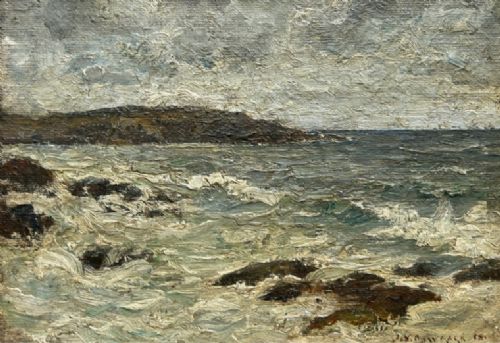
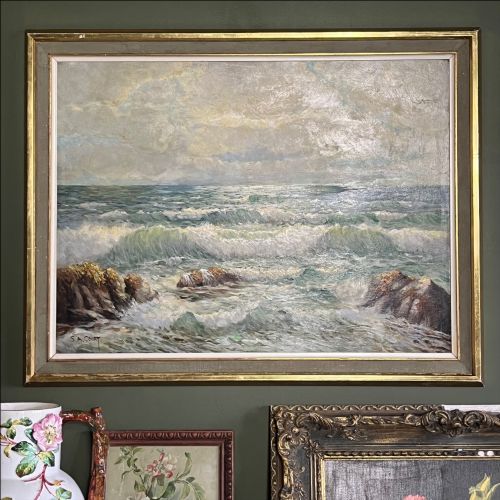
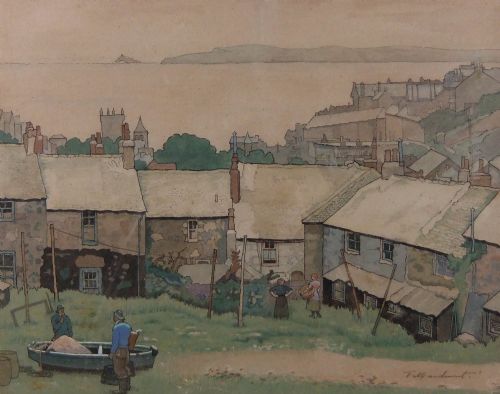
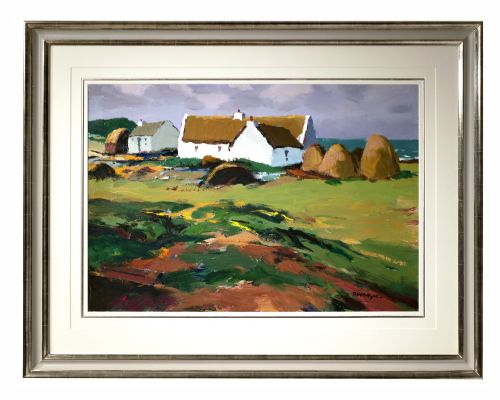
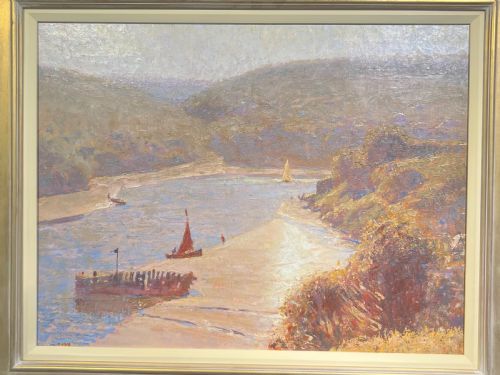
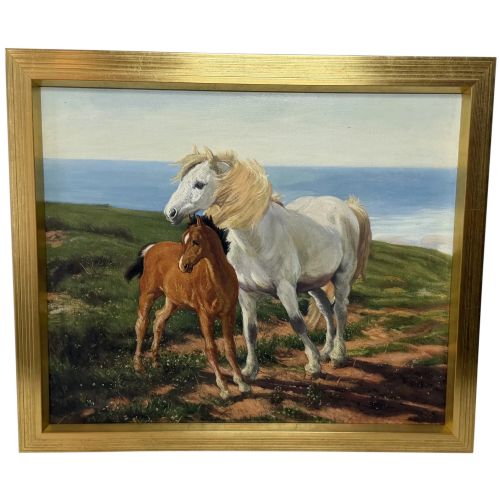
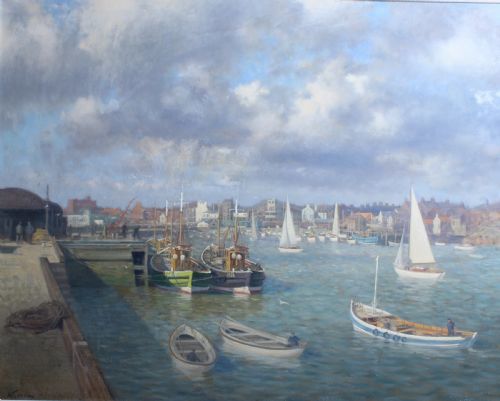
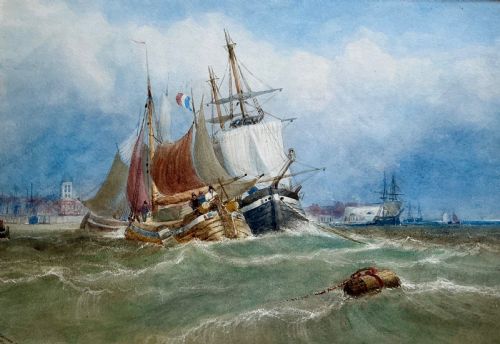
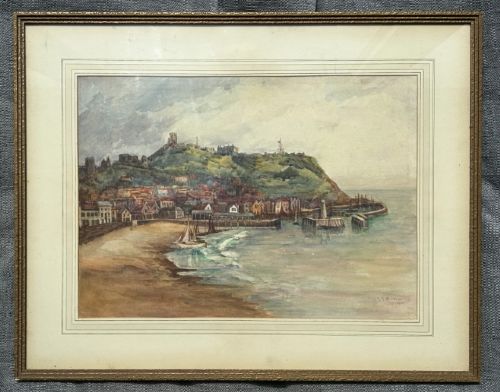
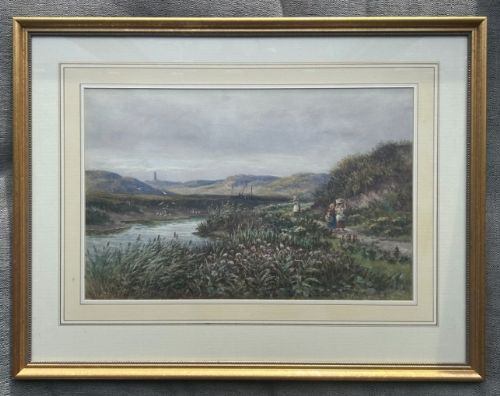
Green coastal landscape art spans nineteenth-century watercolours and mid-century oils depicting British shores, harbours, and estuaries. The watercolours offer soft washes of northern bays, while the oils capture heavier impasto textures along cliffs and coves.
Buyers meet works originating from regions such as Yorkshire, Cornwall, and Dorset, created across periods ranging from the late Victorian era through to the nineteen-sixties. These pieces document maritime settlements and sweeping shorelines through the eyes of regional British painters.
The dominant forms on this page include framed oil paintings on canvas or board alongside traditional paper watercolours. They reflect schools like British Impressionism and Modern British art, recording open-air studies of the coast.
How They Were Made
Artists utilised oil paint on canvas, panel, or board, applying thick impasto or thin glazes to build up coastal light and shadow. Watercolours on paper capture luminous skies and sea spray through translucent washes applied en plein air.
Supports range from heavy wood panels and stretched canvas to textured paper, housed in period wood frames that complement the palette. Pigments rely on earth tones, muted greens, and slate greys mixed to render the British seaside.
Listings feature works from the nineteenth century through the nineteen-sixties, utilising oil and watercolour on paper, canvas, and board.
What Varies in Quality
Quality rests in the sureness of the brushwork and the artist's command of atmospheric light over water and land. Stronger pieces convey the salt air and movement of the tide with economy and precision.
Condition of the pigment and the originality of the mounting play a role in distinguishing finer examples. Works retaining their untouched surface and period framing hold greater visual authority.
Sidney A. Court·Thomas Maidment·Donald McIntyre·Henry Barlow Carter·Joseph Edward Hennah·Helen Layfield Bradley·James Fry·William J B Jenkins·Frank Wood·John Hobson Nicholson·Frederick Williamson·Gudrun Sibbons·William Lambert Bell·William Tatton Winter·Walter Henry Sweet·James Watson·Frank Rousse·William Sidney Cooper·GM de L'Aubiniere
The Green Coastal Landscape Art Glossary
- Impasto
- Paint applied thickly to a canvas or board so that it stands proud of the surface. This technique leaves visible brush or palette knife marks that catch the light.
- En plein air
- Painting outdoors in direct contact with the subject matter. Artists take their easels to the cliffs and harbours to capture changing light conditions.
- Wash
- A thin, semi-transparent layer of watercolour pigment applied to paper. It creates luminous skies and glassy expanses of water.
- Board
- A rigid wooden or composition support used instead of stretched canvas. Painters often favoured it for smaller outdoor sketches.
- Provenance
- The documented history of ownership attached to a painting. It helps trace the exhibition record and verifies the origin of the work.
Green Coastal Landscape Art: Frequently Asked Questions
How do I date these coastal paintings?
Stylistic clues, framing methods, and artist signatures help narrow down the decade of creation. Records of active exhibition periods provide further confirmation for nineteenth and twentieth-century works.
Changes in painting technique from Victorian detail to mid-century looseness also point to specific eras. Comparing handling styles with known dated works clarifies the timeline.
Were these painted outdoors?
Many works on paper and board were executed en plein air directly on the beach or cliff top. Artists captured immediate weather conditions before returning to the studio.
Larger canvases often involved initial outdoor oil sketches developed into finished compositions indoors. Both approaches prioritized direct observation of the British coastline.
How should I frame an antique watercolour?
Watercolours require conservation framing with acid-free mounts to prevent paper degradation over time. Glazing protects the delicate pigments from atmospheric moisture and ultra-violet light.
Retaining period gilt or wood frames adds historical context provided the structure remains sound. Simple mouldings often suit the minimalist aesthetic of mid-century pieces.
What subjects appear in these scenes?
Harbours, fishing boats, rocky coves, and sweeping estuaries dominate the topographical record across these regions. Views focus heavily on working ports in Yorkshire, Cornwall, and Dorset.
Human figures occasionally populate the foreground near cottages or slipways, adding scale to the landscape. Marine traffic and coastal cliffs remain the central focus throughout.