


Coastal Canvas Wall Art
Coastal canvas wall art brings maritime atmosphere and seaside scenes into a room through historic oil paintings.
Coastal Canvas Wall Art
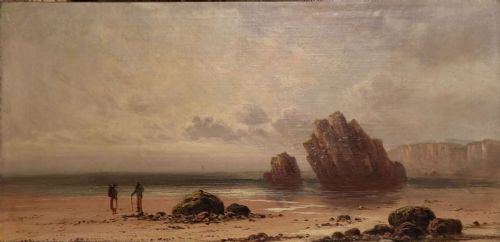
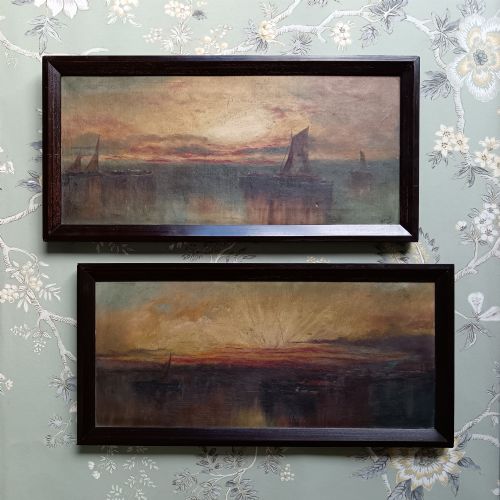
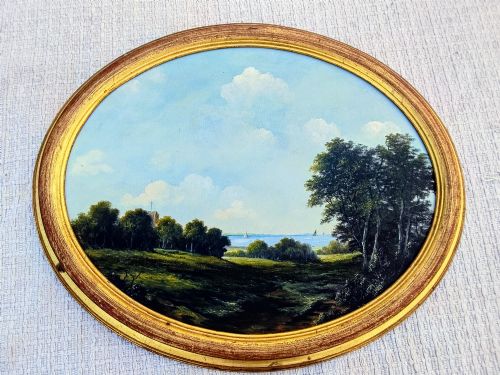
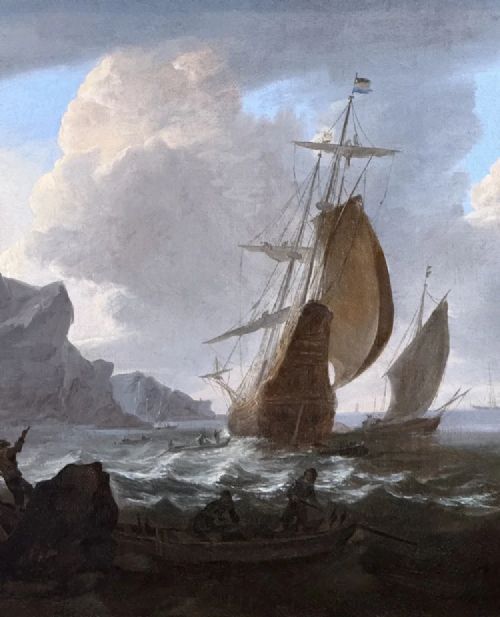
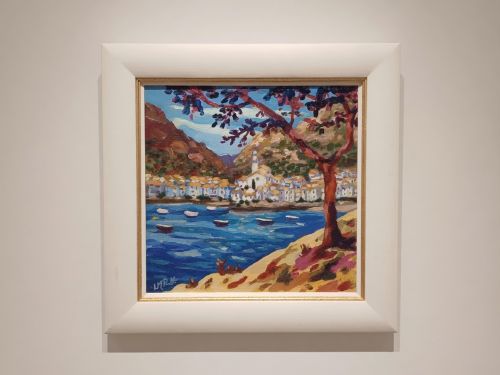
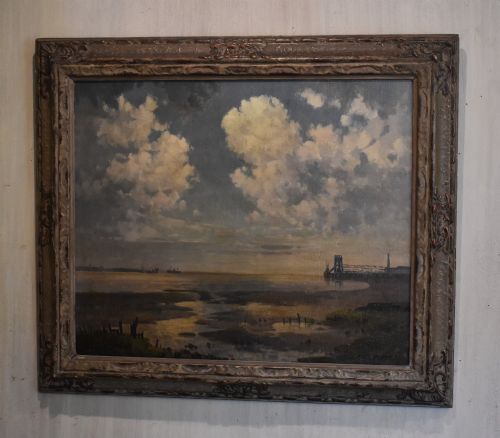
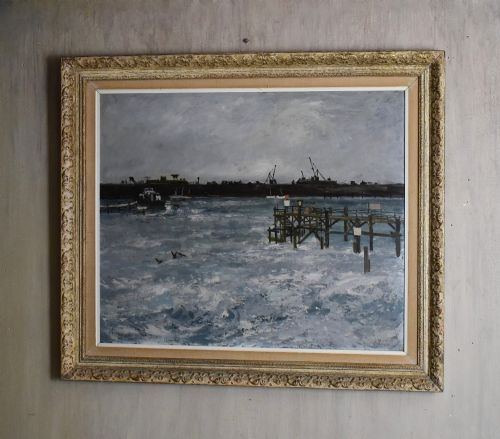
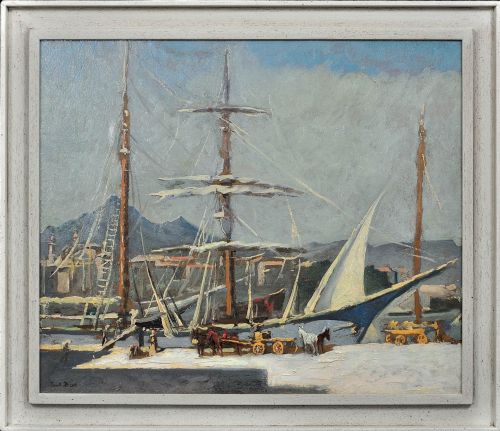
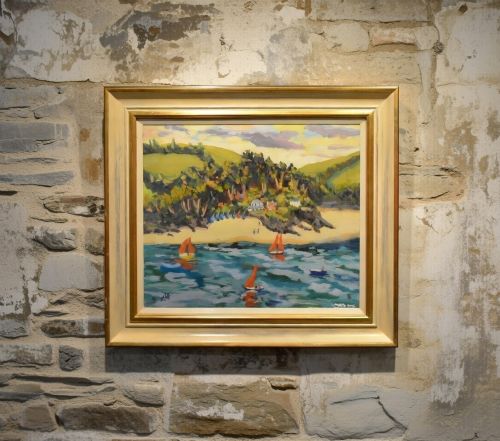
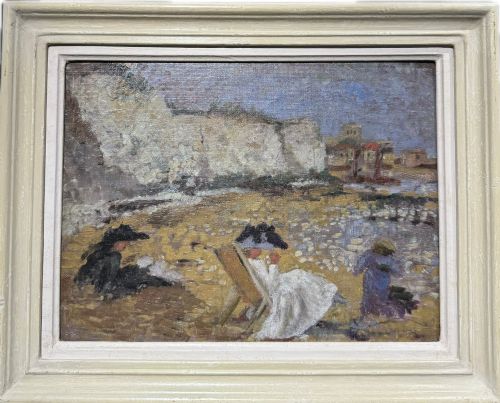
Buyers searching for coastal canvas wall art examine framed oil paintings depicting harbours, shorelines, and maritime activity. The selection spans the nineteenth century through the mid twentieth century, featuring British and European coastal views.
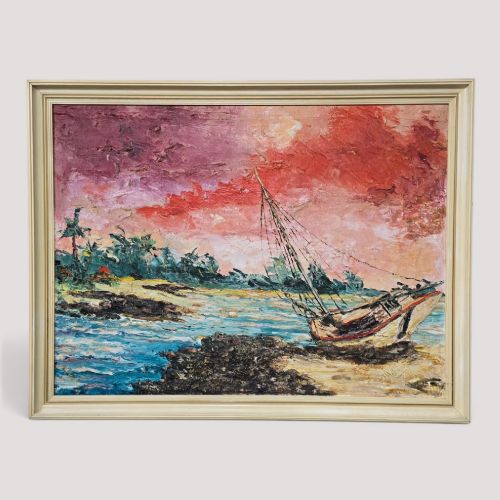
Most examples take the form of traditional oil paintings on canvas or board, created within artistic movements such as British Impressionism, Victorian marine art, and Post-Impressionism.
How they were made
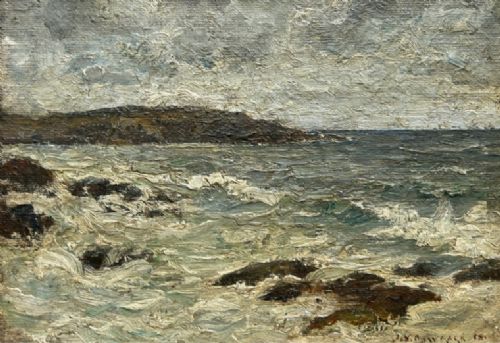
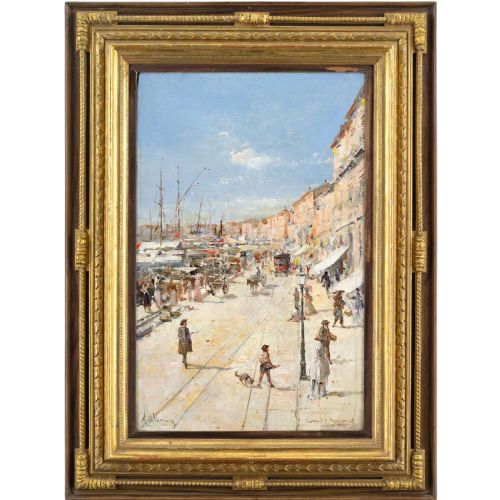
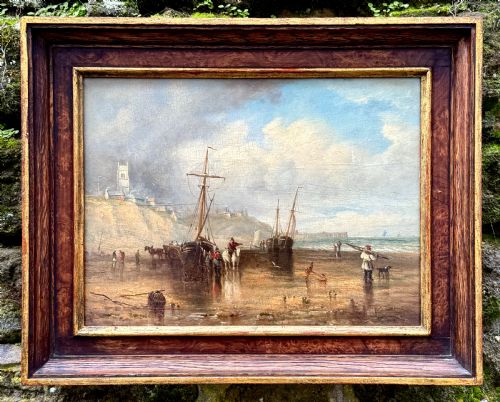
Makers applied oil paint to stretched canvas or prepared wooden boards, often building texture with thick impasto brushwork. Canvases sat within wooden frames, occasionally accented with gilt wood details.
Artists captured natural light and coastal atmosphere using layered oil pigments, combining detailed brushwork with broader strokes to depict water, sky, and rocky shores.
Several canvases capture smugglers with horses on coastal paths alongside peaceful harbour scenes.
What varies in quality
Quality rests in the artist's handling of light, atmosphere, and composition, distinguishing ambitious marine paintings from standard decorative views. Stronger pieces display assured brushwork and accurate perspective in rendering water and vessels.
The integration of the original frame and the preservation of the paint surface also influence the standing of a piece, as does the documented provenance of the painter.
Bonaventura Peeters·John Wilson Carmichael·Abraham Hulk I·Charles Napier Hemy
The Coastal Canvas Wall Art Glossary
- Impasto
- Paint applied thickly to a canvas or board, standing out in relief from the surface and catching natural light. This technique adds tactile depth to depictions of rough seas and rocky cliffs.
- Marine art
- Painting that focuses significantly on ships, harbours, coastal views, and the sea. The genre holds a long tradition within British and European art.
- Gilt wood
- Wood carved and coated with gold leaf or a gold-coloured finish, commonly used for historical picture frames. It provides a decorative border that complements oil paintings.
- Board
- A rigid flat panel used as a support for painting in place of stretched canvas. Artists often utilised wooden or composite boards for smaller outdoor studies.
Coastal Canvas Wall Art: Frequently Asked Questions
How do I hang a heavy oil painting?
Heavy framed oil paintings require secure picture hooks fixed directly into wall studs or masonry using appropriate rawlplugs. Steel picture wire attached firmly to the wooden stretcher frame supports the weight safely.
Position the art at eye level to ensure the maritime scene is viewed correctly. Avoid hanging canvases in areas prone to dampness or direct sunlight.
How do I identify the period of a painting?
The period of a work is identified through the stretcher construction, canvas type, frame style, and the artist's working dates. Signatures, inscriptions on the reverse, and exhibition labels offer further chronological evidence.
Stylistic markers, such as the brushwork typical of Victorian marine art or mid-century impressionism, also help date the artwork accurately.
Can I display these paintings in bright rooms?
Direct sunlight causes oil paint and canvas to degrade over time, leading to fading or varnish yellowing. Position pieces away from south-facing windows or harsh, direct heat sources.
Stable indoor temperatures protect both the canvas support and the wooden frame from warping or cracking. Indirect ambient lighting highlights the texture of the oil paint safely.