




Original Sailing Boat Oil
Original sailing boat oil paintings capture maritime scenes on canvas and board, offering buyers a window into historic waters and coastal craftsmanship.
Original Sailing Boat Oil
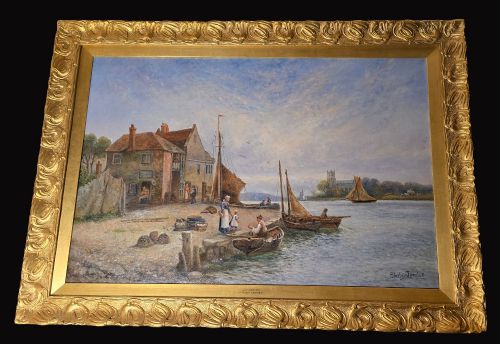
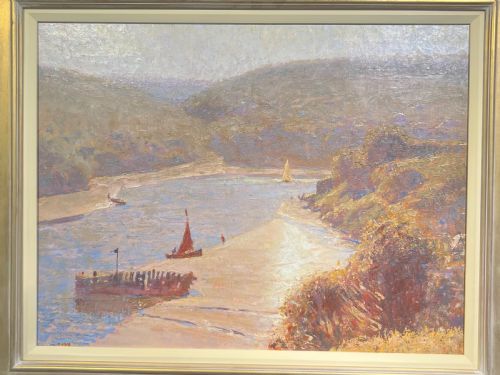
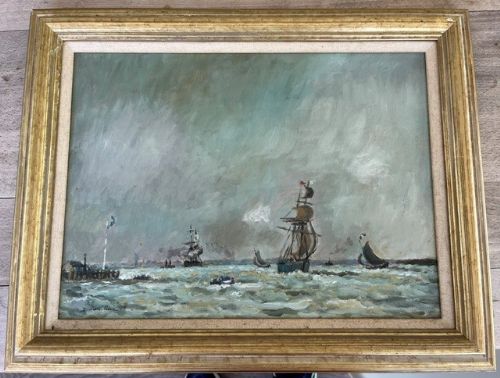
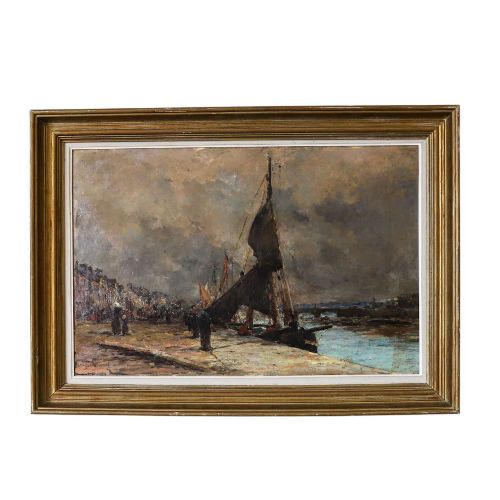
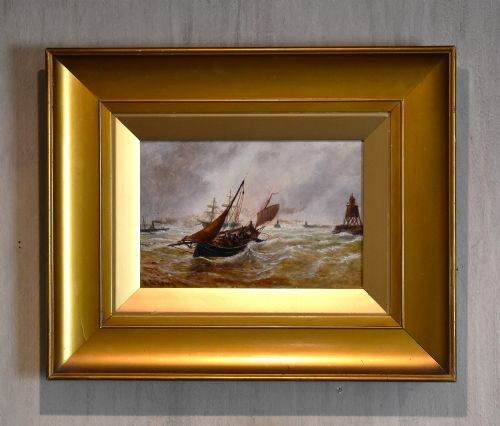
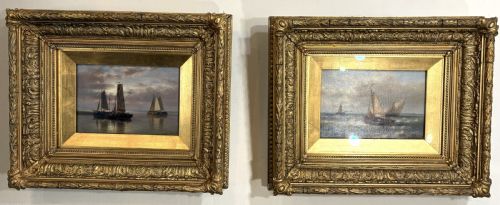
When you search for original sailing boat oil oil paintings, you are looking at maritime art spanning from the nineteenth century through the mid-twentieth century. The most common pieces on this page are nineteenth-century marine scenes and twentieth-century works on board or canvas, capturing harbours, coastal views, and open waters.
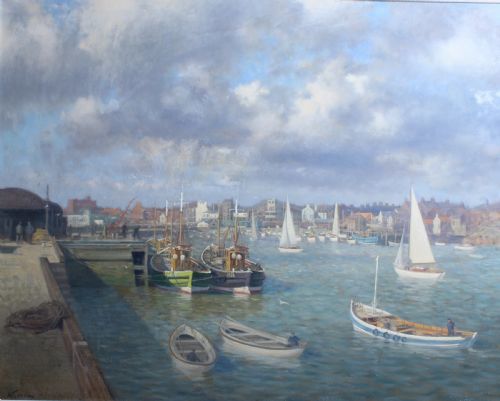
These works range from detailed Victorian maritime compositions to impressionist and modernist interpretations by British and continental European artists. Subjects frequently feature Thames barges, fishing vessels, and leisure yachts navigating coastal waters or docked in busy harbours.
Materials and techniques
The primary supports recorded in these listings are canvas, wooden board, and card, painted primarily with traditional oil paint. Artists built up texture and depth using layered oil pigments to render the movement of water, stormy seas, and atmospheric skies.
Many surviving examples are housed in their period gilt wood or giltwood frames, which complement the maritime subject matter and protect the edges of the canvas or board.
Original Sailing Boat Oil Retail Price Guide 2026
Typical asking prices for original sailing boat oil among the pieces listed under this phrase on Sellingantiques today, from the lower quarter to the upper quarter. They describe what is for sale here now, not the wider market.
Canvas meets salty sea air as artists chase light across stormy waves and quiet riverways.
Evaluating quality and execution
Quality in these maritime works rests on the artist's ability to handle light, water, and vessel perspective convincingly. Finer pieces demonstrate confident brushwork and accurate nautical detail, whether depicting the rigging of a galleon or the loose impression of a mid-century river sailing boat.
The condition of the pigment and the integrity of the original support also distinguish works, alongside the craftsmanship and original gilding of the surrounding frame.
Cecil Allan Mould RI·Bernard Benedict Hemy·Walter Goodin·Abraham Hulk I·Charles Napier Hemy·Adrian Van Porten·Edward Henry Eugene Fletcher·Edward Seago·Frank Myers Boggs·William Edward Webb·Maurice Sijs·Sam Barnes Robson
The Original Sailing Boat Oil Glossary
- Canvas
- A heavy woven fabric used as a surface for oil painting. It is stretched over a wooden frame to provide a stable ground for the artist.
- Gilt wood
- Wood that has been treated with a thin layer of gold leaf or metallic gilt. It is commonly found on traditional frames enclosing nineteenth-century marine art.
- Impressionism
- An art style focused on accurate depiction of light and its shifting qualities. In marine painting, this approach captures the transient effects of sun and wind on water.
- Seascape
- A work of art depicting the sea, coast, or marine vessels. These compositions range from calm harbour scenes to dramatic storms.
Original Sailing Boat Oil: Frequently Asked Questions
How do I care for an oil painting on canvas?
Keep the artwork away from direct sunlight and fluctuating humidity levels to protect the canvas and oil pigments from cracking.
Dust the surface gently with a soft, dry brush and avoid using liquid cleaners on either the painting or the frame.
Are these paintings supplied with frames?
Many listings include period gilt wood frames that complement the age and style of the maritime artwork.
Check individual descriptions to confirm whether the specific piece retains its original period framing.
How can I tell the date of a marine painting?
Dating relies on stylistic evidence, such as the transition from Victorian maritime realism to mid-century impressionism, alongside artist signatures and exhibition records.
Materials such as board versus stretched canvas can also provide clues regarding the period of production.
What is the difference between an oil on canvas and an oil on board?
Oil on canvas involves pigment applied to a woven textile stretched across a wooden framework, offering slight flexibility.
Oil on board uses a rigid wooden panel or card as the base, which was a popular support for plein air sketching and twentieth-century works.