
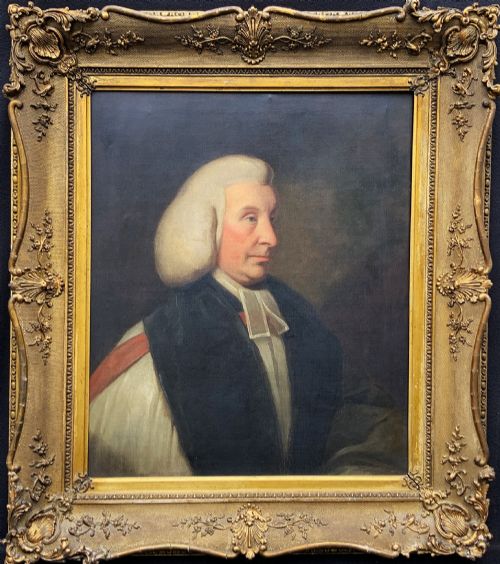


Clergyman Portrait Painting
These clergyman portrait painting works capture centuries of clerical dignity on canvas and paper, offering a direct window into ecclesiastical history.
Clergyman Portrait Painting
A clergyman portrait painting depicts ministers, rectors, bishops and deacons from the seventeenth century through to the Victorian era. These works record the likenesses of named divines such as Reverend Paul White and Bishop Robert Frampton alongside anonymous clerics.
The material record spans the seventeenth century, eighteenth century and nineteenth century, with Georgian and Victorian periods well represented. Oil paintings dominate the selection, executed on canvas within traditional frames.
Most pieces show bust or half-length figures dressed in clerical bands, cassocks or robes. They range from works by known practitioners to unattributed British School studies.
Materials and methods
Artists worked primarily in oil paint applied to woven canvas supports, building up rich dark tones and facial details. Watercolour on paper appears in later Victorian examples.
Many works are housed in period frames constructed from wood and finished with gesso and gilt, providing structural housing that complements the painted surface.
Listings feature works spanning the seventeenth century through to the Victorian era, executed in oil on canvas and watercolour.
Assessing quality
Quality rests upon the artist's ability to render facial expression, bone structure and the texture of clerical vestments with psychological depth. Stronger works capture individual character rather than relying on generic formulas.
The preservation of the paint surface and the originality of the accompanying frame contribute significantly to the standing of any given piece.
Pieter Van Bleeck·Eden Upton Eddis·James Ward·Edward Penny
The Clergyman Portrait Painting Glossary
- Canvas
- A heavy woven fabric stretched across a wooden frame to serve as a support for oil painting. It forms the primary base for the seventeenth and eighteenth-century works found here.
- Gesso
- A plaster-like mixture applied to wooden frames before gilding to create a smooth surface for moulding. It is commonly found on the period frames enclosing these canvases.
- Oil Paint
- Pigment mixed with a drying oil such as linseed, allowing for smooth blending and deep tonal graduation. It remains the defining medium for the painted portraits in this category.
- Watercolour
- A paint consisting of pigment suspended in a water-based solution, applied to paper. This medium appears in nineteenth-century examples within the selection.
- Pinxit
- A Latin term meaning he painted it, historically inscribed by the artist alongside their signature on the canvas. It appears on seventeenth-century documentation within these records.
Clergyman Portrait Painting: Frequently Asked Questions
How do I date a clergyman portrait painting?
Dating relies upon costume details such as the shape of clerical bands and wigs, alongside framing styles and any visible inscriptions on the canvas.
Comparison with documented sitters and known active dates of the artist or school further narrows the period of creation.
Were these portraits painted from life?
Many formal portraits were commissioned directly by parishes, colleges or families while the clergyman was living, often recording significant milestones.
Some later or posthumous works drew from earlier visual records or memorial commissions rather than direct sitting sessions.
How should I display an oil painting on canvas?
Keep the piece away from direct sunlight and steady the room against extreme fluctuations in humidity and temperature to protect the canvas and paint layers.
Ensure the hanging wall is structurally sound to support the weight of both the canvas frame and any heavy gilt wood surround.
What do clerical bands signify in these portraits?
Clerical bands are the two pieces of white linen worn at the collar, serving as a standard mark of clerical dress for ministers and scholars across centuries.
Their exact shape and prominence can help indicate the decade and ecclesiastical tradition of the sitter.