
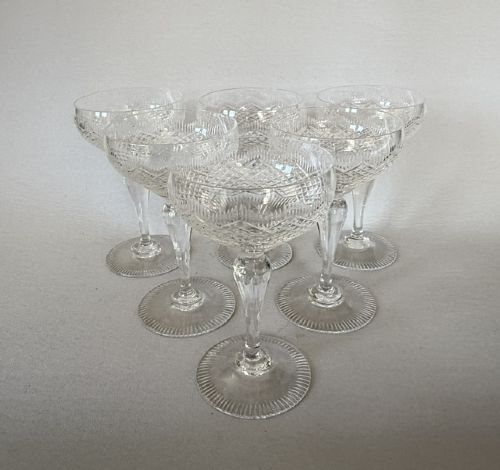
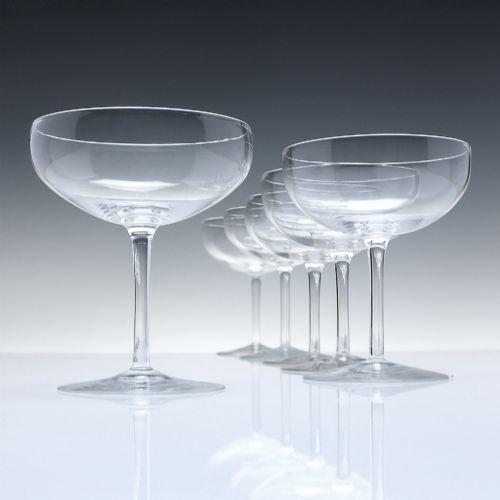
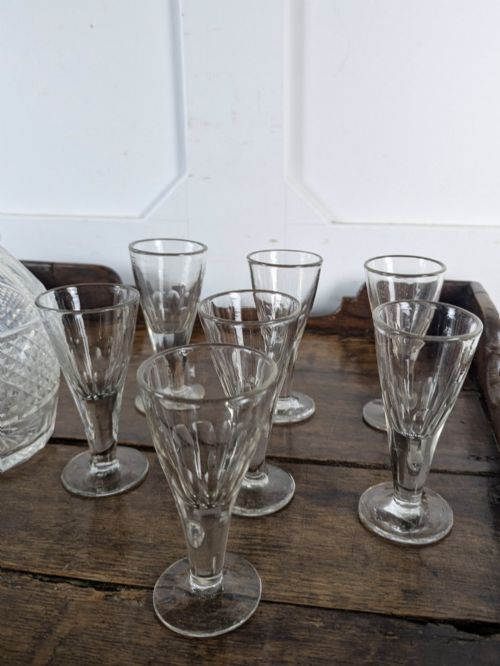
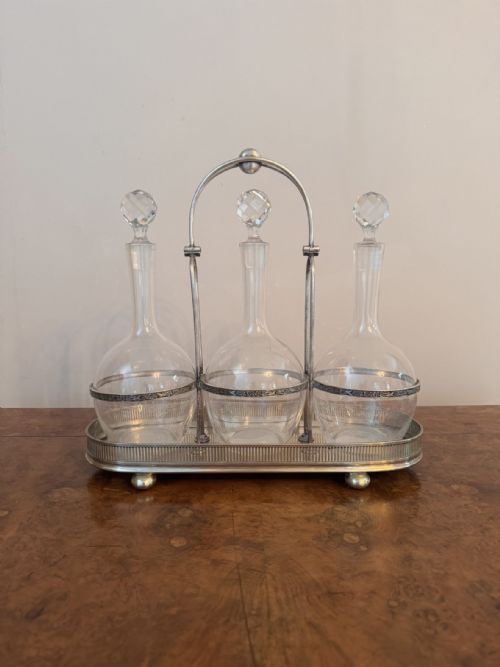


Clear Glassware Set
These grouped pieces of clear glassware set out tables across centuries, offering practical drinking vessels shaped by changing tastes.
Clear Glassware Set
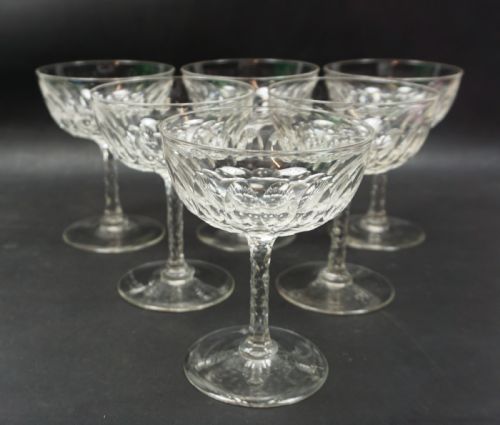
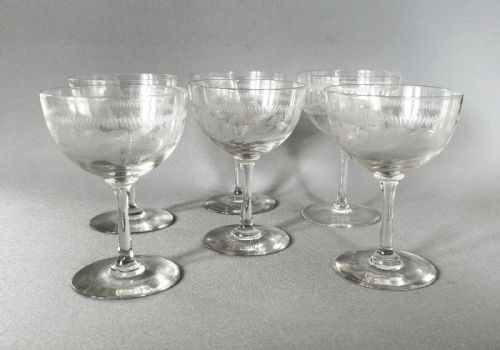
A clear glassware set brings together matching or harmonised drinking vessels, decanters and serving pieces intended for social dining and entertaining. When searching for this phrase, expect to encounter groupings ranging from compact sets of six wine glasses or champagne coupes to larger suites of table glass.
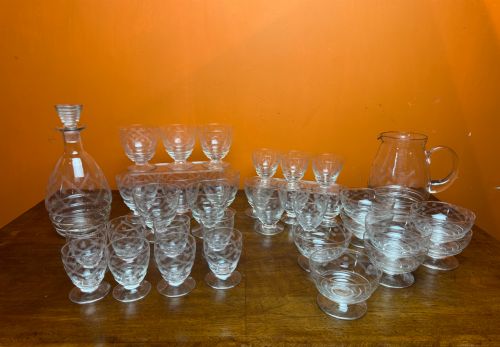
The selections span distinct periods from the Georgian era through Victorian and Edwardian services up to French and Czech Art Deco designs. Common forms include tumblers, rummers, cordials, finger bowls and decanter sets complete with matching trays or stands.
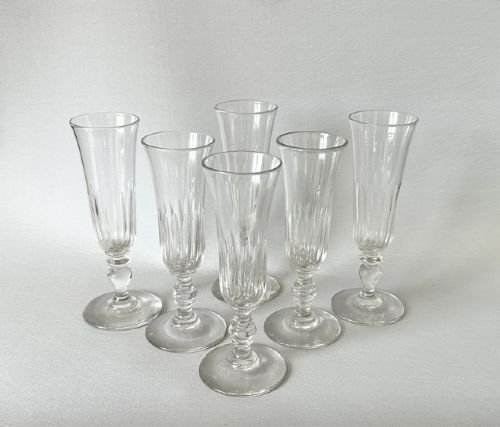
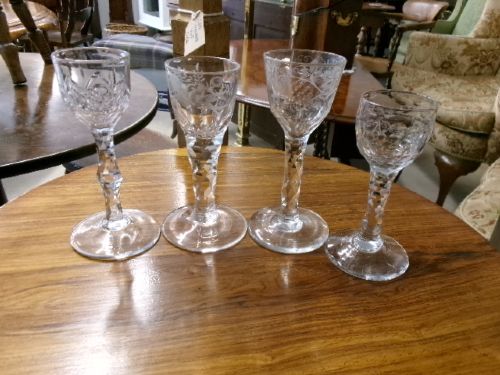
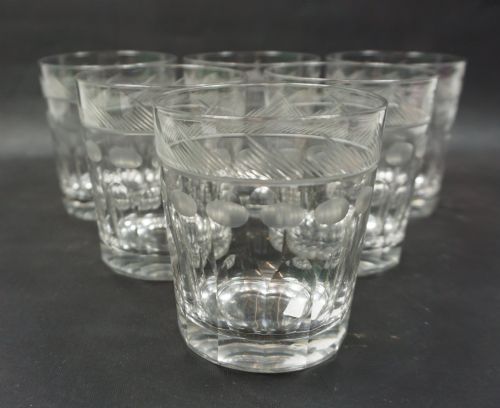
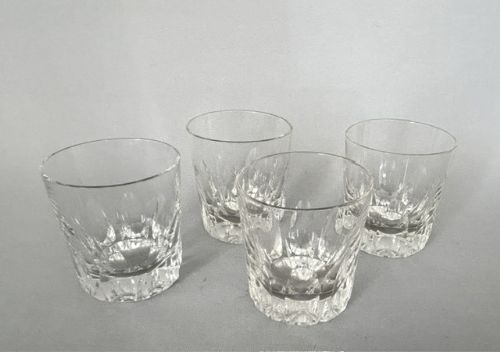
Victorian and Edwardian examples dominate the offerings, often featuring matched sets of champagne flutes, dessert wines or whisky tumblers. Earlier Georgian pieces tend to appear in smaller groupings of rummers, jelly glasses or faceted stemmed drinking vessels.
Materials and Techniques
Makers utilised clear glass, crystal and lead crystal, shaping pieces through free-blowing, optical blowing and mould-blowing techniques. Lead crystal added weight and refractive brilliance, allowing makers to achieve sharper profiles during subsequent surface work.
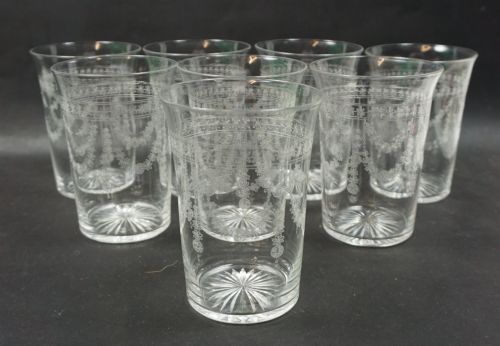
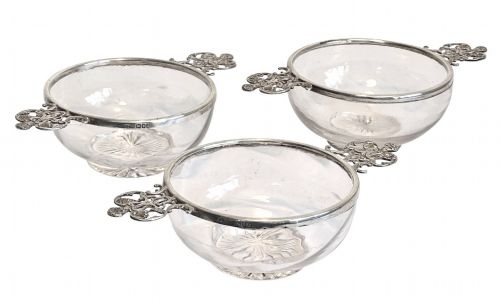
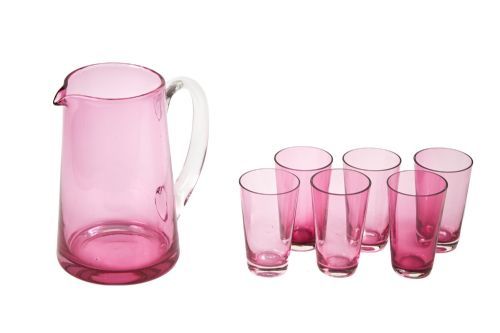
Surface ornamentation relied heavily on wheel-cutting, facet-cutting and thumb-cuts, alongside acid-etching and intaglio engraving. Certain continental and Victorian productions incorporated applied enamel decoration, silver mountings or flashed coloured glass such as cranberry and amethyst.
Object forms range from complete decanter sets and champagne coupes to finger bowls, custard cups and ice plates.
Assessing Quality
Quality rests upon the clarity of the metal, the precision of the cutting and the balance of each individual vessel in the hand. Superior sets display crisp facets, even wall thickness and consistent proportions across every matching piece.
The distinction between standard table service and fine production lies in the depth of wheel-engraving, the absence of heavy optical distortion in the glass, and the harmonious unity of a matched or harlequin grouping.
William Comyns·Rene Lalique·Karl Palda·Webb Corbett·James Powell
The Clear Glassware Set Glossary
- Rummer
- A capacious heavy drinking glass popular in the Georgian and Victorian periods, typically featuring a short stem and a thick foot.
- Champagne coupe
- A shallow saucer-shaped glass designed for sparkling wines, frequently seen in Edwardian and Art Deco formations.
- Lemon squeezer foot
- A square, moulded glass foot with sloping sides resembling a traditional kitchen lemon squeezer, found on Georgian and early nineteenth-century stemware.
- Intaglio
- A technique where the design is sunk below the surface of the glass by means of small rotating wheels, creating a detailed cameo effect.
- Roemer
- A traditional Germanic drinking vessel featuring a ribbed cylindrical stem and a conical foot built from applied glass coils.
Clear Glassware Set: Frequently Asked Questions
How do I date a clear glass set?
Dating relies on combining the silhouette of the vessel, the weight of the metal and the decorative technique employed. Georgian pieces often display pontil marks and thicker feet, while Victorian and Edwardian examples utilise crisper mechanical cutting or acid etching.
Art Deco sets from the 1930s introduce geometric motifs, contrasting colours and stylised forms characteristic of continental factories like those in France and Bohemia.
Can antique glassware sets be used daily?
Many antique drinking vessels remain entirely durable for contemporary dining, provided they receive careful handling and gentle washing. Hand washing in warm water prevents thermal shock and protects delicate rims and engraved surfaces.
Heavier lead crystal tumblers and rummers tolerate regular use well, whereas fine eighteenth-century glasses or pieces with delicate enamel work suit special occasions better.
What is a harlequin glassware set?
A harlequin set consists of individual pieces that share a common period, form or decorative style without forming an identical factory-matched dozen. This approach allows collectors to assemble a functional dining service with pleasing visual variety.
Such groupings often display subtle variations in cutting patterns or stem heights while maintaining a cohesive overall aesthetic on the table.
How should I care for cut crystal?
Wash crystal items individually by hand using mild detergent and avoid sudden temperature changes between water and air. Storing them upright on stable shelving prevents rim damage and preserves the integrity of older glass.
Lining storage surfaces with soft cloth or felt further protects heavy bases and prevents scratching during removal.