




Clear Glass Desk Lamp
These clear glass desk lamp examples combine brass, chrome and heavy crystal to illuminate a workspace with period distinction.
Clear Glass Desk Lamp
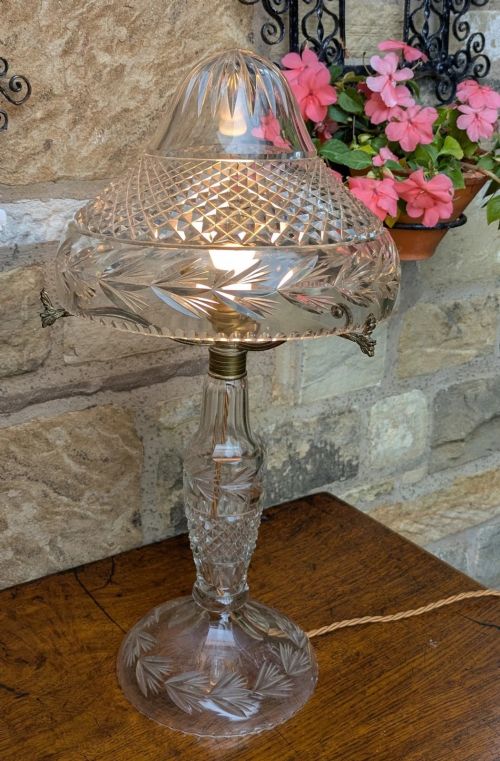
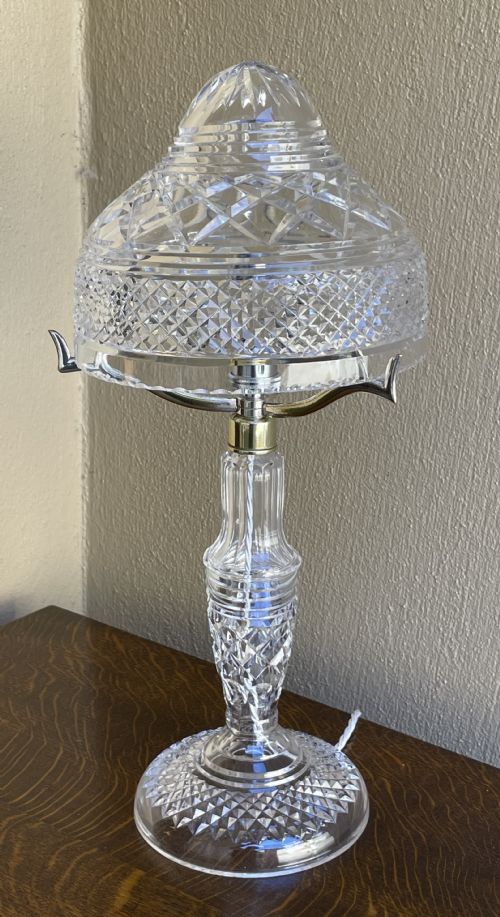
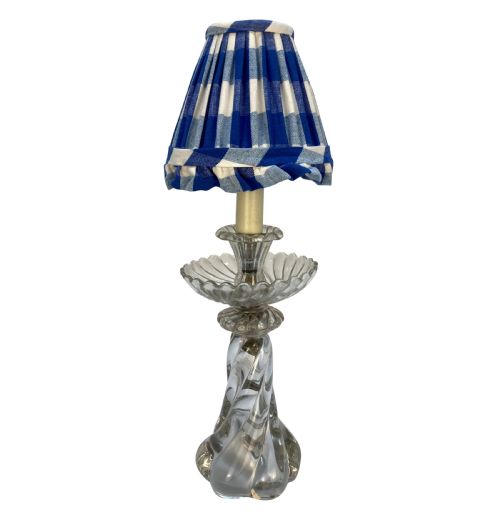
The selection ranges from early Victorian brass and cut glass oil lamps to streamlined Art Deco mushroom shapes and modernist cubic designs. Victorian Corinthian column lamps and twin bulb crystal pieces appear alongside French glass lamps and heavy lead crystal structures.
Materials and construction
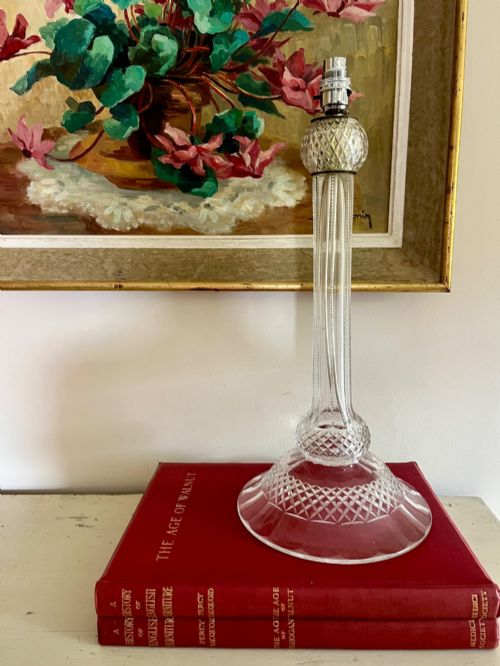
The construction relies on heavy combinations of cut glass, cut crystal and lead crystal paired with structural elements of brass and chrome. Many pieces integrate cut crystal bodies with brass mounts or mahogany bases to provide stability.
Makers utilised specialised cutting techniques on crystal surfaces to catch and refract light, while metal components supplied durable framing for early oil mechanisms and later electrical fittings.
Some Victorian examples began life dispensing spirits before finding a second career as glowing desk companions.
Determining quality in glass and metal
Quality rests in the depth and clarity of the crystal cutting and the substantial weight of the brass or chrome mountings. Superior examples display crisp faceting in the cut glass and robust metal casting that anchors the lamp securely.
The integration of materials dictates the overall refinement, where finely polished lead crystal works harmoniously with well-proportioned brass columns or patterned Art Deco glass bases.
Stuart Crystal·Osler·Karl Palda
The Clear Glass Desk Lamp Glossary
- Cut crystal
- Glass containing lead oxide that is faceted or patterned by cutting wheels. This process enhances brilliance and weight compared to standard glass.
- Corinthian column
- An architectural column form featuring an ornate capital decorated with acanthus leaves. It frequently forms the central pillar of Victorian table lamps.
- Mushroom lamp
- A lamp style characterised by a domed shade shape resembling a mushroom cap. These pieces often feature all-over cut glass patterns.
- Lead crystal
- High-clarity glass produced with a high lead content. The material allows for deeper cutting and superior light refraction.
Clear Glass Desk Lamp: Frequently Asked Questions
How do I date a glass lamp?
Dating relies on identifying material combinations, manufacturing techniques and stylistic markers such as Victorian Corinthian columns or Art Deco geometric bases. Examining the mountings and the type of crystal provides further clues to the decade of manufacture.
Earlier pieces often incorporate brass oil lamp conversions, whereas 1930s examples lean towards streamlined mushroom shapes and modernist cubic glass forms.
Are these lamps safe for modern desks?
Most antique and vintage lamps require rewiring or PAT testing by a qualified electrician to ensure they meet contemporary safety standards before daily use.
Retaining original brass fittings and switches is standard practice, but internal wiring should be updated to handle modern electrical currents safely.
What is the difference between glass and crystal?
Crystal contains lead oxide, which increases the weight, clarity and refractive index of the material compared to standard glass. This high lead content allows artisans to cut deeper, sharper facets into the surface.
Lamps made from lead crystal catch and disperse light more intensely than ordinary glass alternatives.
How should I clean a cut crystal lamp?
Cleaning requires mild soapy water and a soft cloth to remove dust from the intricate facets without damaging the surrounding brass or chrome mounts. Harsh chemical cleaners must be avoided to protect the vintage metal finishes.
Careful drying prevents water spots from forming within the deep cuts of the crystal.