


Clear Glass Comport
A clear glass comport is a raised serving dish that elevates fruit or sweetmeats, bringing height and brilliance to a table.
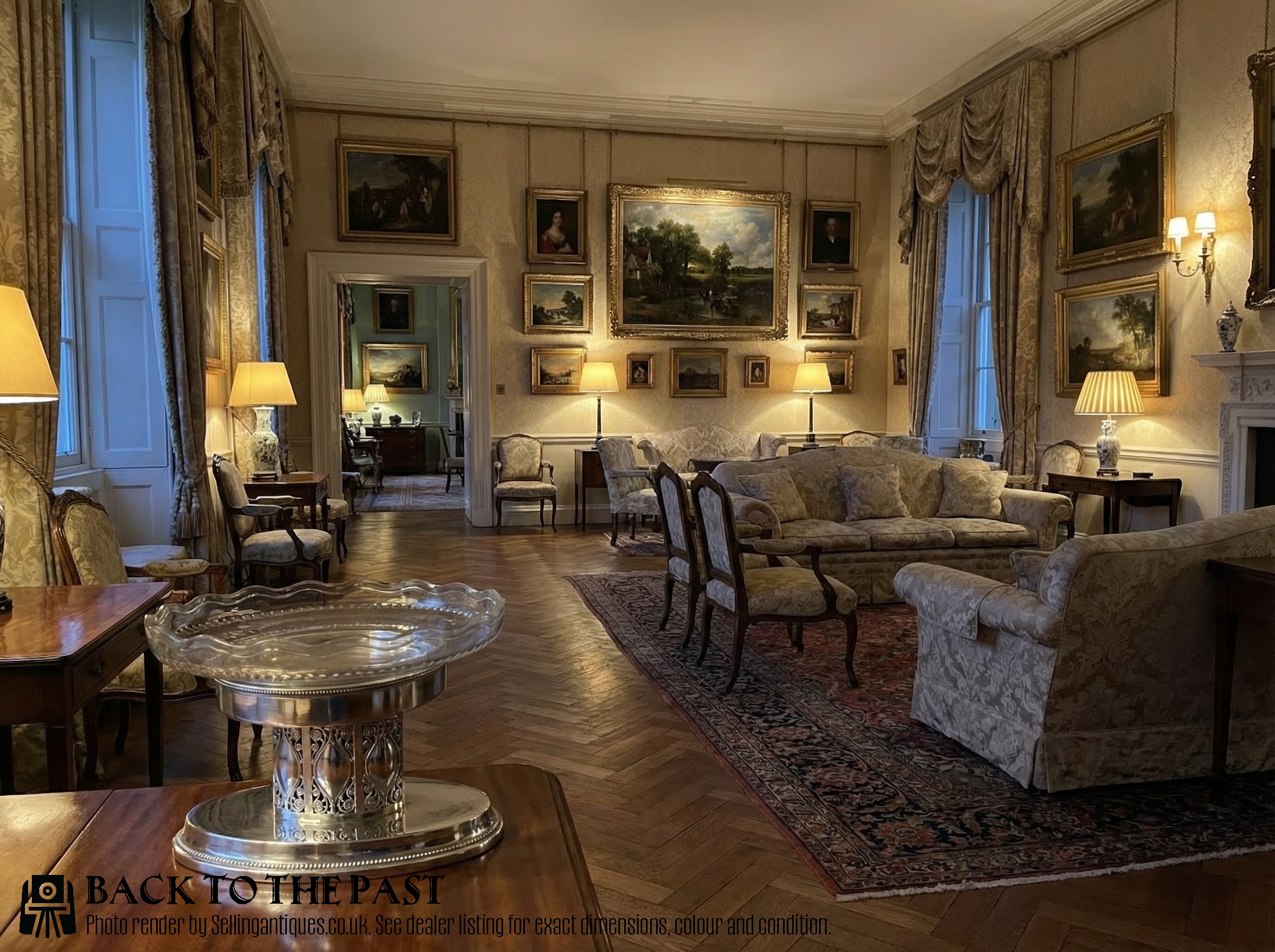
Clear Glass Comport
A clear glass comport sits on a pedestal base, functioning as a centrepiece, tazza, or decorative bowl for serving fruit and sweetmeats. The versions on this page span from the eighteenth century through the Georgian, Victorian, and Edwardian eras, encompassing Arts and Crafts and French Rococo Revival styles.
Buyers encounter pedestal bowls, tazzas, and table centrepieces formed from clear glass, crystal, and lead crystal, occasionally paired with gilt metal, ormolu, or coloured cane decoration. These pieces reflect the dining customs of the eighteenth, nineteenth, and early twentieth centuries, serving both functional and decorative roles in period interiors.
Materials and construction methods
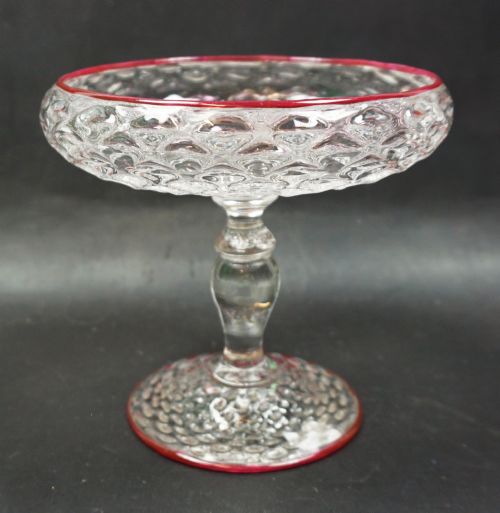
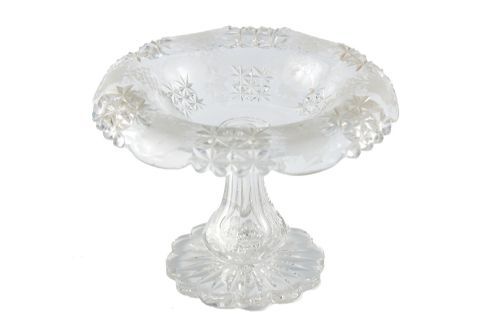
These pieces utilise glass, lead crystal, and crystal glass, shaped through hand blowing and moulding techniques. Artisans achieved decorative surface patterns through deep cutting, wheel-etching, and honeycomb moulding, whilst others integrated red or green cane decoration into the molten metal.
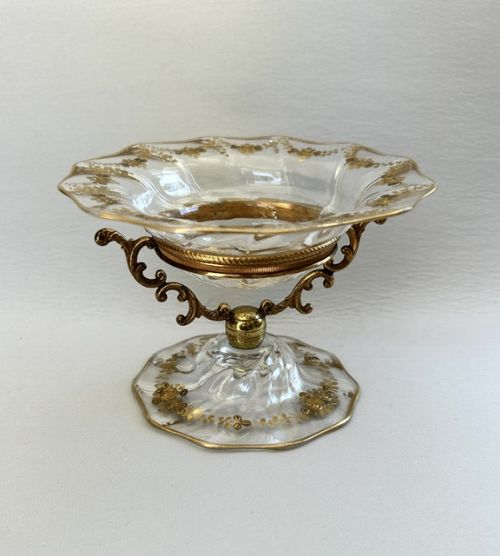
Mounts and stands incorporate ormolu and gilt metal to support the glass bowls. Makers such as Elkington and WMF applied partial gilding and metalwork to frame the clear glass vessels.
A solitary red glass cane twists through a Victorian pedestal bowl, proving that even formal dining took a colourful turn.
Distinctions in quality
Quality rests in the weight and clarity of the glass, alongside the crispness of the cut or etched patterns. Heavier lead crystal and deeply hand-cut facets demonstrate superior material quality and intensive craftsmanship compared to lighter moulded variants.
The integration of metal mounts, such as ormolu and gilt metal stands, influences the overall refinement of the piece. Well-balanced proportions between the pedestal base and the upper bowl indicate careful design execution.
Elkington and Co·WMF
The Clear Glass Comport Glossary
- Comport
- A raised dish or bowl on a pedestal, utilised for serving fruit, nuts, or sweetmeats at the table. These vessels provide verticality to a dining arrangement.
- Tazza
- A shallow bowl or saucer mounted on a stem and foot, often synonymous with a comport. The term derives from the Italian for cup.
- Lead crystal
- Glass containing lead oxide, which increases brilliance, weight, and workability for deep cutting. It forms the basis of many nineteenth-century pedestal bowls.
- Ormolu
- Gilded bronze or brass utilised for mounts and stands beneath glass bowls. This technique flourished in French revival and nineteenth-century decorative metalwork.
- Cane decoration
- Coloured glass rods incorporated into the body of the vessel during manufacture. Examples on this page feature distinctive red or green glass canes.
Clear Glass Comport: Frequently Asked Questions
What is a clear glass comport used for?
These pieces function as elevated serving vessels for fruit, desserts, and confectionery during formal dining. They also serve as decorative centrepieces on sideboards and dining tables.
Historically, height on the table created visual hierarchy and allowed guests to reach shared items easily. Today, collectors utilise them to display fruit or simply as decorative objects.
How do I distinguish between periods?
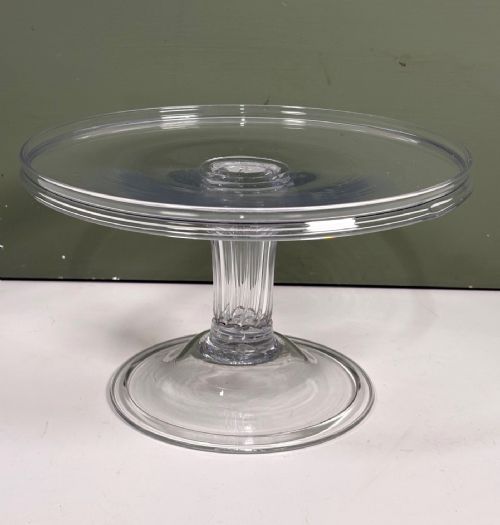
Georgian and eighteenth-century examples often display heavy hand-blown lead crystal with distinct pontil marks on the base. Victorian and Edwardian pieces frequently incorporate etched floral motifs, honeycomb moulding, or coloured cane decoration.
Later nineteenth-century and 1900s pieces may also include metal stands or ormolu mounts, reflecting Arts and Crafts or French revival influences.
Are these pieces made of crystal?
The evidence shows items made from standard glass, clear glass, crystal glass, and lead crystal. Lead crystal contains lead oxide, giving the material greater weight, refractive brilliance, and suitability for deep cutting.
Lighter pieces often rely on hand blowing and moulding without the heavy lead content found in premium nineteenth-century examples.
How should I live with a glass comport?
Place the piece in a stable location where natural light can pass through the clear glass or lead crystal. Avoid placing heavy fruit on delicate antique pedestals to protect the stem from strain.
Hand washing in lukewarm water preserves the etched surfaces and any associated gilt metal or ormolu mounts.