

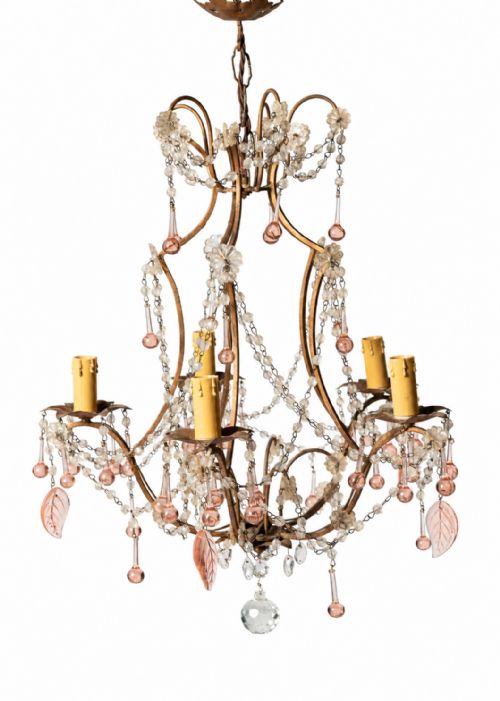
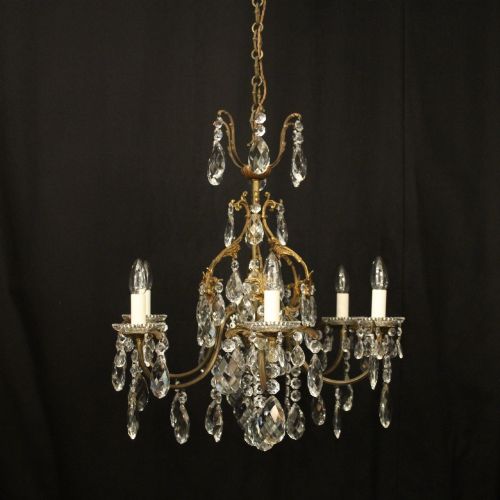
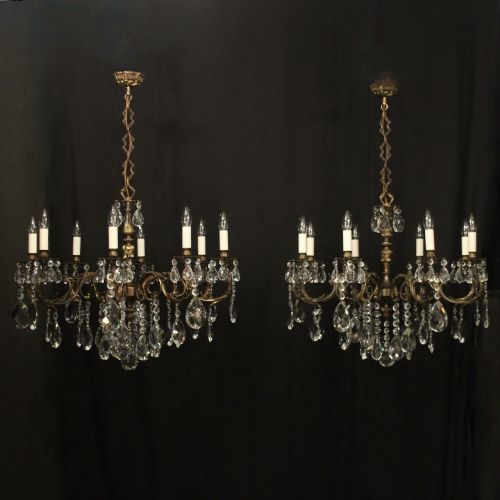
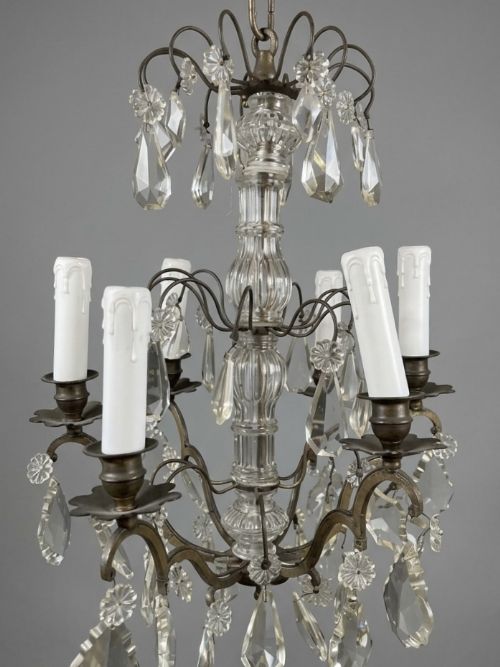
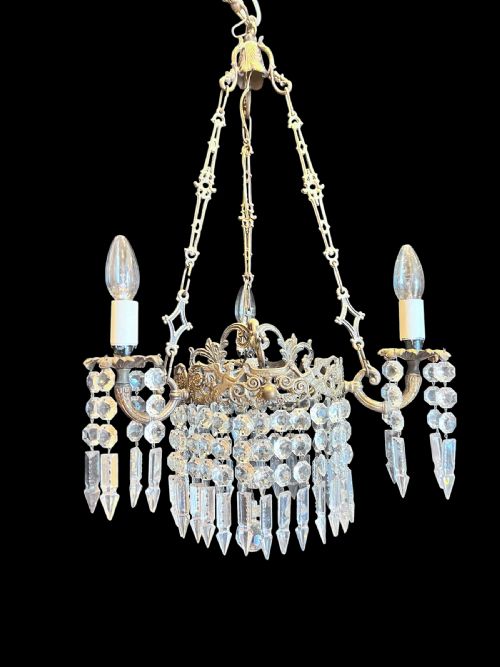
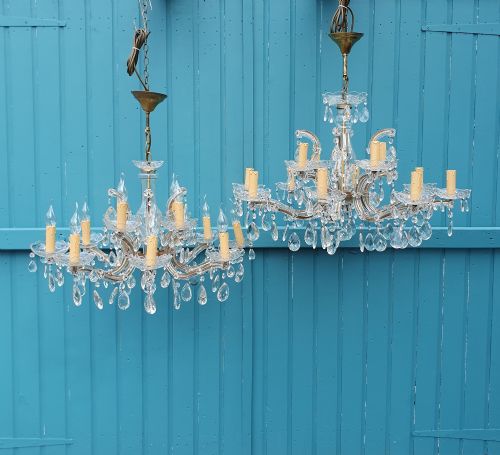

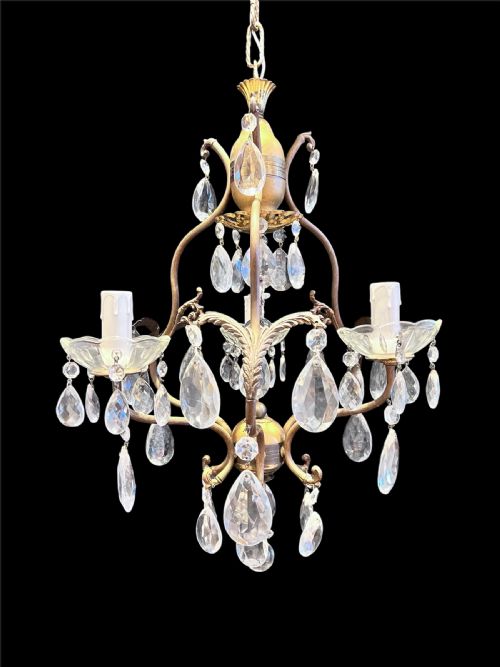


Clear Glass Chandelier Arms
Clear glass chandelier arms are sculptural components of lighting fixtures that shape the spread of light, and finding matched examples completes restoration projects.
Clear Glass Chandelier Arms
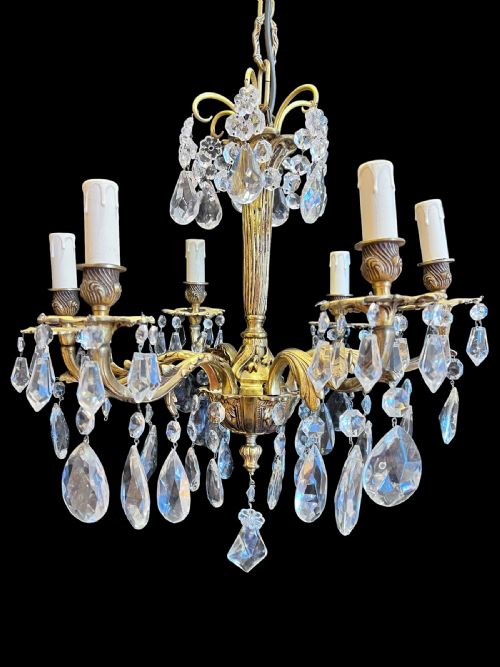
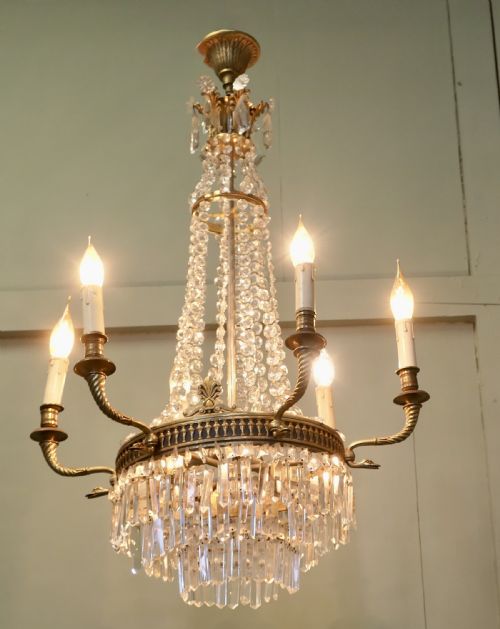
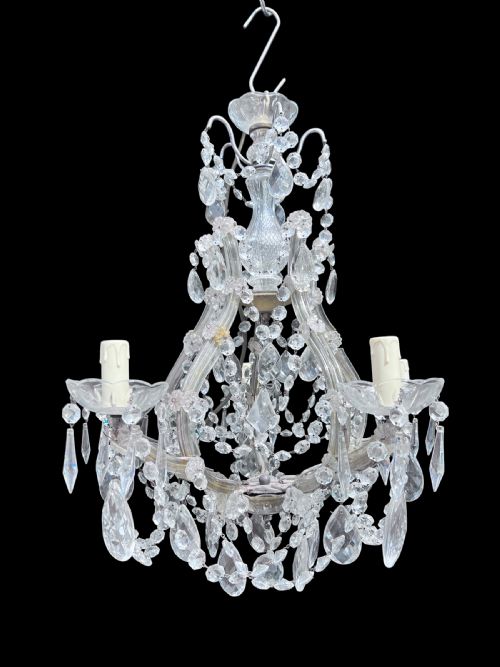
Clear glass chandelier arms appear on nineteenth-century and early twentieth-century lighting fixtures, including Edwardian, Regency, and French Empire forms. These components project outwards from central chandelier bodies, carrying candle sockets or drip pans at their outer extremities.
The versions most likely to meet a buyer on this page belong to larger multi-arm chandeliers spanning the late nineteenth century up to the 1930s. They emerge from diverse regional traditions, such as Venetian, Bohemian, and English cut glass workshops.
Materials and construction methods
Makers utilised transparent materials like lead crystal, cut glass, and standard glass, combining them with metal elements such as brass, gilt bronze, and silver. Individual arms were shaped and curved, frequently incorporating moulded or cut facets to refract the light produced by early electric lamps or candles.
Structural stability relied on internal metal spindles or external brass mounts that secured the glass arms to the main chandelier frame. Surface ornamentation often involved hand-cut fluting, beaded elements, and suspended drops attached directly to the arm structures.
Clear Glass Chandelier Arms Retail Price Guide 2026
Typical asking prices for clear glass chandelier arms among the pieces listed under this phrase on Sellingantiques today, from the lower quarter to the upper quarter. They describe what is for sale here now, not the wider market.
Current listings feature materials including brass, gilt bronze, lead crystal, and cut glass across periods spanning the nineteenth century to the 1930s.
Distinctions in craftsmanship
Quality rests in the optical clarity of the glass and the precision of hand-cut facets. Superior examples display sharp, clean geometric cuts that catch light effectively without internal cloudiness or manufacturing bubbles in the material.
The structural design of the arm profile dictates overall refinement, ranging from simple curved glass tubes to complex, moulded forms with integrated drip pans and beadwork. Consistency across a matched set indicates skilled workshop production rather than hurried output.
The Clear Glass Chandelier Arms Glossary
- Cut glass
- Glass that has been shaped and patterned on a wheel, producing sharp facets that reflect light. This technique defines many traditional lighting components.
- Lead crystal
- Glass containing lead oxide, which increases weight, brilliance, and softness for easier cutting. It is frequently found in high-grade antique lighting.
- Gilt bronze
- Bronze that has been coated with a thin layer of gold. It appears in mounts and metal framing supporting glass components.
- Drop
- A pendant piece of glass or crystal suspended from a chandelier arm or frame. Drops enhance the overall sparkle of the fixture.
- Branch
- An alternative term for an arm that extends outward from the central column of a chandelier. Multiple branches dictate the lighting capacity of the fixture.
Clear Glass Chandelier Arms: Frequently Asked Questions
What are clear glass chandelier arms?
Clear glass chandelier arms are curved structural components designed to project light sources away from the central body of a hanging fixture. They are typically hollow or channelled to allow internal wiring or to support external mounting hardware.
These elements appear in various historical styles, ranging from Victorian cut glass designs to early twentieth-century Edwardian and 1930s forms.
How do I match replacement arms?
Matching replacement arms requires careful measurement of length, curvature, and the diameter of the fitting end that inserts into the chandelier body. Note the presence of any cut patterns or moulding that needs to align with existing components.
Materials also require close observation, as lead crystal, standard glass, and cut glass each possess distinct refractive qualities and weights that affect visual balance.
Can these arms support modern wiring?
Many antique chandelier arms accommodate internal wiring, though older installations relied on external channels or surface mounting alongside brass frames. Inspect the internal bore of any arm to determine if electrical wire can pass safely through the centre.
Professional rewiring ensures that older glass components do not bear excessive mechanical stress from modern heavy electrical cables.
How do I date a chandelier arm?
Dating relies on stylistic clues, manufacturing techniques, and the associated metal components like brass or gilt bronze collars. Pieces from the nineteenth century often feature hand-cut facets, while later twentieth-century examples display machine moulding.
Context from known fixture types, such as Marie Therese or French Empire designs, further narrows the period of production.