


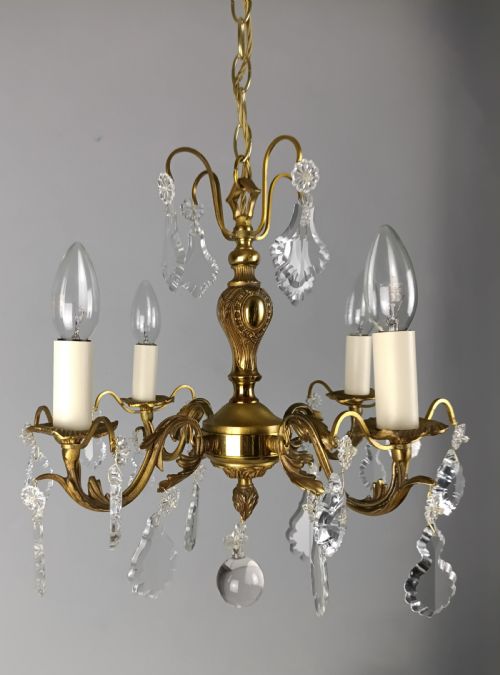
Candle Style Crystal Chandelier
The candle style crystal chandelier brings dramatic illumination and reflective brilliance to a room, drawing the eye upwards through tiers of glass and metal.
Candle Style Crystal Chandelier
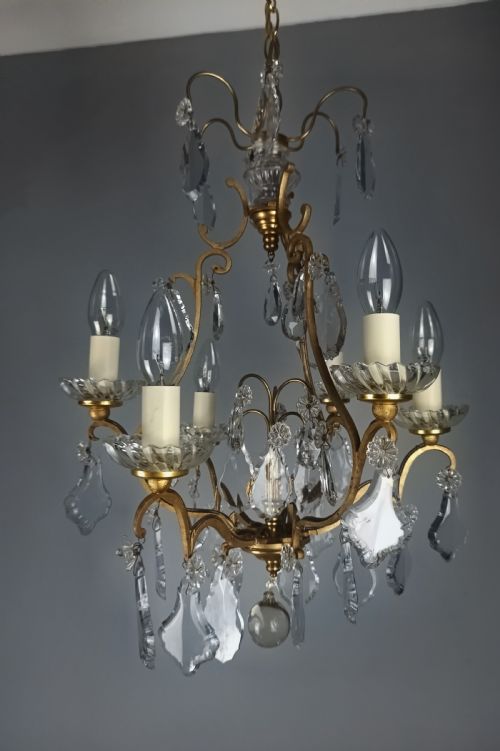
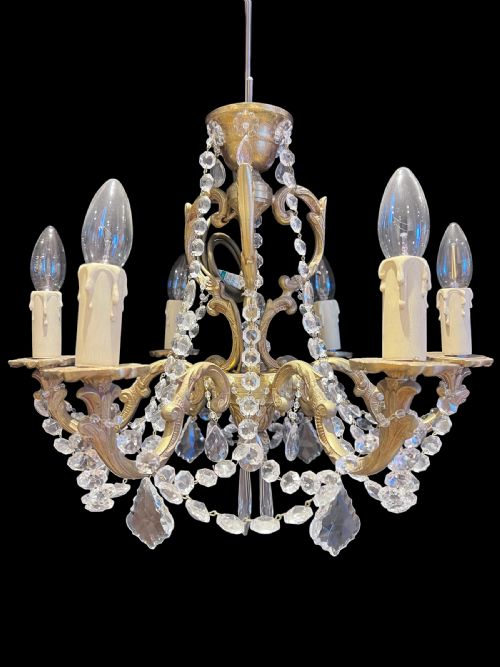
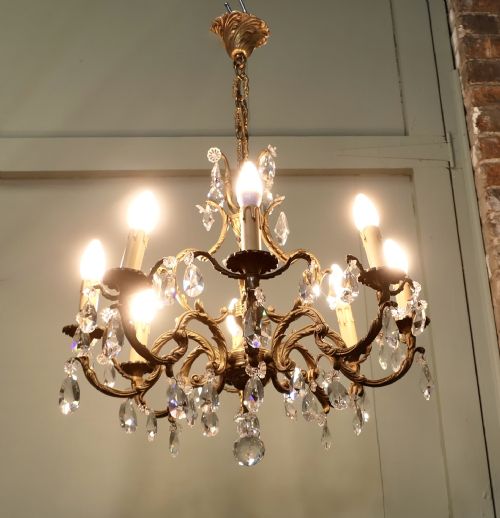
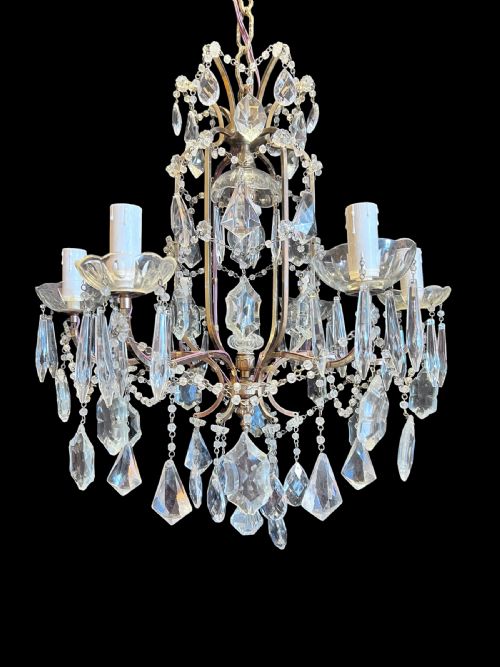
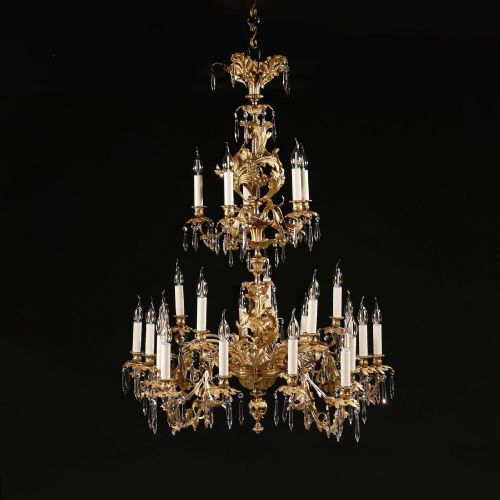
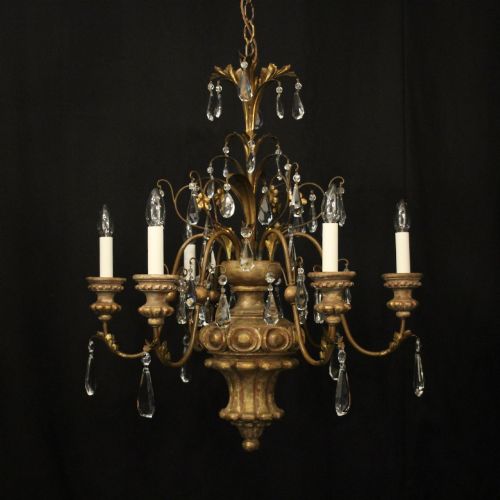
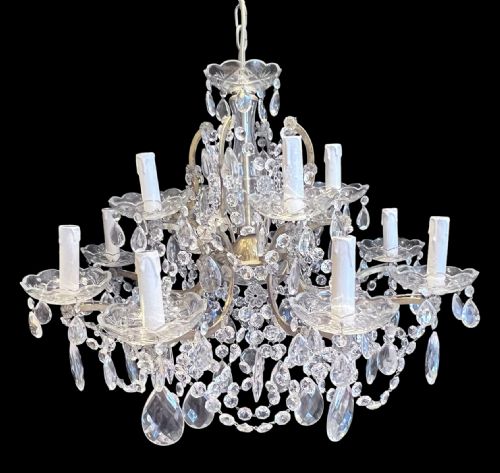
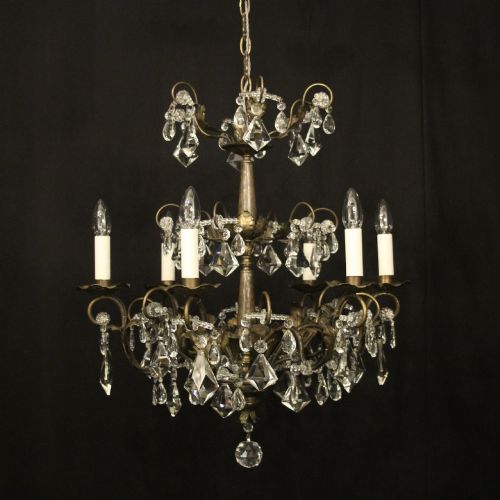
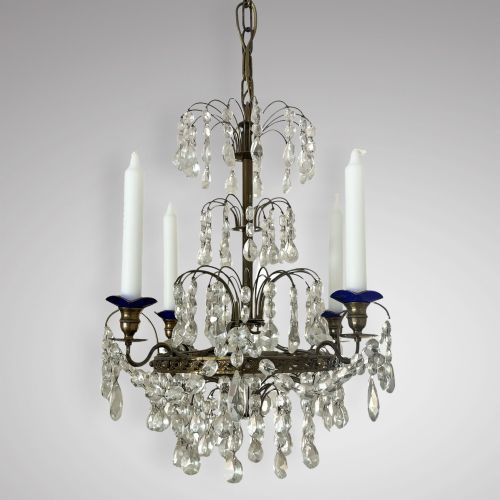
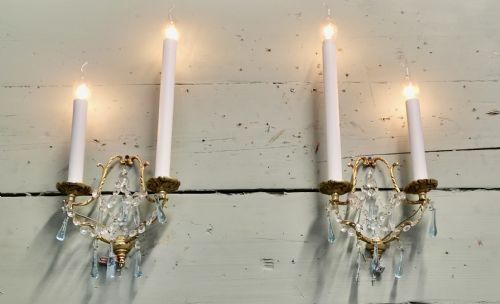
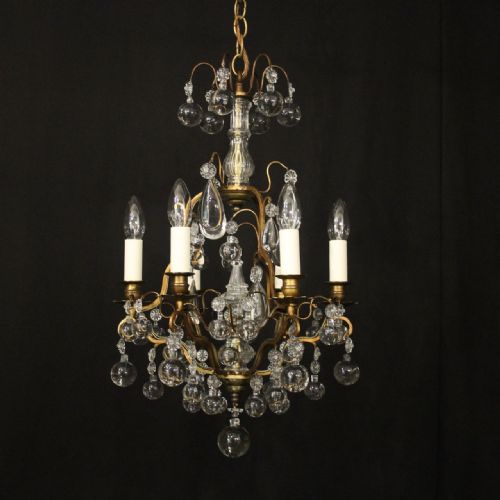
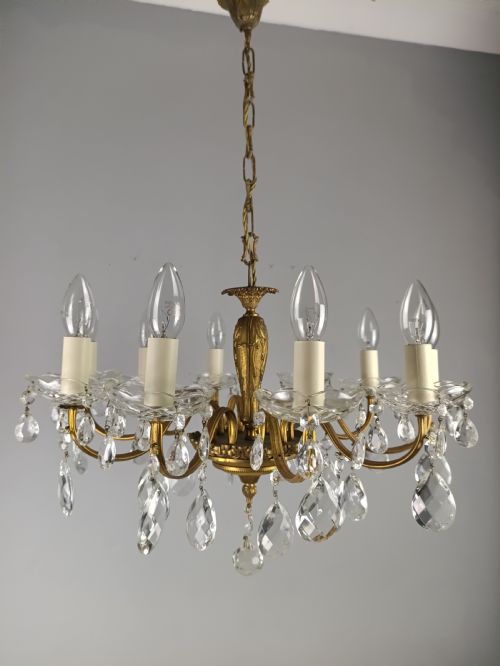
A candle style crystal chandelier combines candle-form drip pans and sleeves with hanging glass prisms, drops, and garlands. These fixtures emerge in forms such as the classic birdcage, tent and basket, and multi-armed branching frames.
The pieces available span from the late nineteenth century through the Edwardian era and into the 1920s and 1930s. French and Italian designs dominate the selection, showing stylistic influences from French Rococo, Louis XV, and Italian Baroque traditions.
Buyers mostly encounter brass, gilded brass, and gilt bronze frameworks holding cut crystal or glass elements. Many of these lighting fixtures arrange multiple light points across four, six, eight, or even twenty-five arms to maximise illumination.
Materials and construction
Metals form the structural spine of these chandeliers, utilising cast brass, gilded bronze, gilt brass, wrought iron, and silvered or silver-gilded metal. Workshops shaped, cast, and carved these metal elements to support the heavy weight of glass components.
Prisms, droplets, and lustres utilise cut crystal and moulded glass, suspended from the metal frames by wire pins. Coloured glass elements, amber and mauve fruits, and polychrome details occasionally accent the clear crystal drops.
The candle form itself relies on cylindrical sleeves and drip pans mounted directly onto the arms. These simulate traditional wax candles while housing modern electrical wiring or older fittings.
Current listings demonstrate a strong concentration of 1920s and 1930s French production, alongside nineteenth-century examples in brass, gilt bronze, and cut crystal.
Assessing craftsmanship and design
The intricacy of the metal casting and the depth of the gilding set finer examples apart from simpler pieces. Heavier bronze or brass mounts with chased detail and substantial arms indicate superior workshop production.
The cut and clarity of the crystal components dictate how effectively the fixture refracts light. Precise hand-cutting on crystal lustres and drops produces sharper light dispersion than smooth or pressed glass.
The structural integration of the cage or tent framework affects the overall visual harmony. Balanced proportions between the metal armature and the volume of hanging crystal create a more cohesive decorative object.
The Candle Style Crystal Chandelier Glossary
- Birdcage chandelier
- A chandelier style featuring a curved metal skeletal frame resembling a birdcage, often adorned with cascading crystal drops. This form concentrates the visual weight towards the centre.
- Tent and basket chandelier
- A lighting fixture characterised by a conical upper section of crystal strands leading down to a lower bowl-shaped basket. The design creates a dense canopy of reflective glass.
- Gilt bronze
- Metalwork created by applying a fine layer of gold to a bronze substrate, commonly known as ormolu. This technique prevents oxidation and provides a rich metallic lustre.
- Lustre
- A cut crystal pendant or hanging prism designed to catch and reflect light. Lustres come in various shapes including spears, drops, and pear forms.
- Drip pan
- A shallow circular dish placed beneath the candle dummy to catch melted wax. On electrical conversions, these pans serve a purely decorative and historical function.
Candle Style Crystal Chandelier: Frequently Asked Questions
How do I hang a heavy antique chandelier safely?
These fixtures require direct attachment to ceiling joists using a rated ceiling hook and metal chain capable of supporting the combined weight of metal and crystal. Professional installation ensures the electrical wiring meets current safety standards.
Weight distribution matters significantly because brass and crystal frames exert constant downward pull. A qualified electrician can assess the ceiling capacity before mounting.
Can these chandeliers be converted for modern electric bulbs?
Most surviving examples have already received electrical conversions during their history, adapting the original candle sleeves to house modern wiring and small bulbs. The internal channels within the brass arms conceal the electrical cables.
When inspecting a piece, check whether the lamp holders fit standard candle-tube covers. This allows you to select bulb shapes that preserve the traditional appearance.
How should I clean the crystal elements?
Routine dusting with a soft microfibre wand keeps the glass clear without requiring disassembly. For deeper cleaning, professionals recommend using a specialised glass spray applied while the fixture hangs.
Avoid immersing entire frames in liquid cleaning solutions, as moisture can damage the internal wiring and corrode the metal pins holding the crystal drops.
What distinguishes French chandeliers from Italian ones?
French designs often lean towards Rococo, Louis XV, or birdcage frameworks employing heavy gilded bronze and precise crystal arrangements. These pieces emphasise elaborate metal scrollwork and symmetrical balance.
Italian lighting, such as Florentine or Marie Theresa styles, frequently incorporates open frames, delicate brass structures, and distinctive glass-working traditions. The overall effect tends toward airiness and fluid curvature.