

Traditional Crystal Ceiling Pendant
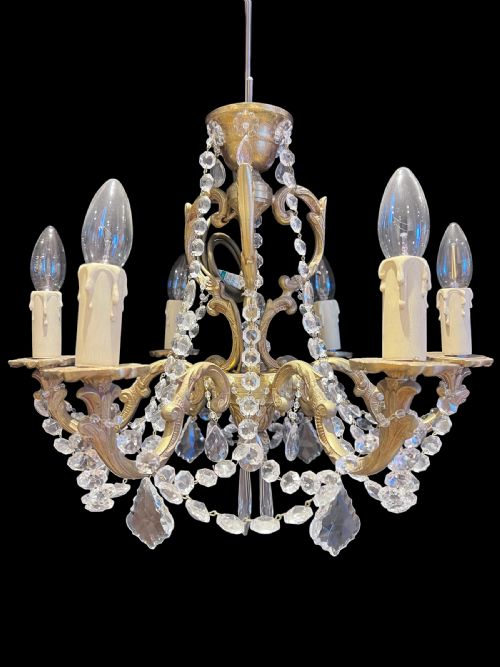
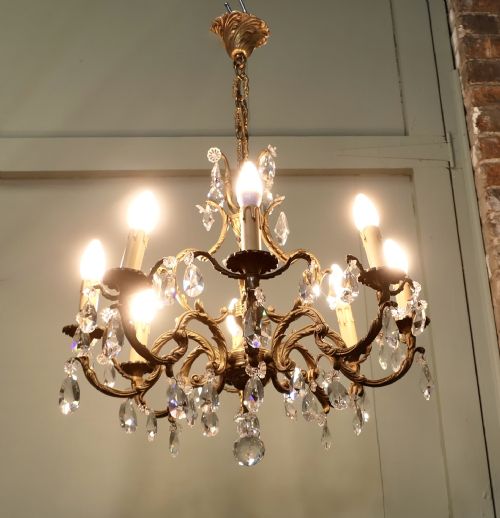
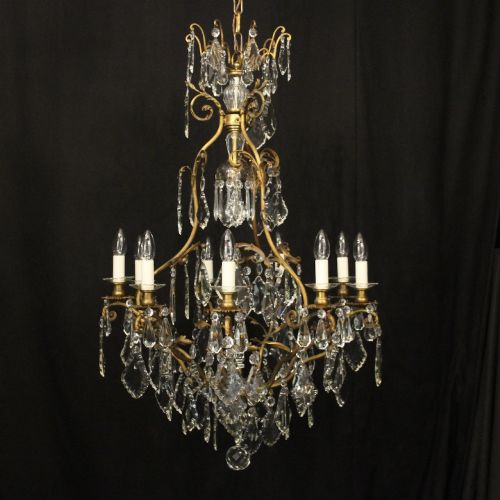
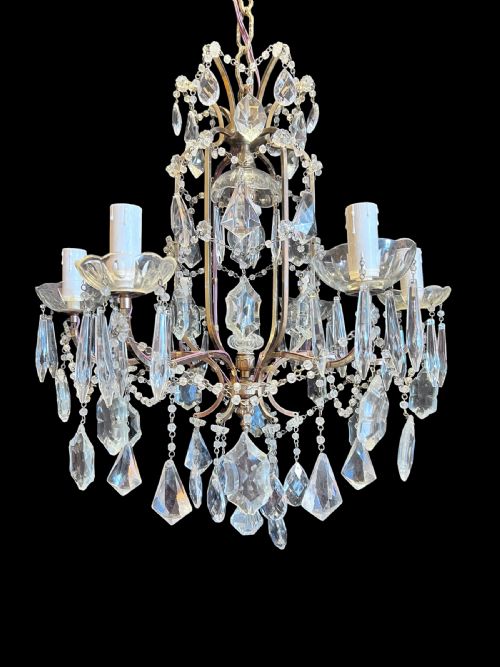
A traditional crystal ceiling pendant brings refractive brilliance overhead, offering French and Italian period lighting designed to anchor a room.
Traditional Crystal Ceiling Pendant
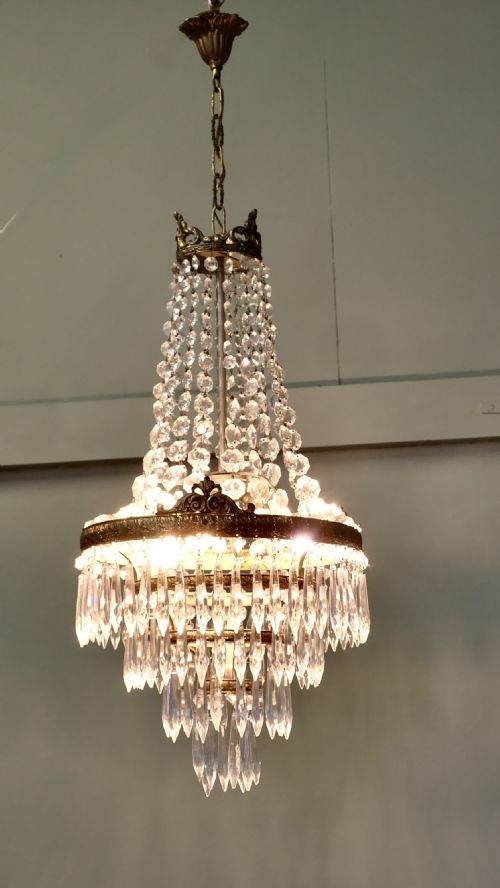
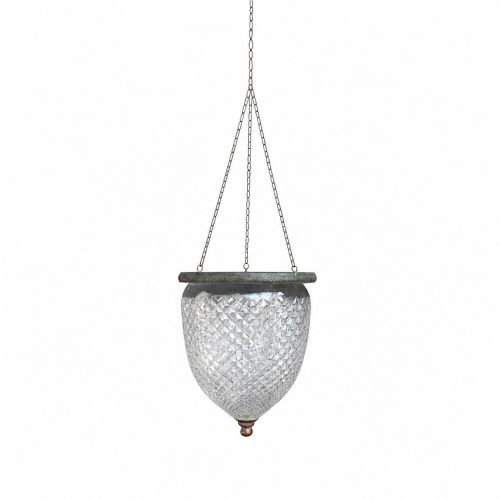
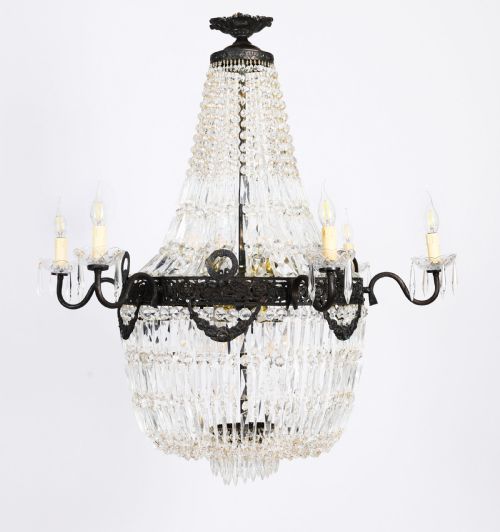
A traditional crystal ceiling pendant encompasses ornate multi-arm chandeliers, flush plafonniers, and basket fixtures dating from the late nineteenth century through the 1930s. Buyers searching for a traditional crystal ceiling pendant encounter heavy French and Italian stylistic influences, ranging from Empire and Rococo forms to Edwardian glass fixtures.
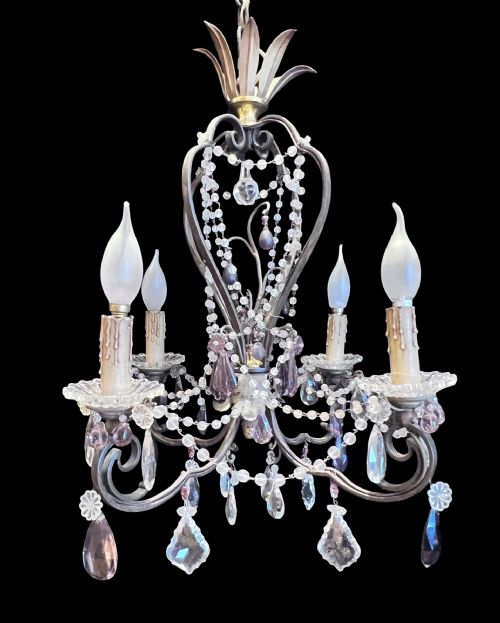
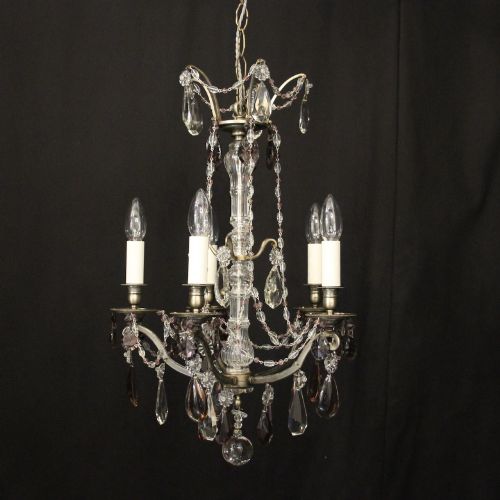
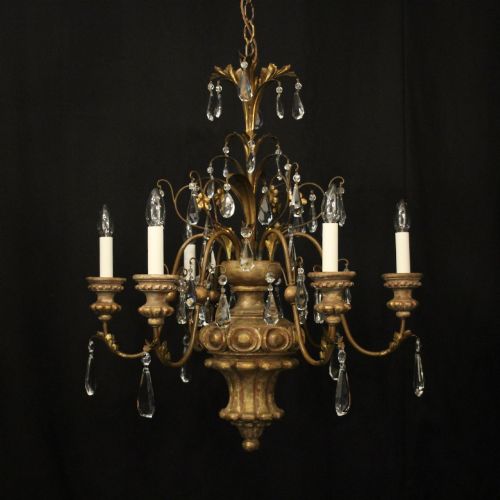
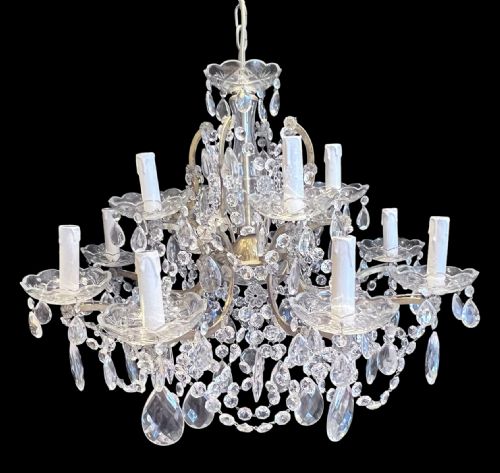
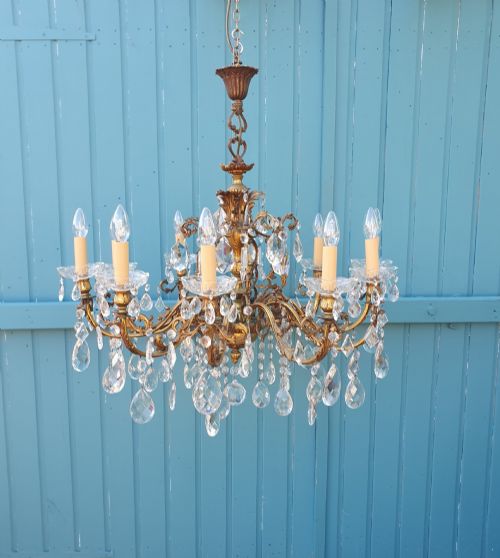
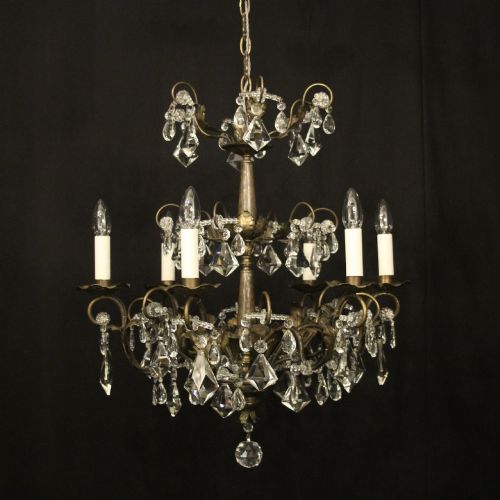
The prevailing examples on this page are French and Italian multi-light chandeliers and ceiling lights originating around 1920. These pieces typically combine cast brass, gilt bronze, or gilded metal frames with extensive droplet configurations, crystal lustres, and beaded arms.
Alongside grand ballrooms and multi-tier tent designs, the inventory holds smaller ceiling installations like plafonniers and bag chandeliers. These compact alternatives offer similar refractive glass elements suited to lower ceiling heights without sacrificing period character.
Materials and Construction
Makers constructed the structural framework of these fixtures using cast brass, gilt bronze, and toleware, which provided durable support for complex lighting tiers. Metal components were frequently silver gilded or fire-gilt to achieve a rich metallic finish that complemented the hanging glass elements.
The optical effects rely on hand-cut crystal, moulded glass drops, and specialist components such as coloured crystal teardrops and amethyst accents. Artisans wired the metal arms to support multiple light branches, hanging thousands of individual lustres, beads, and pendeloques by hand.
Materials recur across brass, gilt bronze, cut crystal, and coloured glass teardrops.
Gradations of Quality
Superior quality in these lighting fixtures rests on the clarity and hand-cutting of the crystal elements rather than mere scale. High-grade pieces display crisp facet cutting that refracts light sharply, whereas lesser examples utilise simple moulded glass with softer edges and internal bubbles.
The intricacy of the metalwork frames separates standard production from exceptional craftsmanship. Finely chased gilt bronze and substantial brass armature support complex arrangements like tent and waterfall structures securely, maintaining structural alignment over decades.
The Traditional Crystal Ceiling Pendant Glossary
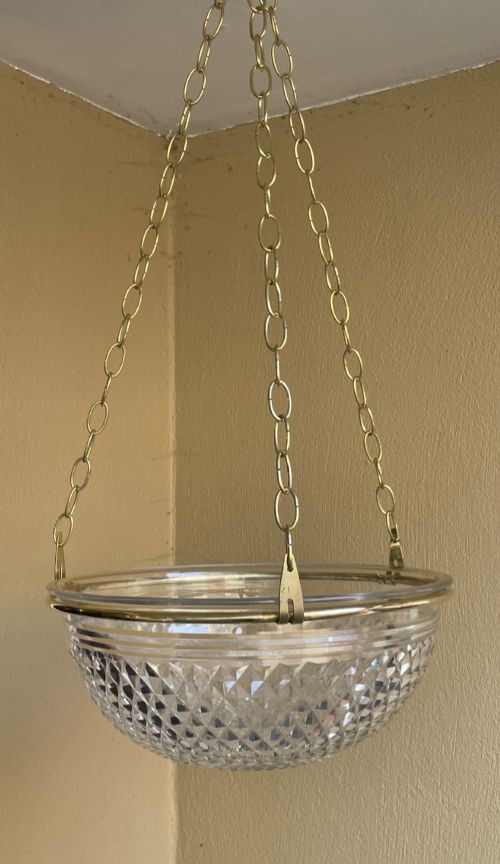
- Plafonnier
- A shallow bowl-shaped ceiling light mounted close to the ceiling. These Edwardian and early twentieth-century glass fixtures diffuse illumination softly downwards.
- Lustre
- A cut crystal pendant or drop suspended from the chandelier frame. Lustres capture and refract light across the room.
- Bag chandelier
- A light fixture featuring a flattened or basket-shaped lower section composed of dense rows of glass beads. The design conceals the interior frame while maximising sparkle.
- Tent and waterfall
- A cascading chandelier configuration featuring an upper conical tent of beads above a wider, flowing lower tier of crystals. This elaborate profile originates from neoclassical and Empire styles.
- Toleware
- Painted or lacquered sheet metal utilised for decorative body elements on specific regional chandeliers. It introduces coloured surfaces into the metallic framework.
Traditional Crystal Ceiling Pendant: Frequently Asked Questions
How do I hang a heavy antique chandelier safely?
Suspension requires fixing directly into ceiling joists using a rated steel hook and secure electrical box. Professional installers should assess the weight distribution of multi-arm brass and crystal fixtures before mounting.
Heavier multi-tier designs demand substantial load-bearing capacity to prevent structural strain on older ceilings. Adequate hanging height ensures proper clearance while allowing the refractive glass elements to project light effectively.
What is a Marie Therese chandelier?
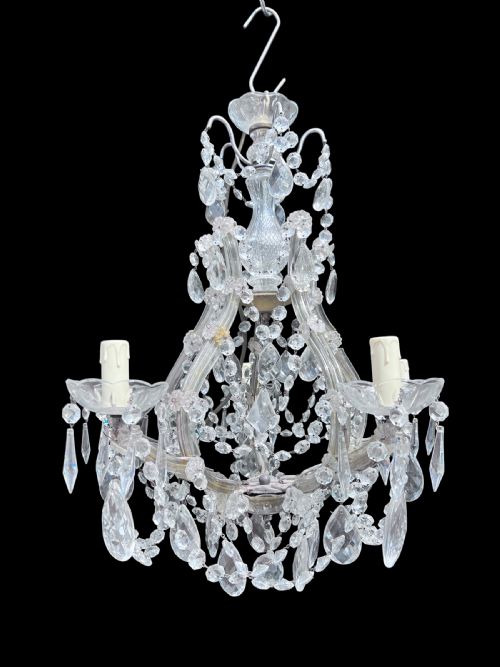
A Marie Therese chandelier is a distinctive style characterised by a glass-armature frame completely wrapped in crystal beads and ribbons. These fixtures typically feature low profiles and delicate multi-light arrangements.
Originating in Central Europe and popularised in Italy, this design minimises visible metalwork in favour of continuous glass surfaces. The construction creates a shimmering halo effect when illuminated.
How do I clean antique crystal drops?
Maintenance involves wiping individual glass drops with a soft cloth dampened in a mild water and vinegar solution. Technicians often clean components in situ to preserve the delicate wire fixings.
Harsh chemical cleaners can damage gilt brass finishes and degrade aged metal ties holding the lustres. Regular dusting prevents particle build-up and maintains the optical clarity of the cut crystal.
Are these fixtures wired for modern electrical standards?
Most antique lighting units have been rewired with modern cable to meet contemporary safety requirements. Original lampholders are occasionally retained where safe, but internal circuits are typically updated.
Buyers should consult a qualified electrician to verify compatibility with current domestic power supplies. Rewired fixtures integrate standard SES or BC lamp fittings while preserving historical exterior metalwork.