



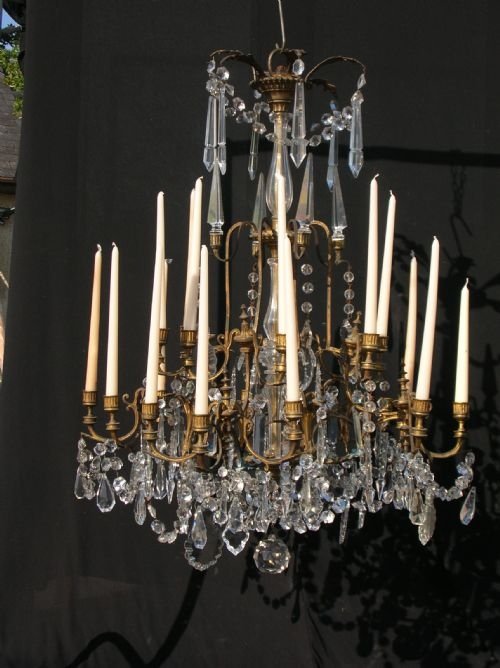


Large Clear Crystal Lighting
Large clear crystal lighting brings grand proportion and brilliant refraction to a room, spanning French Empire, Victorian and Edwardian periods.
Large Clear Crystal Lighting
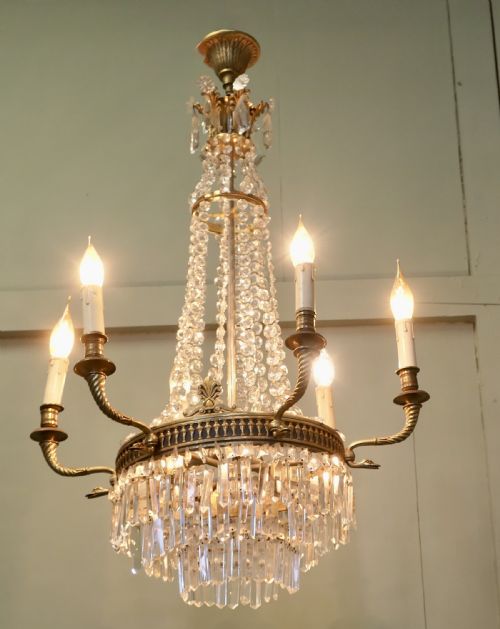
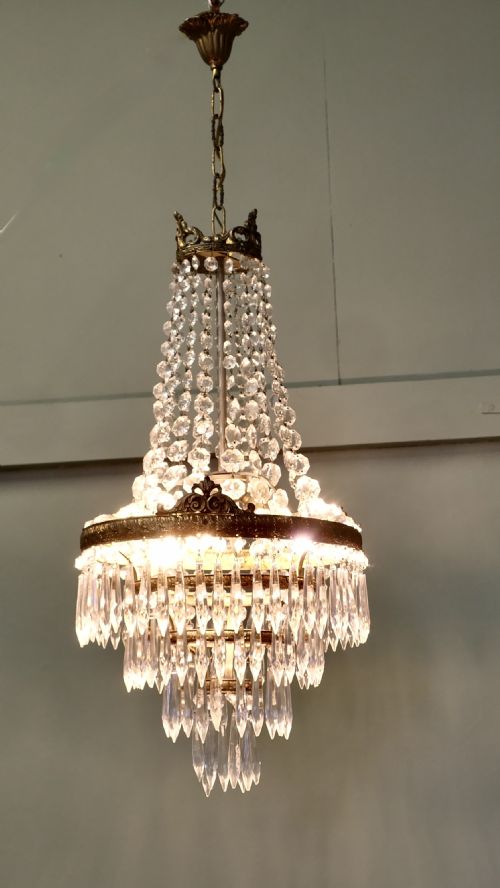
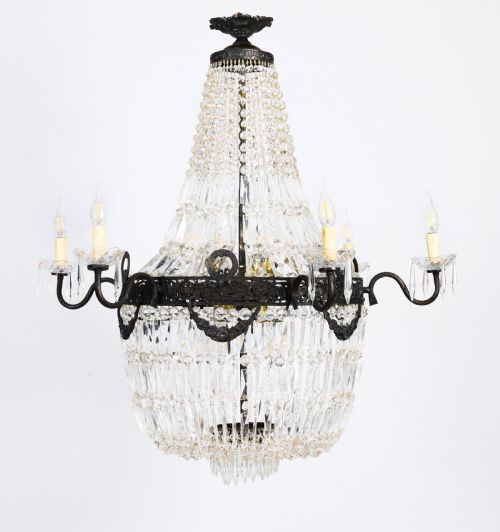
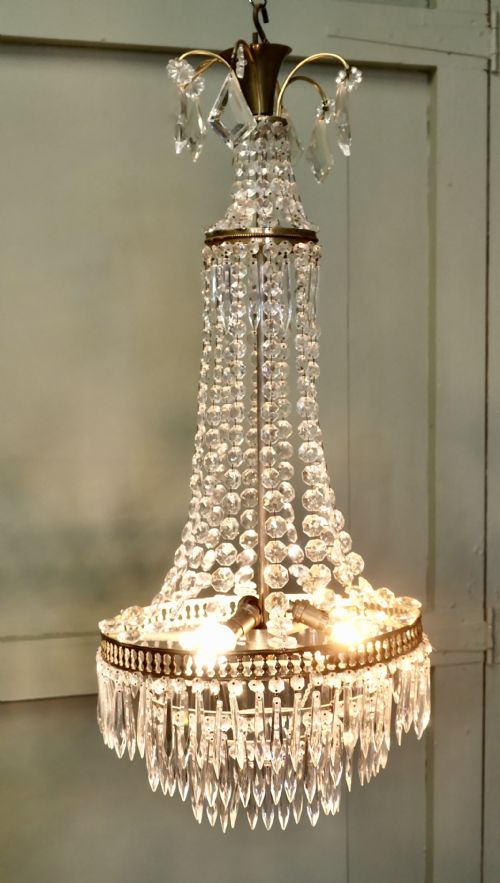
Large clear crystal lighting comprises substantial chandeliers, plafonniers and wall lights designed to illuminate expansive spaces with refracted candlelight or early electric power. These fixtures appear primarily in French Empire, Louis Revival and Victorian styles, often featuring multi-tiered drops or cascading elements.
The pieces listed span the nineteenth and early twentieth centuries, drawing on traditions from English, Bohemian, Venetian and French workshops. Common configurations include multi-branch chandeliers with tent and waterfall arrangements alongside imposing ballroom centrepieces.
Makers and origins vary from documented French houses to English cut glass makers and Bohemian glassworks. Buyers encounter formats ranging from twelve-arm candelabra to massive forty-one light ballroom fixtures.
How they were made
Makers combined cast brass, gilt bronze and metal frames with hand-cut crystal and glass drops, securing the elements with wire or metal pins. The structural armature supports numerous branches and heavy tiers of lustres.
Glass and crystal components were shaped by blowing, moulding and hand-cutting to maximise light refraction. Metalwork often received a gilt or polished brass finish to complement the clear glass elements.
Large Clear Crystal Lighting Retail Price Guide 2026
Typical asking prices for large clear crystal lighting among the pieces listed under this phrase on Sellingantiques today, from the lower quarter to the upper quarter. They describe what is for sale here now, not the wider market.
Some ballrooms required forty-one lights just to keep the waltz adequately visible through layers of cascading crystal.
What varies in quality
Quality rests in the precision of the glass cutting and the clarity of the crystal itself, which dictates how cleanly the fixture refracts light. Superior pieces display crisp facets on every drop and robust, well-cast bronze or brass frames.
Proportion and structural integrity separate exceptional examples from standard production, particularly in large multi-tiered designs where balance is essential. The complexity of the mounting, such as tent and waterfall layering, indicates the ambition of the original workshop.
Baccarat
The Large Clear Crystal Lighting Glossary
- Chandelier
- A branched ceiling-mounted lighting fixture designed to hold multiple candles or bulbs. These large examples often incorporate elaborate tiers of crystal drops.
- Plafonnier
- A shallow bowl-shaped ceiling light mounted close to the surface. They frequently utilise cut glass or crystal plates held in a metal frame.
- Tent and waterfall
- A lighting structure where upper crystal strings form a tent shape over a cascading waterfall of lower drops. This arrangement creates dense layers of light refraction.
- Lustre
- A cut glass or crystal pendant suspended from a chandelier to reflect light. They appear in various sizes and geometric cuts across nineteenth-century pieces.
- Electrolier
- A large lighting fixture originally designed for gas or electricity rather than candles. Such pieces often represent later nineteenth or early twentieth-century engineering.
Large Clear Crystal Lighting: Frequently Asked Questions
How do I clean a large crystal chandelier?
Cleaning involves wiping individual drops with a specialised glass cleaner while the fixture remains suspended. Many collectors prefer cleaning components in situ to avoid disturbing delicate brass wiring.
Take care to support drops from beneath while working so that connecting pins do not bend or snap under pressure.
How can I tell a nineteenth-century piece from a later revival?
Examine the metal casting quality, the pin fixings holding the drops, and the composition of the glass itself. Older pieces often show hand-cut irregularities and heavier bronze armatures.
Revival pieces from the early twentieth century frequently adopt earlier French Empire styles while employing slightly different wire-binding techniques.
What is the difference between glass and crystal?
Crystal contains lead oxide, which increases its weight, density and light-refracting brilliance compared to standard soda-lime glass. This high lead content allows for sharper facet cutting.
In older lighting, heavier lead crystal components create deeper tonal resonance when gently tapped.