

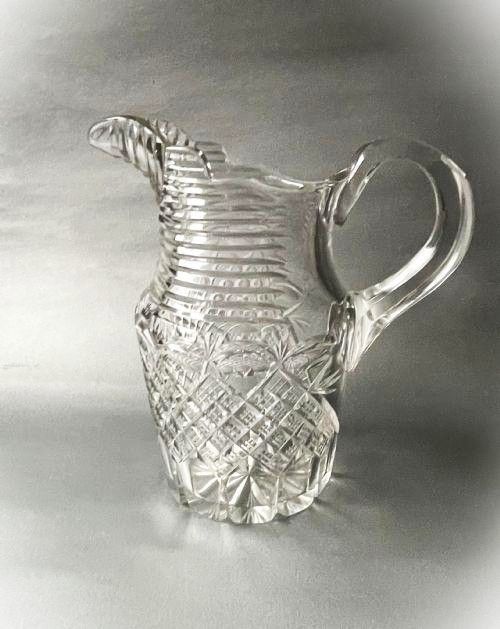
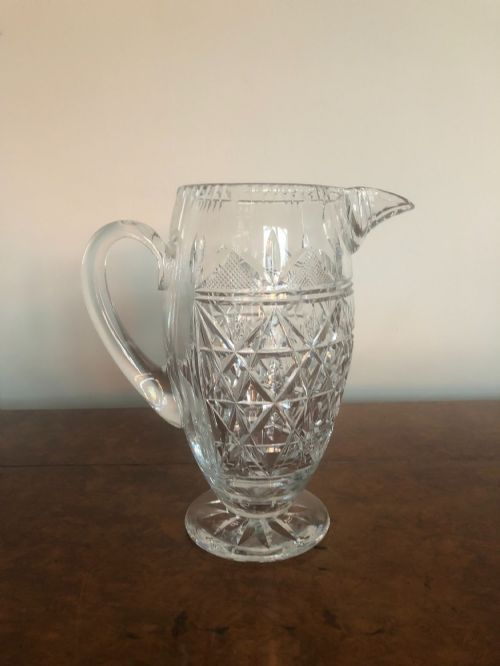
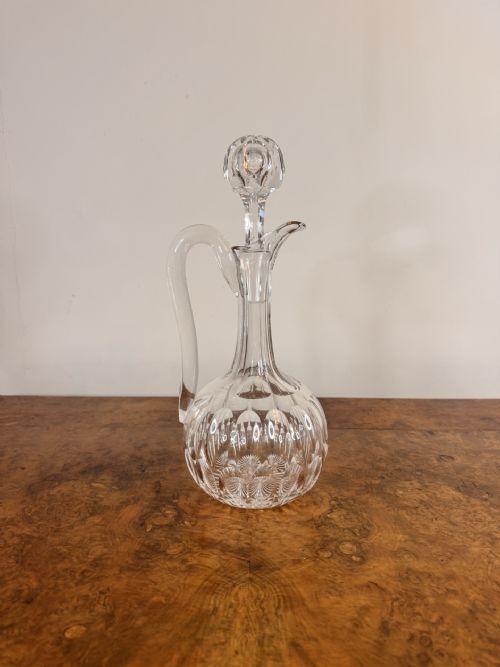
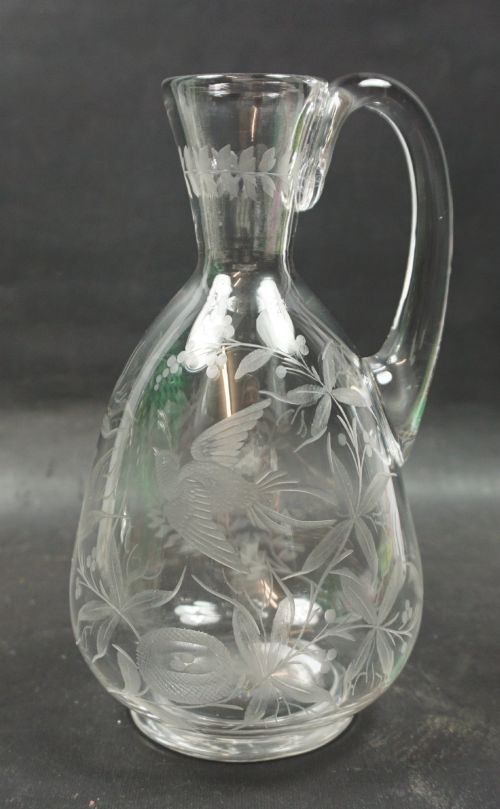


Clear Crystal Water Jug
A clear crystal water jug brings bright refraction and weight to a table, combining utility with decorative cut or engraved detail.
Clear Crystal Water Jug
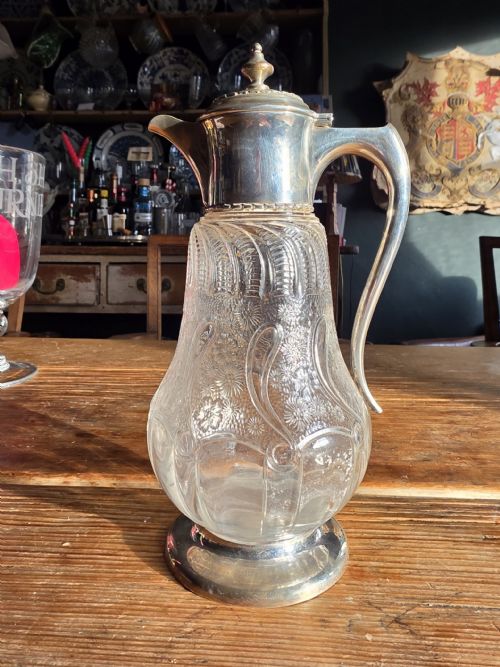
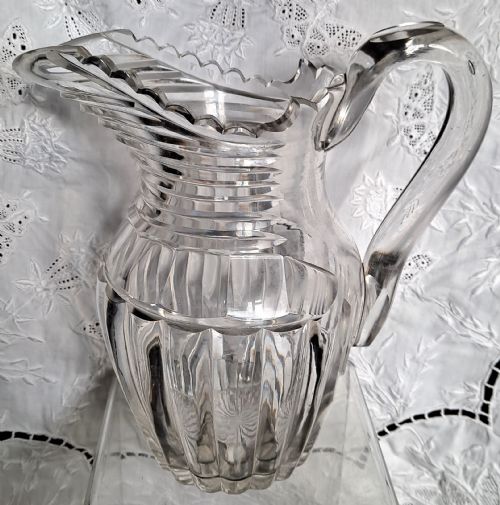
When you search for a clear crystal water jug, you encounter functional serving vessels shaped as ewers, pitchers, and claret jugs produced across the nineteenth and early twentieth centuries. These pieces emerge from Victorian, Edwardian, Regency, and Art Deco periods, reflecting changing domestic habits around dining and refreshment.
The objects take various forms including pint-sized vessels, large ewers, and matching drinking services featuring pitchers alongside glasses. English makers and workshops dominate the record, utilising lead crystal and clear glass to construct durable vessels intended for regular use on the sideboard or table.
Most examples meet on this page hail from the Victorian and Edwardian eras, showcasing traditional pouring lips and applied handles. Whether plain in form or heavily ornamented, each piece serves the fundamental purpose of holding and pouring water or wine.
Distinctions in craftsmanship and design
The clarity of the material and the crispness of the facet cutting separate finer examples from simpler production. Sharp, cleanly executed wheel engraving displays greater artisan skill than shallow or blurred surface marks.
Proportion, handle comfort, and the quality of any integrated silver mounts dictate the standing of a piece. Substantial wall thickness combined with balanced weight distribution indicates superior execution by the glasshouse.
Clear Crystal Water Jug Retail Price Guide 2026
Typical asking prices for clear crystal water jug among the pieces listed under this phrase on Sellingantiques today, from the lower quarter to the upper quarter. They describe what is for sale here now, not the wider market.
Several jugs come complete with engraved dolphins and nests with eggs, proving Victorians liked their water served with a side of wildlife.
William Comyns·Webb Corbett·Richardsons
The Clear Crystal Water Jug Glossary
- Lead crystal
- Glass containing a high proportion of lead oxide, which increases brilliance, weight, and workability for cutting. This material produces a clear ring when struck gently.
- Ewer
- A large jug with a wide spout and a looped handle, traditionally used for holding and pouring water. The form descends from classical metal vessels.
- Intaglio
- A design carved into the surface of the glass rather than raised in relief, creating a sunken frosted effect. Artisans achieve this using small rotating wheels.
- Latticinio
- White or coloured glass threads embedded within clear glass to form delicate linear patterns. The technique originates from Venetian traditions.
- Claret jug
- A specialised vessel designed specifically for serving red wine at the table, frequently fitted with a metal lid and collar. These often feature elaborate engraving.
Clear Crystal Water Jug: Frequently Asked Questions
Can I use these jugs for daily dining?
These robust vessels were built for actual service and handle water, juice, or wine without issue. Modern daily use requires careful handling around countertops and sinks due to the heavy lead glass construction.
Avoid placing them in dishwashers, as harsh detergents and high heat will permanently cloud the clear crystal surface. Hand washing preserves the polish and structural integrity of the handle and spout.
How do I distinguish Victorian from Edwardian pieces?
Victorian examples often feature heavier, deeper cutting and naturalistic motifs such as grapes, vines, and etched foliage. The proportions tend to be robust with substantial applied handles.
Edwardian items frequently display lighter, more restrained cutting styles or incorporate Art Deco influences in later iterations. Silver-plated mounts on Edwardian pieces often exhibit sleeker manufacturing techniques.
What is the difference between glass and crystal?
Standard glass lacks the lead oxide content found in crystal, making it lighter and less refractive of light. Crystal possesses a distinct brilliance and heavier feel that aids in detailed wheel cutting.
When tapped, high-lead crystal produces a clear, sustained musical tone rather than a dull thud. This material property allowed nineteenth-century makers to achieve deep, sharp facets.