
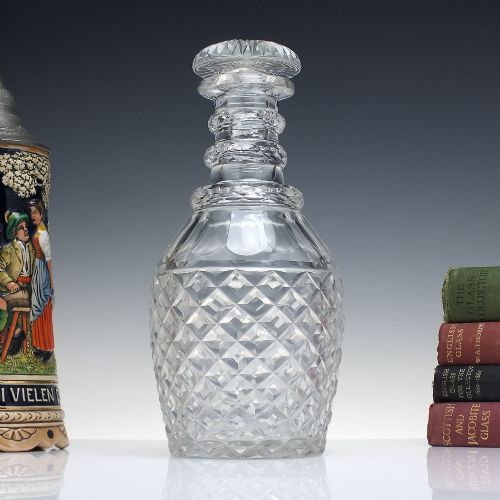
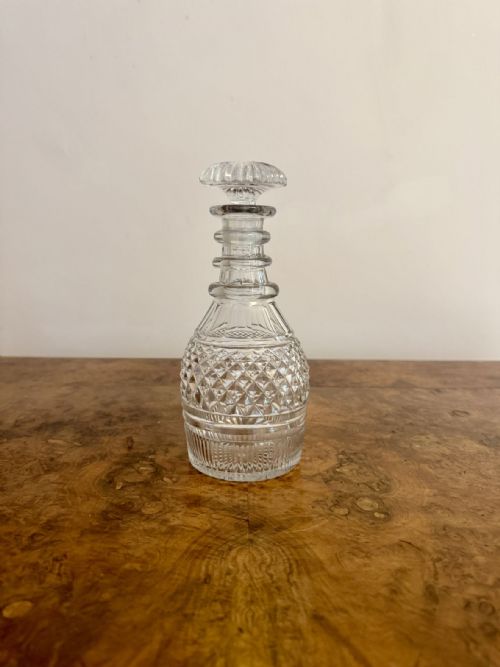
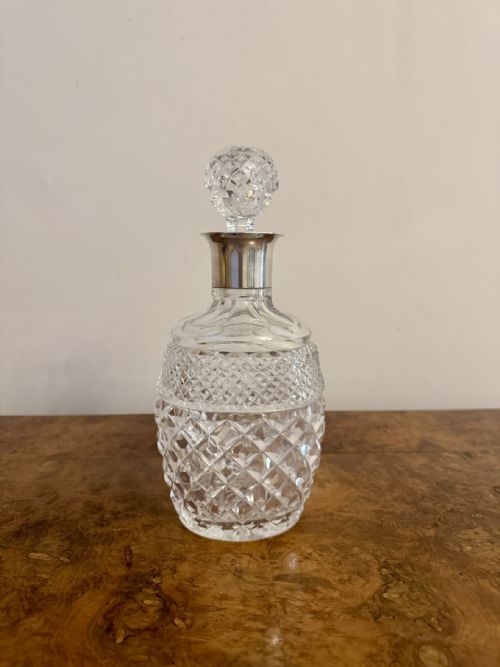
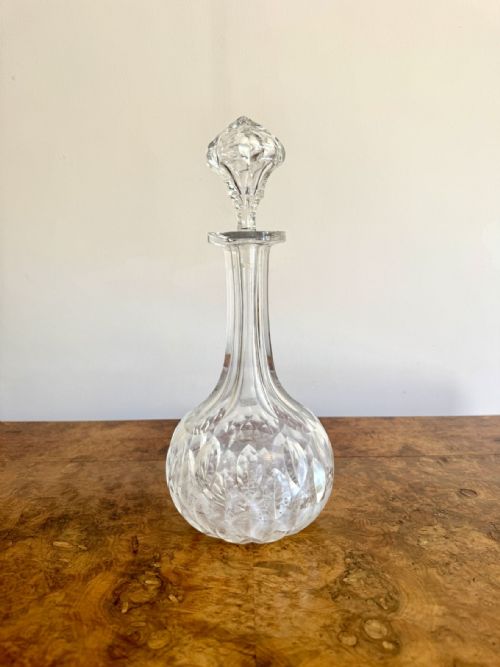
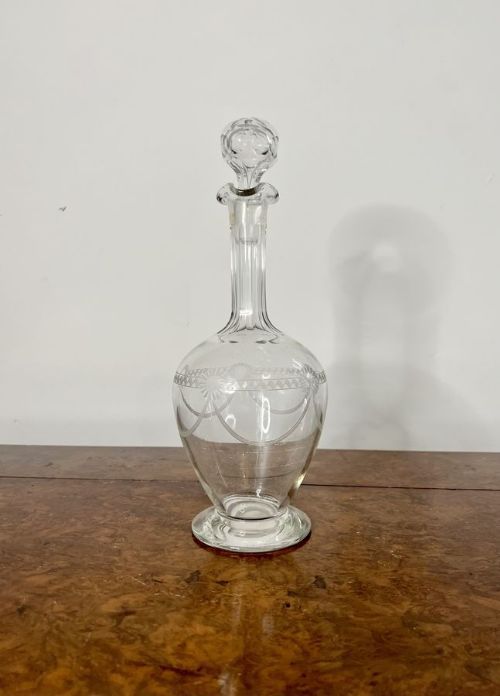


Clear Crystal Spirit Bottle
A clear crystal spirit bottle offers weight, refraction and proper service for your sideboard, spanning Victorian, Edwardian and Regency periods.
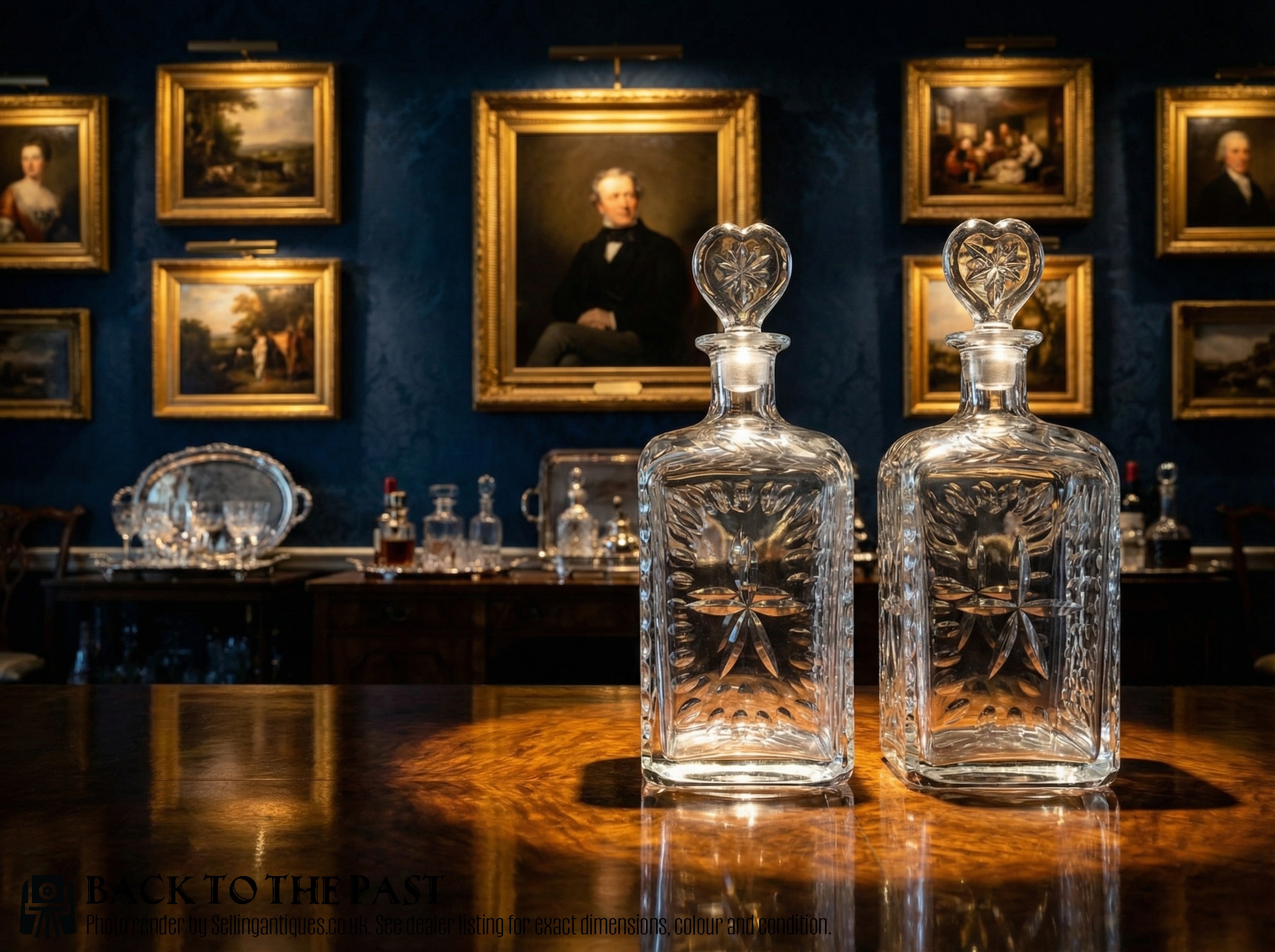
Clear Crystal Spirit Bottle
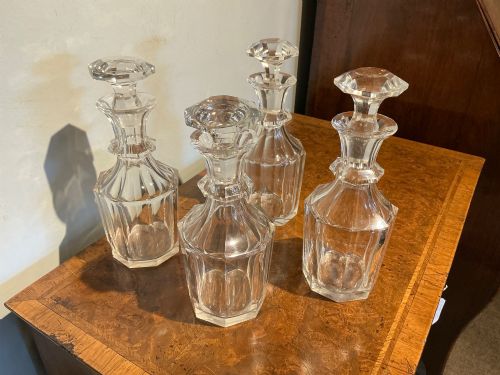
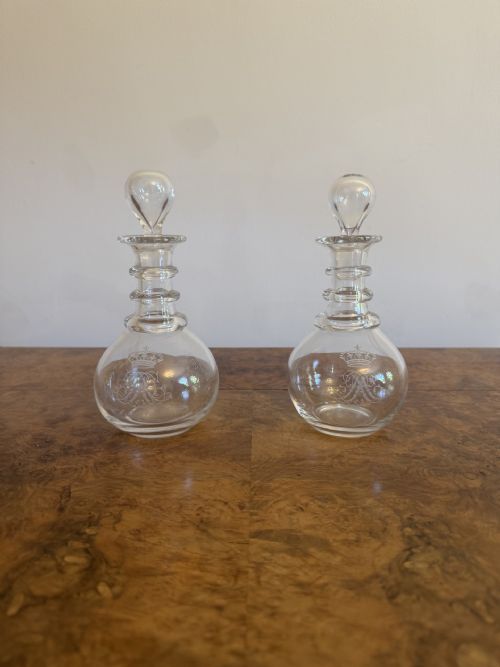
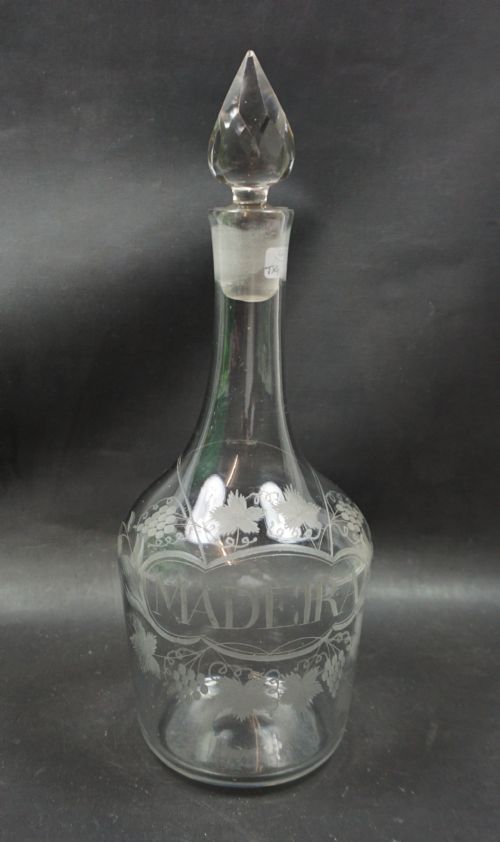
A clear crystal spirit bottle serves spirits at table and on the sideboard, appearing on this page as decanters and decanter stands from the 18th century through to the mid-20th century. Buyers searching for a clear crystal spirit bottle will encounter vessels designed to hold whisky, brandy, rum, gin, liqueur, Madeira and cloves, alongside pairs and matched sets.
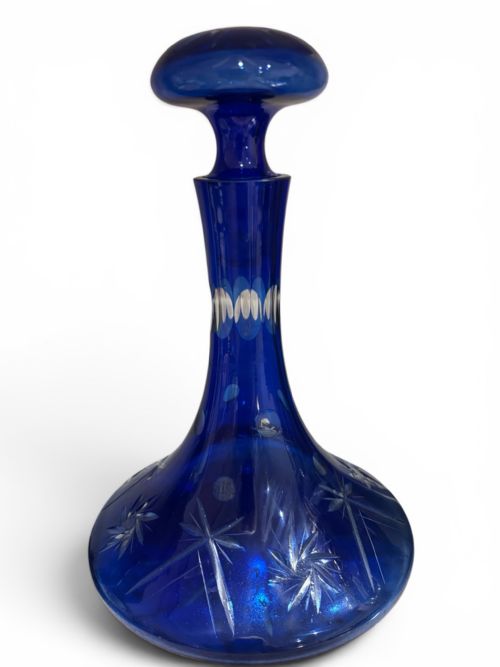
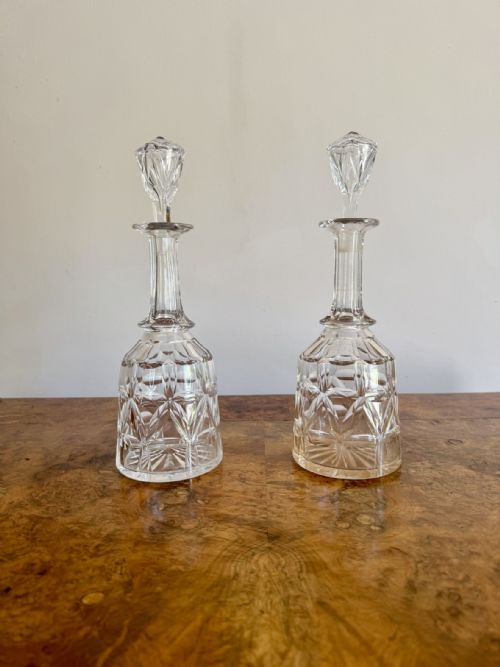
The material takes many forms in these listings, including cut glass, lead crystal, lead glass and crystal glass, often shaped as bell forms, shaft and globe designs, or shoulder decanters. Victorian and Edwardian examples dominate the selection, accompanied by earlier Regency and Georgian pieces, plus bohemian cobalt crystal.
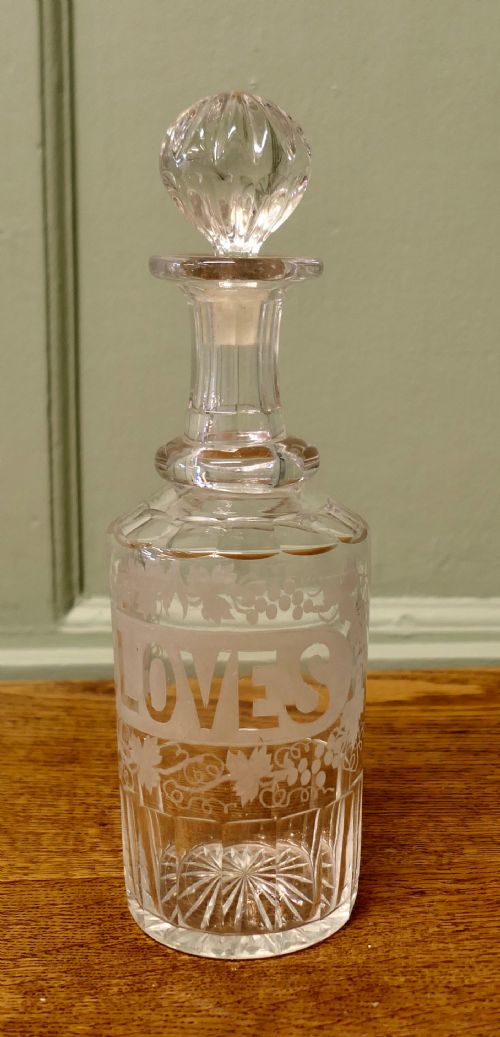
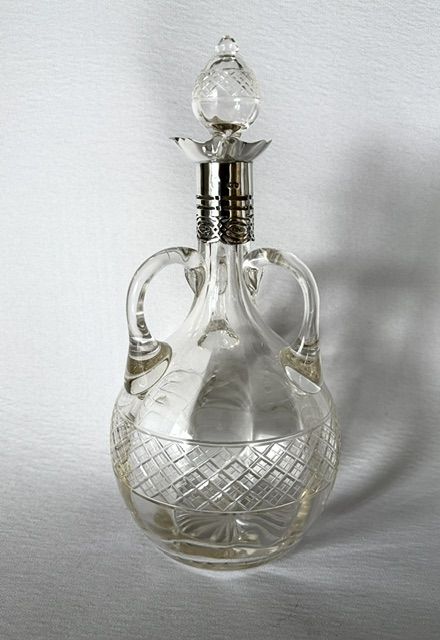
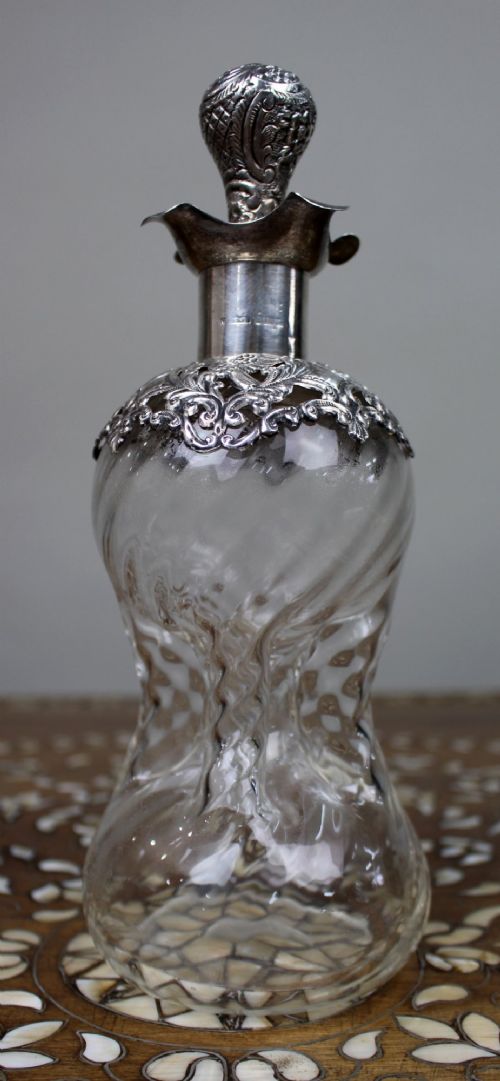
Many of these bottles incorporate silver mounts, collars or hallmarked silver fittings alongside engraved glass labels or etched decoration. Whether styled as Arts and Crafts, Art Deco or traditional Victorian, each piece combines utility with decorative glasswork.
What varies in quality
Clarity of the metal and crispness of the wheel-cut facets distinguish finer examples from standard production. Deep, sharp cutting catches the light directly, whereas worn or softer edges indicate heavier use or simpler moulding.
The presence of hallmarked sterling silver collars, matched stoppers and legible engraved spirit titles elevate a piece. Heavier lead glass weight and balanced proportions demonstrate superior craftsmanship during production.
Listings feature lead crystal, cut glass and sterling silver across Victorian, Edwardian and Regency periods.
James Powell London
The Clear Crystal Spirit Bottle Glossary
- Lead crystal
- Glass containing a significant proportion of lead oxide, which increases weight, refractive index and brilliance. This material allows for deeper and sharper wheel cutting.
- Shaft and globe
- A decanter silhouette featuring a long narrow neck expanding into a rounded globular body. This shape provides stability on the base while holding generous volumes of spirit.
- Shoulder decanter
- A form characterised by broad, flat shoulders tapering down to a cylindrical or panel-cut body. It sits securely in fitted stands or crowded sideboards.
- Sterling silver collar
- A protective metal band fitted around the neck of the bottle, frequently bearing hallmarks. It often anchors the stopper mechanism and adds structural reinforcement.
Clear Crystal Spirit Bottle: Frequently Asked Questions
How do I date a crystal decanter?
Dating relies upon stylistic markers such as shape, cutting depth and hallmarks on any silver collars. Victorian and Edwardian pieces show distinct geometric cutting and neck rings compared to earlier Regency or Georgian examples.
Silver hallmarks provide exact assay years where present. Form variations, such as bell shapes versus shaft and globe silhouettes, also point to specific decades between the 18th and early 20th centuries.
What spirits belong in these bottles?
Historical labels and contemporary evidence indicate these bottles held whisky, brandy, rum, gin, Madeira and liqueurs. Etched inscriptions often name the intended spirit directly on the glass body.
Unmarked vessels suit any preferred spirit for dining or sideboard display. The heavy lead glass protects the contents while offering graceful service.
How should I clean antique decanters?
Gentle washing with warm water and mild detergent preserves both the crystal and any residual silver mounts. Avoid sudden temperature changes to protect the heavy lead glass from thermal shock.
Soft bottle brushes help reach the base of narrow necks. Air drying upside down prevents moisture spots inside the bowl.
Why do some bottles have silver collars?
Silver collars reinforce the vulnerable rim of the decanter neck against repeated stopper insertion. They also provide a surface for assay office hallmarks and maker stamps.
These mounts elevate the decorative appeal of the piece by contrasting polished metal with brilliant cut crystal. Many Edwardian and Victorian examples feature these fitted bands.