
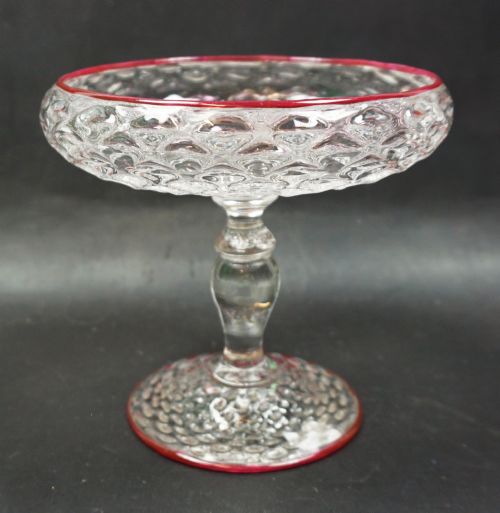
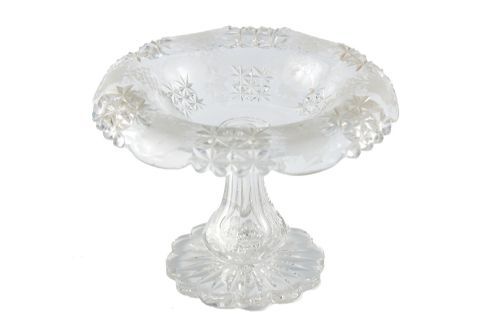


Clear Crystal Pedestal Dish
A clear crystal pedestal dish brings brilliant light to a table, offering a raised display for fruit, sweets or small ornaments.
Clear Crystal Pedestal Dish
A clear crystal pedestal dish encompasses a range of elevated serving vessels, including tazzas, centrepieces, fruit bowls and patch stands found in the listings. These objects range from the early Georgian period through the Victorian and Edwardian eras up to the 1930s.
Buyers will most frequently encounter Victorian cut glass bowls and tazzas alongside Edwardian fruit bowls on this page. Pieces take varied forms, from grand centrepiece bowls and covered sweet jars to miniature patch stands.
How they were made
These items utilise lead glass and lead crystal, shaped through cutting, moulding and etching techniques. Makers employed honeycomb moulding and applied coloured elements such as red cane or yellow over crystal to create decorative contrast.
Certain pieces combine cut crystal with other materials, such as Dutch silver mounts on covered candy bowls. Surface decoration relies on wheel-cutting and delicate etching across the clear crystal body.
Some eighteenth-century ladies used tiny pedestal dishes on their dressing tables to hold velvet beauty spots.
What varies in quality
Quality rests on the crispness of the cutting and the clarity of the metal itself. Deeper, sharper facets refract light cleanly, whereas softer mouldings blur the geometric patterns.
The sophistication of the form dictates distinction, separating standard utility bowls from ambitious centrepieces, tazzas and miniature stands with coloured glass or silver additions.
The Clear Crystal Pedestal Dish Glossary
- Tazza
- A shallow bowl or plate mounted on a pedestal stem. These pieces served sweetmeats or fruit at formal tables.
- Patch stand
- A tiny pedestal dish used in the eighteenth century to hold small fabric patches worn on the face. These miniature items are highly collectible.
- Lead crystal
- Glass containing a high proportion of lead oxide, which increases weight, brilliance and softness for cutting. It produces a distinct ring when struck.
- Sweetmeat jar
- A covered vessel designed for preserved fruits, nuts or confectionery. They often sit on matching stands or bases.
- Honeycombing
- A decorative pattern of shallow, hexagonal impressions resembling a beehive, moulded into the exterior of the glass.
Clear Crystal Pedestal Dish: Frequently Asked Questions
What is a pedestal dish used for?
These elevated vessels traditionally served sweetmeats, fruits, biscuits or small confectionery at the dining table. Their raised profile kept delicacies prominent and shared among guests.
Today, they function as decorative centrepieces or serving dishes for modern gatherings, bringing height and sparkle to a tablescape.
How do I date a crystal dish?
Dating relies on stylistic clues, manufacturing techniques and the weight of the metal. Georgian pieces often feature thicker lead glass with pontil marks underneath, while Victorian items show sharper machine-wheel cutting.
Comparing the rim shape, foot ring and decorative motifs against known period examples helps narrow down the decade of production.
How should I clean antique crystal?
Wash these pieces by hand in lukewarm water using a mild, non-abrasive detergent. Avoid sudden temperature changes to prevent thermal shock and cracking in old lead glass.
Dry them immediately with a lint-free cloth to restore the brilliant refractive shine without leaving water spots.