
Clear Crystal Glassware
Clear crystal glassware encompasses drinking vessels and decorative objects formed from lead glass and flint glass across multiple centuries.
Clear Crystal Glassware
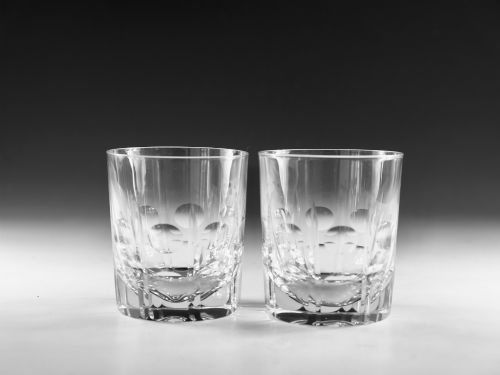
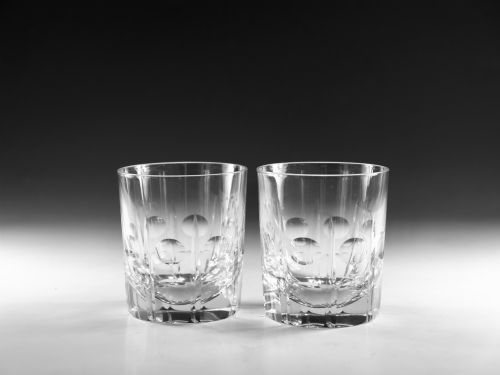
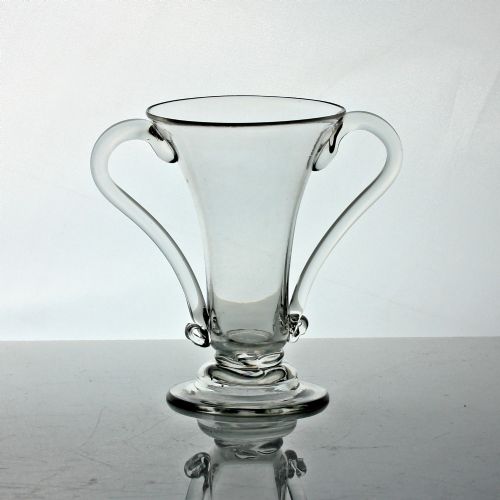
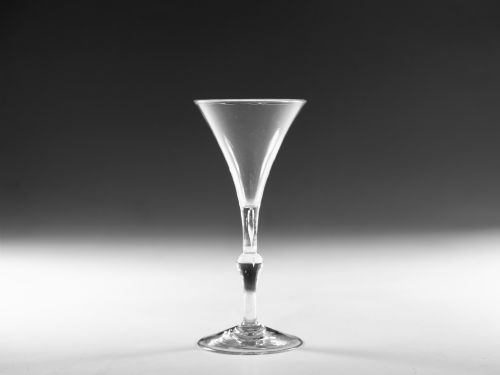
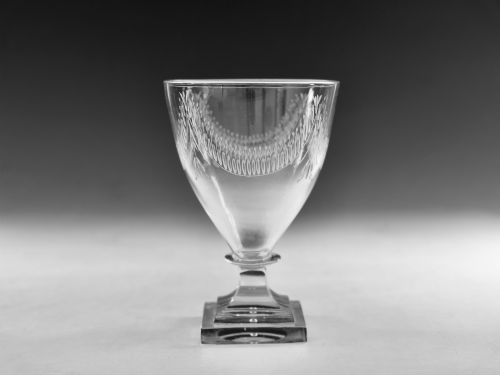
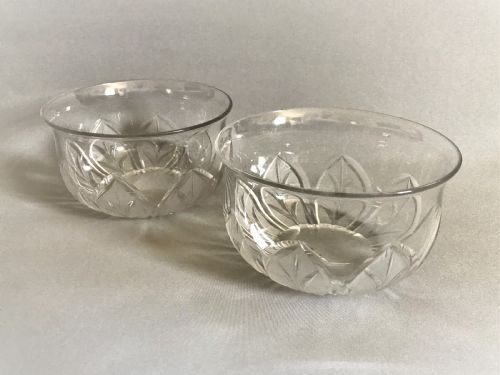
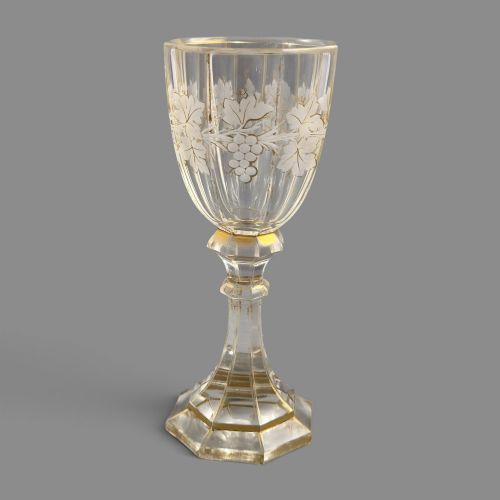
Clear crystal glassware covers a broad spectrum of drinking vessels, bowls, decanters, jugs, and serving items spanning from the eighteenth century through to the art deco period. Buyers encounter drinking glasses such as rummers, wine glasses, champagne coupes, ale glasses, and tumblers alongside larger decorative bowls, ewers, and carafes. These pieces originate from English, French, and Bohemian workshops operating across the Georgian, Victorian, Edwardian, and twentieth-century eras.
Distinctions in craftsmanship
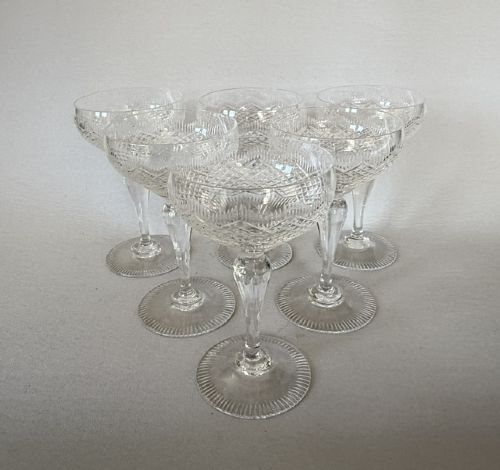
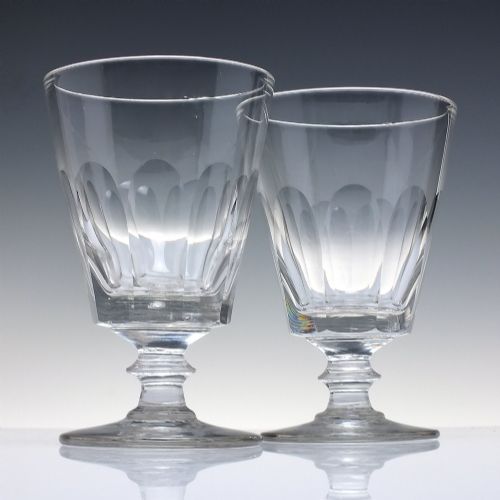
The clarity and weight of the glass establish the baseline of quality, with heavier lead crystal compositions offering superior brilliance and light refraction compared to standard clear glass. Precision in hand-cutting differentiates standard production from exceptional pieces; sharp, clean facet edges and deeply incised patterns require advanced skill from the glass-cutter. The execution of delicate details, such as multi-spiral air twists within slender stems or finely stippled engravings, marks the work of master craftsmen.
Proportion and balance dictate the aesthetic success of drinking vessels and decorative forms. Superior pieces exhibit harmonious relationships between the bowl, stem, and foot, maintaining structural integrity alongside visual lightness. Consistency across matched sets further elevates a group, as uniform wall thickness and matching decorative motifs demonstrate rigorous workshop standards.
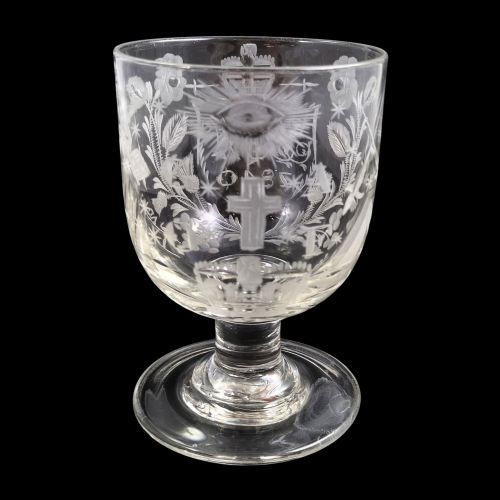
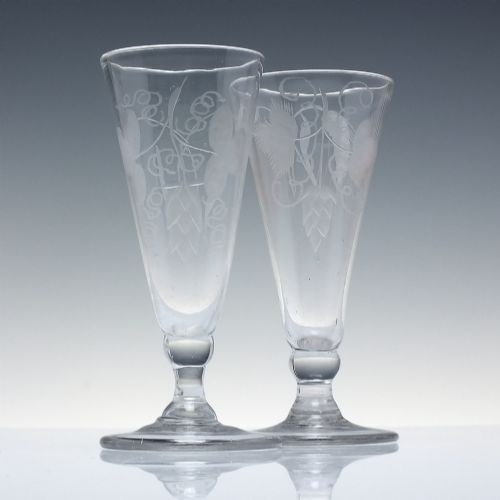
Hops and barley motifs frequently adorn serving rummers, celebrating the contents those heavy vessels once poured.
Stevens and Williams·Moser·Theresienthal·Rene Lalique
The Clear Crystal Glassware Glossary
- Rummer
- A large, heavy drinking glass popular in the eighteenth and nineteenth centuries, typically used for ale, wine, or punch. These vessels often feature bucket bowls supported by stout stems and broad feet.
- Air twist
- An internal decorative feature within the stem of a drinking glass formed by drawing out elongated bubbles of air during the drawing process. These bubbles appear as spiral threads winding down the length of the stem.
- Champagne coupe
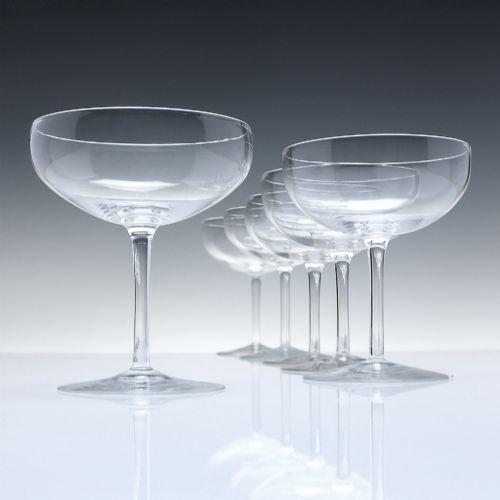
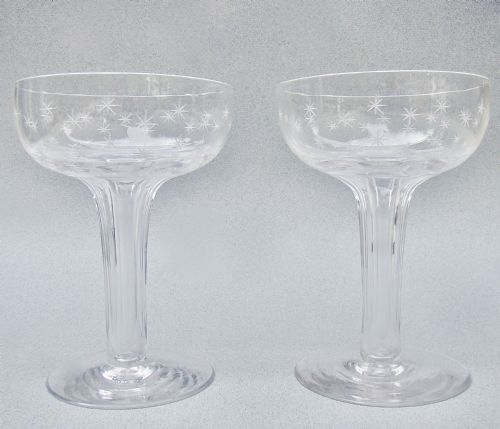
- A shallow, broad-bowled stemmed glass designed for sparkling wine, prevalent during the Victorian, Edwardian, and art deco periods. The wide bowl allows the aromas of the beverage to develop.
- Flint glass
- An early British term for clear glass containing lead oxide, developed to imitate rock crystal. It possesses high density, refractive brilliance, and weight.
- Ewer
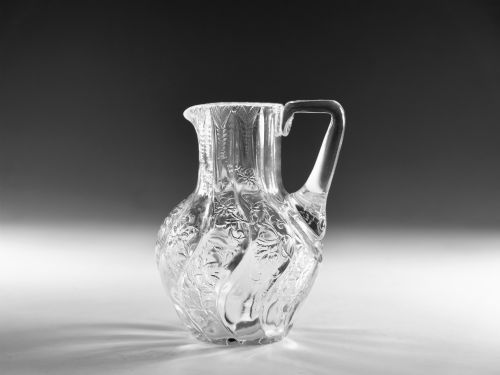
- A large pitcher or jug with a wide spout and looped handle, used historically for serving liquids or as part of a wash set. Antique examples in crystal often feature deep cut-glass decoration.
Clear Crystal Glassware: Frequently Asked Questions
Can I use antique wine glasses for dining?
Many buyers enjoy using Georgian and Victorian drinking glasses for everyday dining or special occasions. Handle them with care due to the thinner walls and delicate stems characteristic of eighteenth-century tableware.
Wash them by hand rather than placing them in modern dishwashers. Sturdier nineteenth-century rummers and tumblers offer robust alternatives for regular use.
How do I distinguish air twist stems from other stems?
Hold the glass up to the light to examine the interior of the stem. An air twist reveals delicate, helical channels of trapped air winding through the transparent metal.
Plain stems are solid and smooth, while faceted stems show exterior cut planes. Mercury twists contain silvery threads rather than trapped air.
What defines a rummer compared to a wine glass?
Rummers are substantially larger and heavier drinking vessels designed for robust beverages such as ale, porter, or rum punch. They usually possess short, thick stems and deep, bucket-shaped bowls.
Standard wine glasses feature slender stems and smaller, bell or ogee bowls intended for modest measures of wine.