

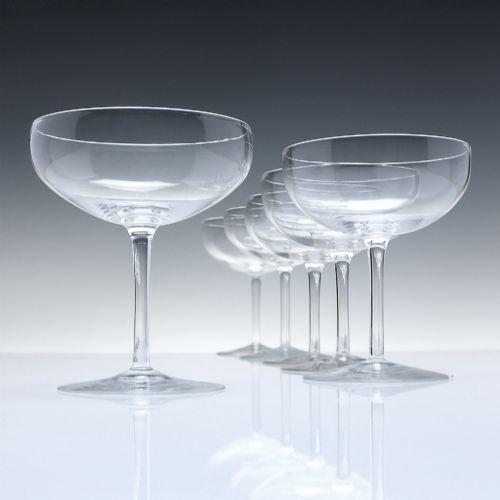
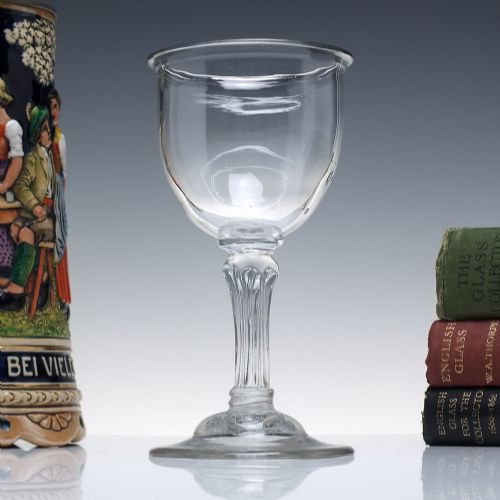


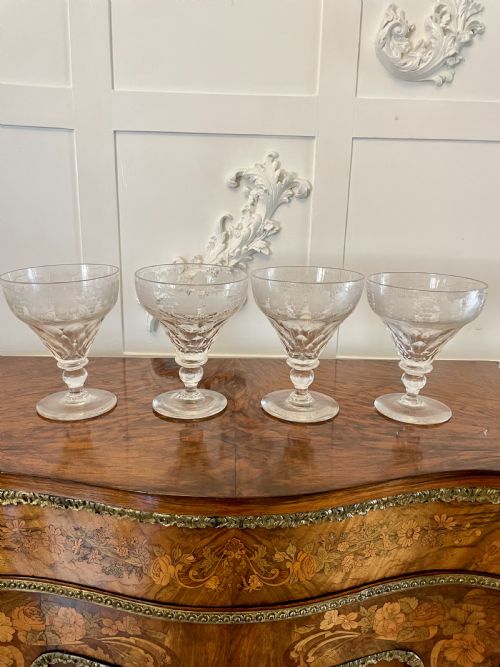
Clear Crystal Champagne Coupes
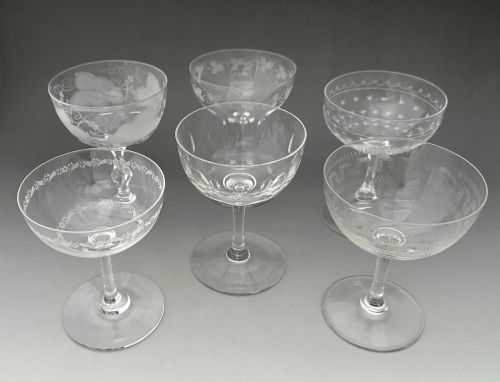
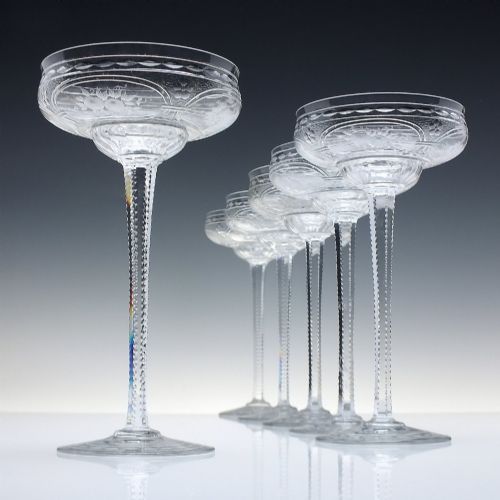
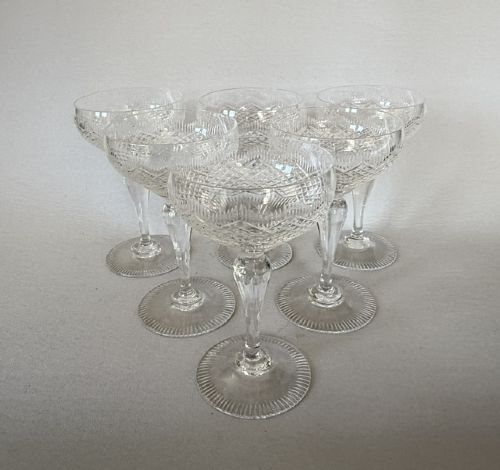
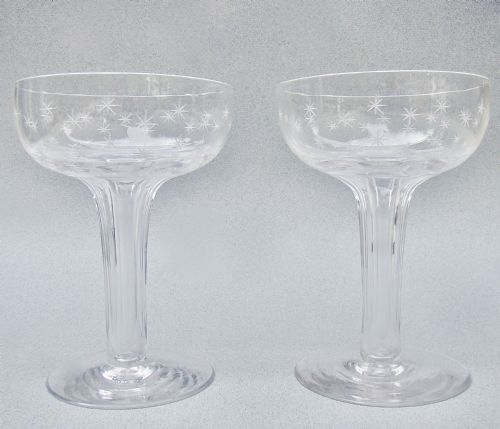
Clear crystal champagne coupes bring sparkle to a table, offering wide shallow bowls that suit sparkling wine.
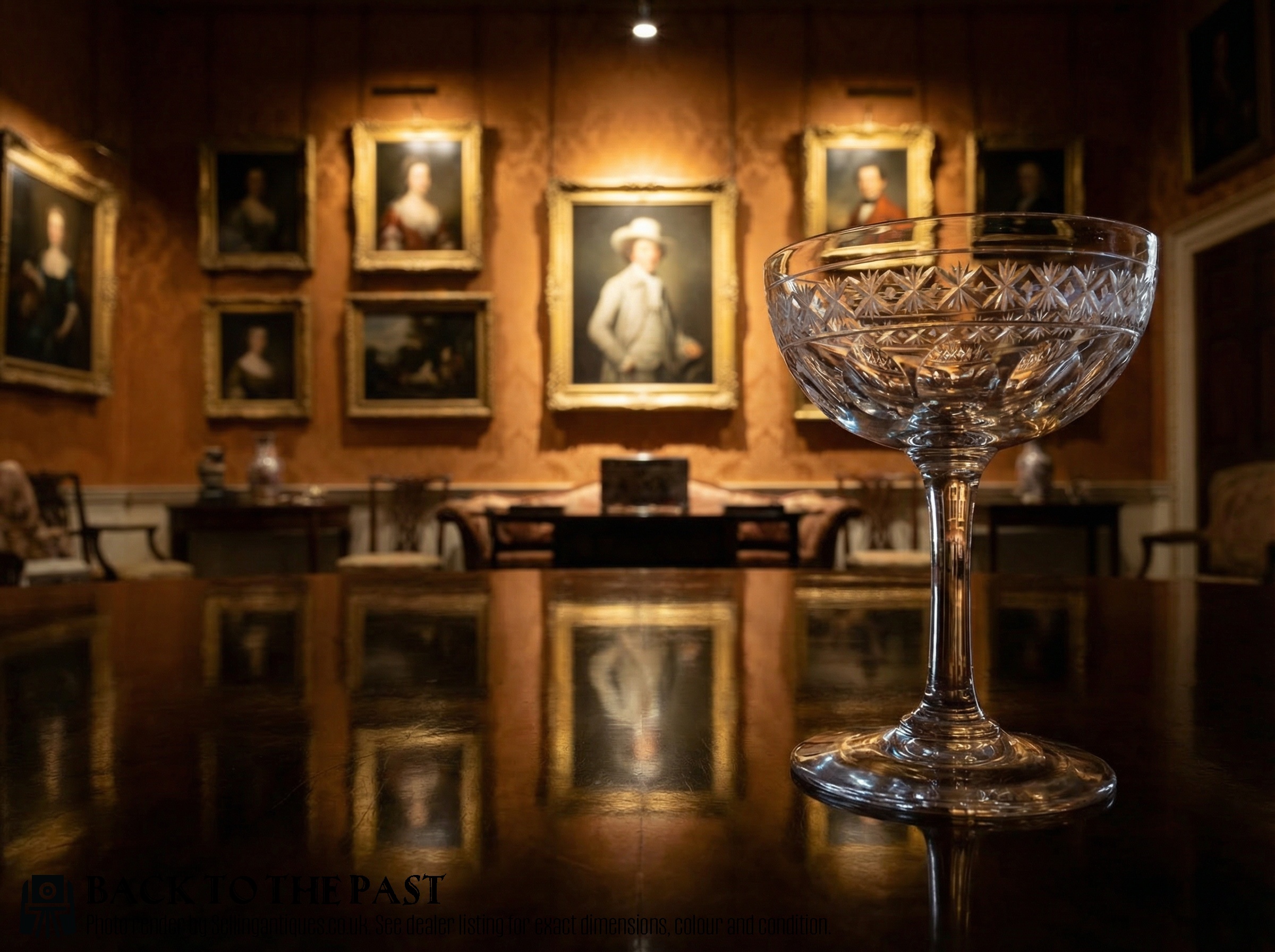
Clear Crystal Champagne Coupes
When buyers search for clear crystal champagne coupes, they seek vintage and antique glassware designed for sparkling wine. These pieces span multiple eras, including Georgian, Regency, Victorian, Edwardian, and the 1920s.
The most common forms on this page are matched sets of bowls and glasses intended for champagne. They appear in varied sizes, from small bowls to large crystal coupes.
Origins include English glassware alongside examples shaped by Victorian, Edwardian, and Art Deco styles. Makers and artisans utilised lead crystal, cut glass, and clear glass to achieve a bright finish.
Materials and methods of production
The primary materials recorded in these listings are crystal glass, lead glass, and clear glass, sometimes accented with cranberry glass. These substances provided the clarity required for decorative cutting.
Techniques relied upon skilled handwork to create hollow stems and pedestal stems. Artisans applied star etching, facet cutting, and floral engraving, such as convolvulus motifs, directly onto the bowls.
Clear Crystal Champagne Coupes Retail Price Guide 2026
Typical asking prices for clear crystal champagne coupes among the pieces listed under this phrase on Sellingantiques today, from the lower quarter to the upper quarter. They describe what is for sale here now, not the wider market.
Assessing quality in antique glassware
Quality rests upon the crispness of the cutting and engraving, separating finely executed star-etched or facet-cut surfaces from plain vessels. Weight and clarity of the crystal also distinguish superior examples.
Completeness alters desirability, as matched sets ranging from pairs up to sixteen pieces hold greater utility than isolated individual glasses.
The Clear Crystal Champagne Coupes Glossary
- Champagne coupe
- A shallow-bowled glass historically used for sparkling wine. Its wide rim allows the bubbles to dissipate quickly.
- Lead crystal
- Glass containing metal oxide that increases weight, brilliance, and refractive index. This material permits sharper facet cutting.
- Facet cut
- A decorative technique involving flat, polished planes ground into the glass surface. It enhances the play of light across the bowl or stem.
- Hollow stem
- A stem possessing an internal channel running from the bowl to the foot. This form appears on specific Victorian designs.
- Pedestal stem
- A raised support elevating the drinking vessel above the foot. Eighteenth-century examples frequently utilise this profile.
Clear Crystal Champagne Coupes: Frequently Asked Questions
What is a champagne coupe?
A champagne coupe is a stemmed glass featuring a broad, shallow bowl designed for sparkling wine. It gained popularity in various forms throughout the Georgian, Victorian, and Edwardian eras.
Today, buyers use these vintage bowls for serving champagne or desserts, appreciating their historical craftsmanship and decorative cut glass surfaces.
How do I care for antique crystal?
Antique crystal requires gentle hand washing in warm water with mild detergent. Avoid sudden temperature changes to prevent cracking the glass.
Store the coupes safely on stable shelving, ensuring they do not crowd together to protect delicate rims and engraved stems.
Are these glasses safe to use?
Most antique crystal and lead glass pieces remain suitable for serving beverages. Modern safety guidelines suggest avoiding prolonged storage of acidic liquids in lead crystal vessels.
For normal dining and toasts, these Victorian and Edwardian coupes function well when handled with reasonable care.
How can I date antique glassware?
Dating relies on observing form, cutting styles, and manufacturing traits such as pontil marks and glass composition. Victorian pieces often feature heavy star-etching, while Georgian examples frequently display pedestal stems.
Comparing the weight, clarity, and decorative motifs helps place a piece within periods like the Regency or Edwardian eras.