

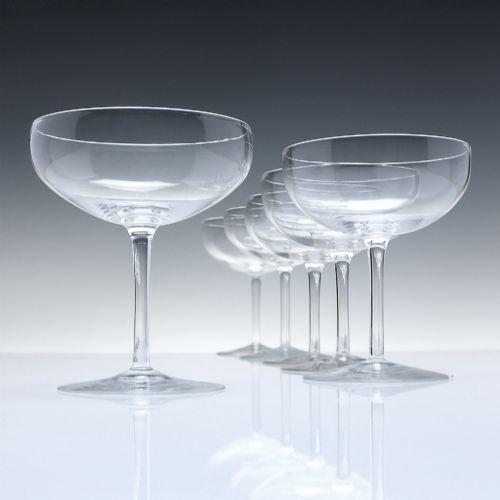


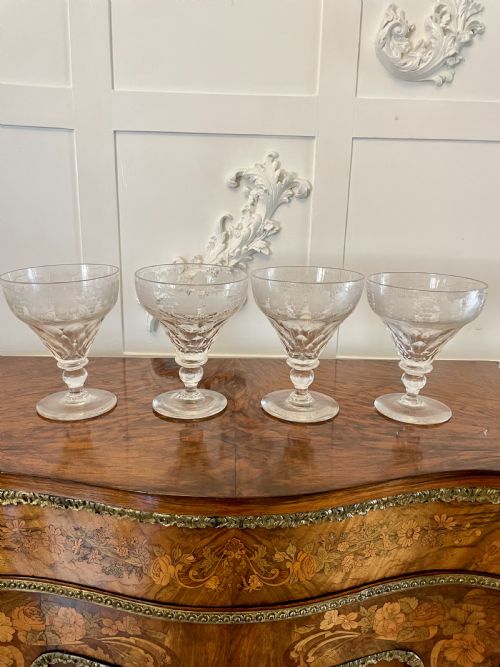
Crystal Champagne Saucer Glasses
Crystal champagne saucer glasses bring weight and brilliance to any table, offering classic proportions for vintage toasts.
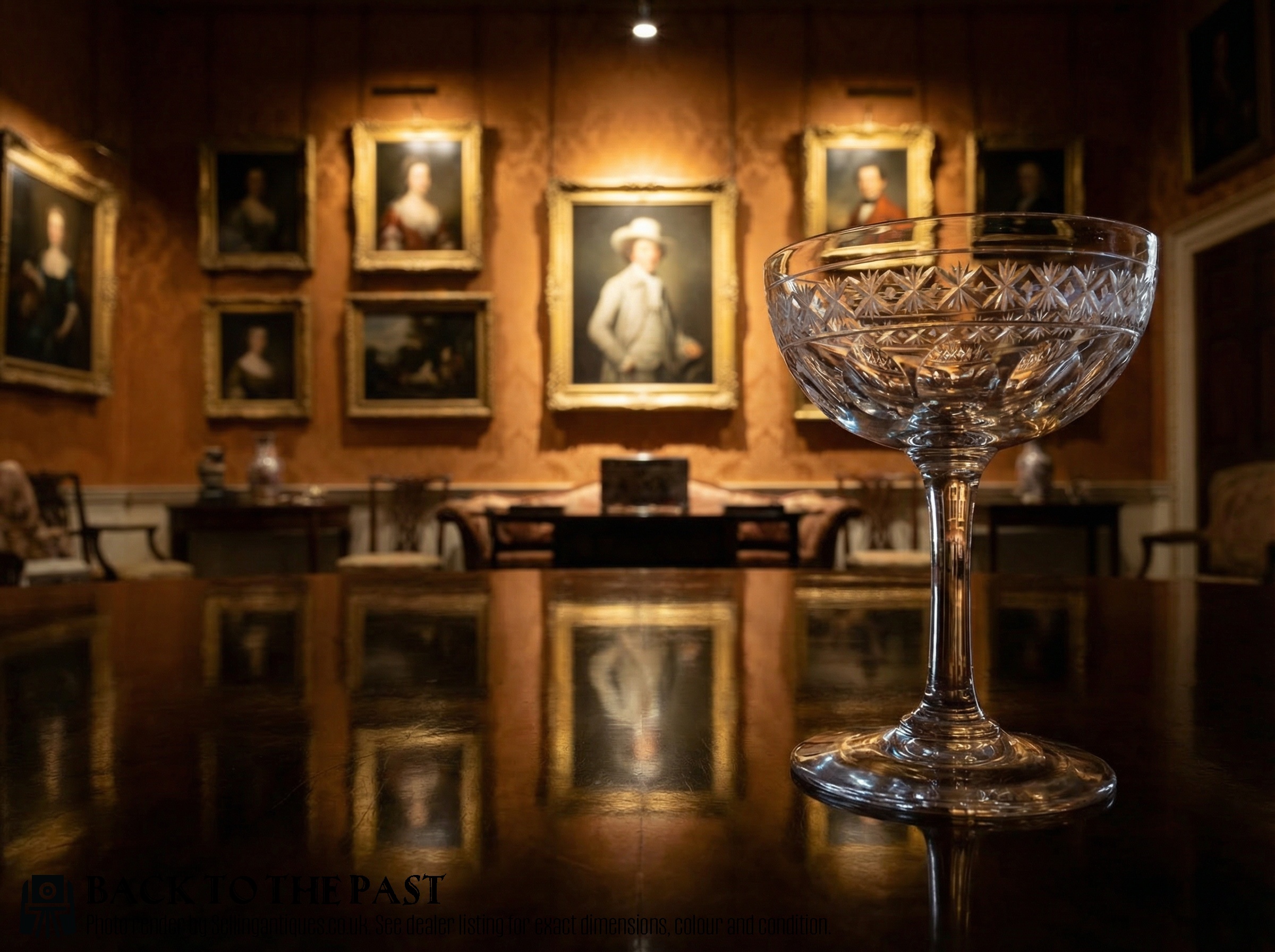
Crystal Champagne Saucer Glasses
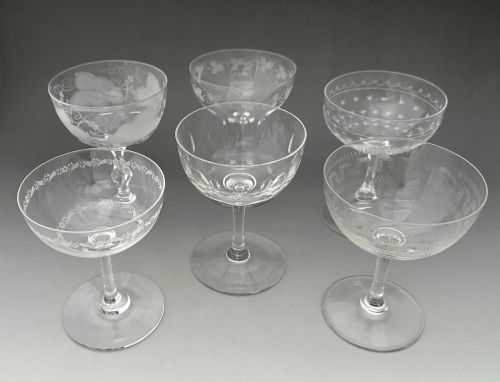
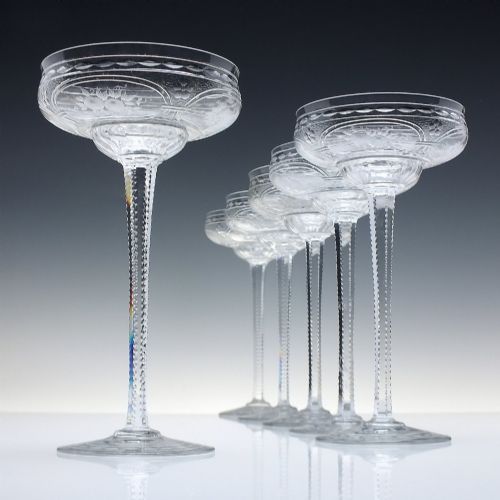
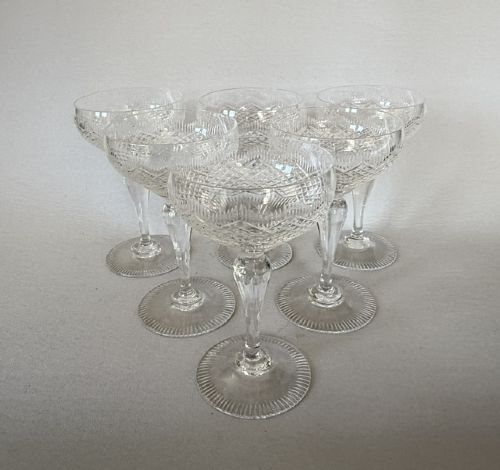
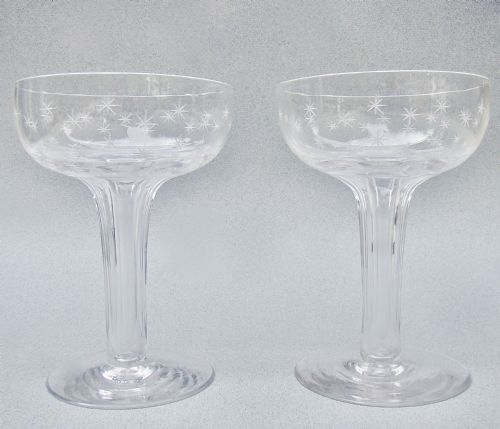
Crystal champagne saucer glasses appear across Victorian, Edwardian, and Art Deco periods, encompassing forms like champagne coupes, bowls, and hollow stem glasses. Buyers searching for crystal champagne saucer glasses encounter matching sets of six alongside pairs and larger groups numbering up to sixteen pieces.
The objects span English origins from the mid-nineteenth century through the early twentieth century, capturing decades of social dining and celebratory drinking. These vessels serve champagne with a shallower profile than modern flutes, reflecting historical tastes in glassware design.
Manufacturing and Materials
Makers utilised lead crystal, glass, and cut crystal, employing techniques such as wheel cutting, star-etching, and engraving to ornament the bowls. Cased glass variations combine clear crystal with layers of cranberry, green, or red glass, allowing artisans to cut through the outer colour to reveal the clear material beneath.
Facet cut stems appear alongside hollow stems, demonstrating diverse methods for constructing the supporting column of the glass. Surface decoration ranges from botanical motifs like convolvulus and fruiting vines to precise geometric cutting across the bowl and foot.
Crystal Champagne Saucer Glasses Retail Price Guide 2026
Typical asking prices for crystal champagne saucer glasses among the pieces listed under this phrase on Sellingantiques today, from the lower quarter to the upper quarter. They describe what is for sale here now, not the wider market.
Listings span the Victorian, Edwardian, and Regency periods, featuring lead crystal, cut glass, and cased glass in cranberry, green, and red hues.
Quality and Distinction
The clarity and weight of the lead crystal establish the foundational quality of the vessel, separating heavy, resonant pieces from lighter standard glass. Precision in the wheel cutting and depth of the engraving distinguish master craftsmanship from simpler surface decoration.
Consistency across a matched set of multiple glasses maintains higher standing than assembled groups, particularly in uniform bowl dimensions and stem thicknesses. The complexity of cased glass execution, involving double-layered colours and aligned cutting, marks the upper tier of production.
The Crystal Champagne Saucer Glasses Glossary
- Cased glass
- Glass formed of two or more distinct layers of different colours, where the outer layer is partially cut away to expose the contrasting colour beneath. This technique creates striking visual depth on decorative tableware.
- Champagne coupe
- A shallow, broad-bowled glass traditionally utilised for serving sparkling wine and champagne. The wide rim allows aromas to disperse quickly.
- Star-etched
- A decorative motif incised into the glass surface in the pattern of a star. Artisans applied this using a small rotating wheel.
- Hollow stem
- A glass construction where the interior of the stem remains open to the bowl. This design feature appears in specific nineteenth-century drinking vessels.
- Facet cut
- Geometric planes ground and polished onto the surface of crystal to reflect light. These flat cuts enhance the refractive quality of the material.
Crystal Champagne Saucer Glasses: Frequently Asked Questions
How do I clean antique crystal glasses?
Wash crystal champagne saucer glasses by hand in warm water using a mild detergent, avoiding sudden temperature changes that might stress the material. Place a soft towel in the bottom of the sink to protect the foot and rim from accidental impacts during washing.
Dry each piece immediately with a lint-free linen cloth to prevent water spots and maintain the brilliant clarity of the lead crystal.
Were these coupes used only for champagne?
Victorian and Edwardian households utilised these shallow bowls for serving sparkling wines, but they also functioned as dessert dishes for puddings and sorbets. The broad bowl accommodated layered trifles and sweet courses during formal nineteenth-century dinners.
Modern hosts continue this tradition by using the vessels for both champagne service and layered desserts.
What is cased glass?
Cased glass consists of a base layer of clear crystal fused with an outer casing of coloured glass, such as cranberry, green, or red. Craftsmen then cut through the exterior colour to reveal the clear crystal underneath.
This method creates high-contrast patterns and rich jewel tones characteristic of mid-nineteenth-century glassware.
How do I date an antique champagne glass?
Dating relies on stylistic markers, cutting techniques, and material composition recorded across Victorian, Edwardian, and Regency periods. Mid-nineteenth-century examples often feature elaborate cased glass and botanical engraving, whereas Edwardian sets lean towards refined cutting and uniform proportions.
Comparing the stem construction and weight alongside known period styles helps narrow the manufacturing era.