








Vintage Crystal Glassware Set
A vintage crystal glassware set brings weight, sparkle and period character to the table, spanning heavy Georgian rummers to sleek Art Deco decanters.
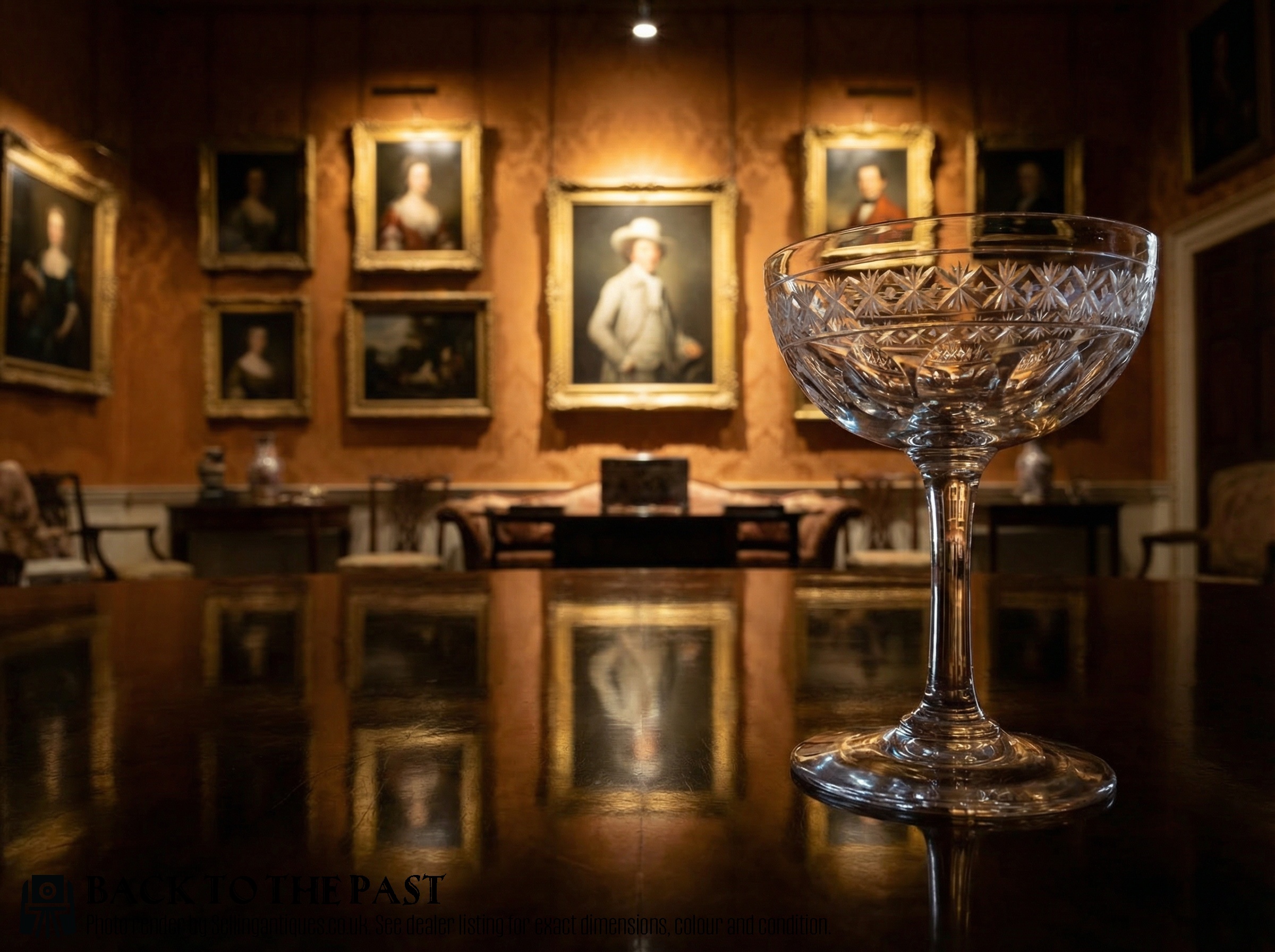
Vintage Crystal Glassware Set
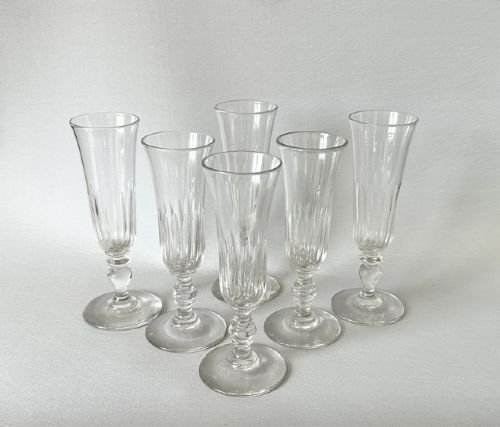
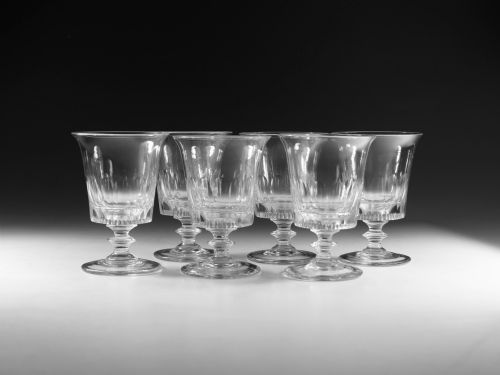
A vintage crystal glassware set brings together matching or harmonised drinking vessels, decanters or serving pieces produced across the nineteenth and twentieth centuries. When searching for a vintage crystal glassware set, buyers encounter forms ranging from simple Georgian jelly glasses and rummers to elaborate Edwardian champagne coupes and French Art Deco drinking suites. These groupings often comprise sets of six, eight or twelve matching glasses, alongside occasional decanter sets with matching jugs and tumblers.
The materials and styles span significant historical shifts, including heavy lead glass, clear cut crystal, and coloured vessels from Victorian, Edwardian and Art Deco periods. Pieces originate from English makers as well as continental European workshops in Bohemia, France and the Czech lands. Buyers select these sets for formal dining, entertaining, or daily use, appreciating the tactile weight of lead crystal and the distinct decorative techniques of each era.
Materials and production methods
Glassmakers produced these sets using lead glass and clear crystal, which provided the high refractive index and heavy feel essential for quality vessels. Artisans shaped pieces through free blowing, optical blowing, or moulding, creating smooth walls ready for subsequent ornamentation. Lead crystal allowed deeper wheel cutting without fracturing the material, producing sharp facets that caught candle or electric light.
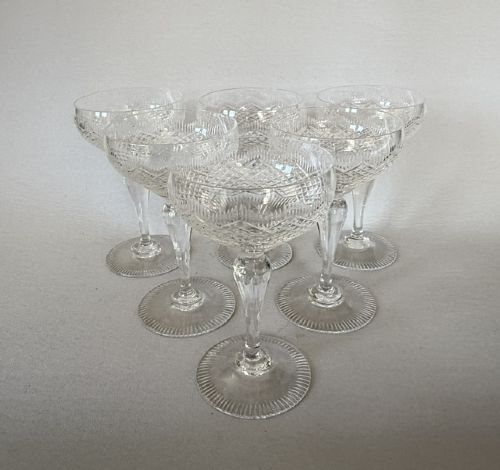
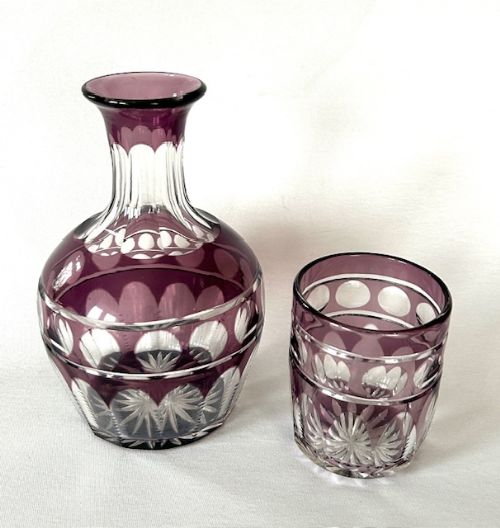
Decoration relied on skilled hand techniques including wheel cutting, intaglio engraving, acid etching, and enamelling. Workshops applied geometric patterns, floral motifs, or gold highlights, while some pieces incorporated coloured layers over clear glass to create striking contrast during cutting. Decanters and jugs often featured blown bodies with hand-applied handles and ground stoppers specific to each individual neck.
Vintage Crystal Glassware Set Retail Price Guide 2026
Typical asking prices for vintage crystal glassware set among the pieces listed under this phrase on Sellingantiques today, from the lower quarter to the upper quarter. They describe what is for sale here now, not the wider market.
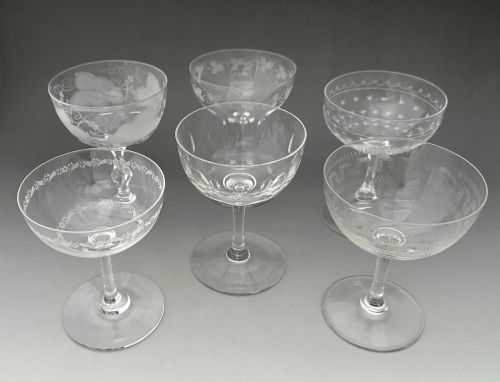
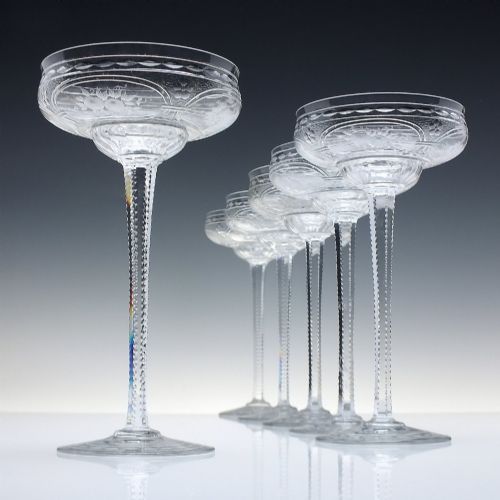
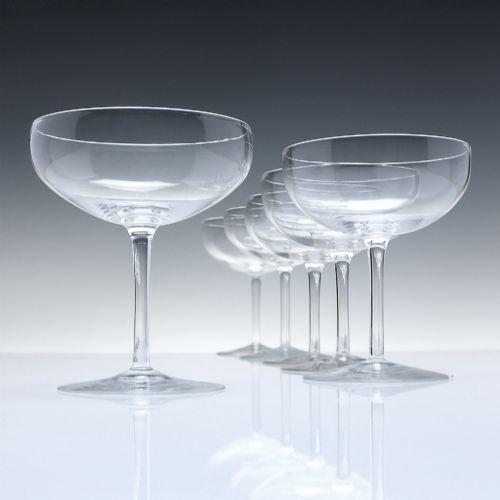
Object forms span drinking services, decanter sets, champagne coupes, finger bowls, ice plates, and candlesticks originating from England, France, Bohemia, and the Czech lands.
Distinctions in quality and execution
The quality of a set rests upon the clarity of the glass, the precision of the cutting, and the uniformity across the entire group. Superior sets display crisp, deep wheel cuts with smooth polished facets and minimal internal bubbles or striations in the metal. Consistency in height, wall thickness, and weight between individual glasses indicates careful workshop production rather than hurried output.
Decoration further separates standard production from exceptional examples, as seen in fine intaglio engraving, detailed acid etching, or precise enamelling. In matched sets, the preservation of every original piece without replacement substitutes maintains both the aesthetic integrity and the historical completeness of the service.
Rene Lalique·Theresienthal·Webb Corbett·James Powell·Saint-Louis·Karl Palda
The Vintage Crystal Glassware Set Glossary
- Lead crystal
- Glass containing a significant percentage of lead oxide, which increases the weight, brilliance, and softness of the material for easier cutting. This composition produces the characteristic ring when tapped.
- Champagne coupe
- A shallow, broad-bowled stemmed glass designed for sparkling wine, popular during the Victorian, Edwardian, and Art Deco periods. The wide bowl allows the aromas to release quickly.
- Intaglio
- A decorative technique where designs are sunk below the surface of the glass by means of small grinding wheels. This creates detailed pictorial or floral motifs with a frosted appearance.
- Rummer
- A large, sturdy drinking glass on a short stem, common in the Georgian and nineteenth centuries. Originally used for ale, cider, or wine, rummers possess considerable heft.
- Harlequin set
- A collection of glasses that match in form or period but vary in their individual colours or decorative motifs. These groupings offer a playful mix while retaining a uniform shape.
Vintage Crystal Glassware Set: Frequently Asked Questions
Are older glasses safe for daily use?
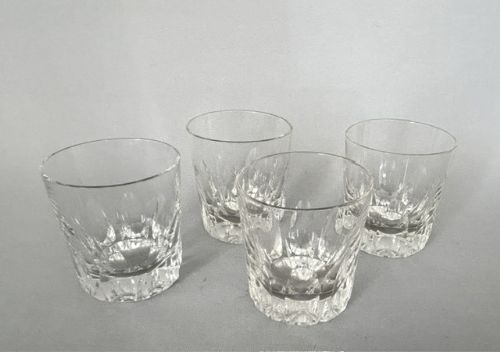
Most nineteenth and twentieth-century crystal glasses are structurally robust enough for regular use, provided they are handled with care during washing and storage. The thicker lead glass found in many Victorian tumblers and rummers withstands everyday handling well.
Caution is required with pieces featuring delicate stems, fine acid etching, or gilt highlights, which benefit from reserved use during special occasions to preserve their condition.
How do I identify Art Deco crystal?
Art Deco crystal sets display geometric motifs, clean lines, and stylised patterns influenced by the 1920s and 1930s design movements. Decanter sets from this era often feature stepped silhouettes, angular stoppers, and contrasting black or coloured accents.
Makers such as Karl Palda and French glasshouses produced suites focusing on symmetry and abstract engraving rather than the floral curves seen in earlier Victorian or Art Nouveau examples.
What is the difference between crystal and glass?
Crystal contains metal oxides, typically lead oxide, which increases the density, refractive index, and clarity compared to standard soda-lime glass. This composition allows crystal to be cut deeply and polished to a brilliant shine.
Standard glass feels lighter in the hand, lacks the resonant ring of lead crystal, and does not refract light with the same prismatic intensity.
Can I mix different periods on the table?
Mixing periods is common practice for collectors who appreciate the variation in historical tableware styles. Combining Georgian rummers with Victorian decanters or Edwardian champagne coupes creates a layered, eclectic table setting.
Harlequin sets specifically embrace this approach, using matching forms across different colours or coordinated shapes to build a cohesive visual display.