



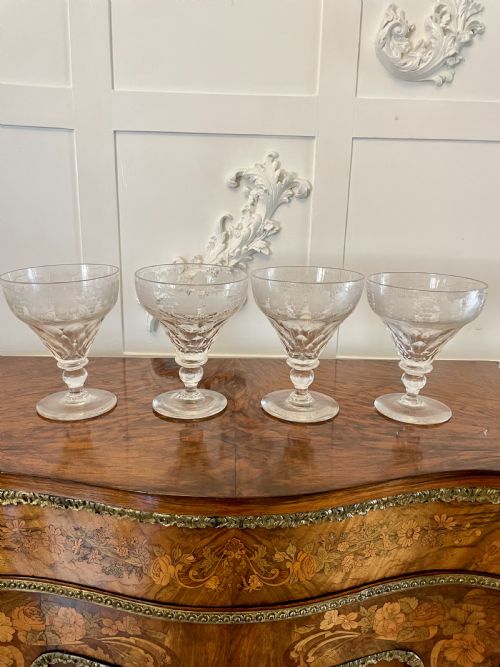
Crystal Glass Cocktail Coupes
Crystal glass cocktail coupes bring weight and sparkle to any table, holding the effervescence of a vintage champagne.
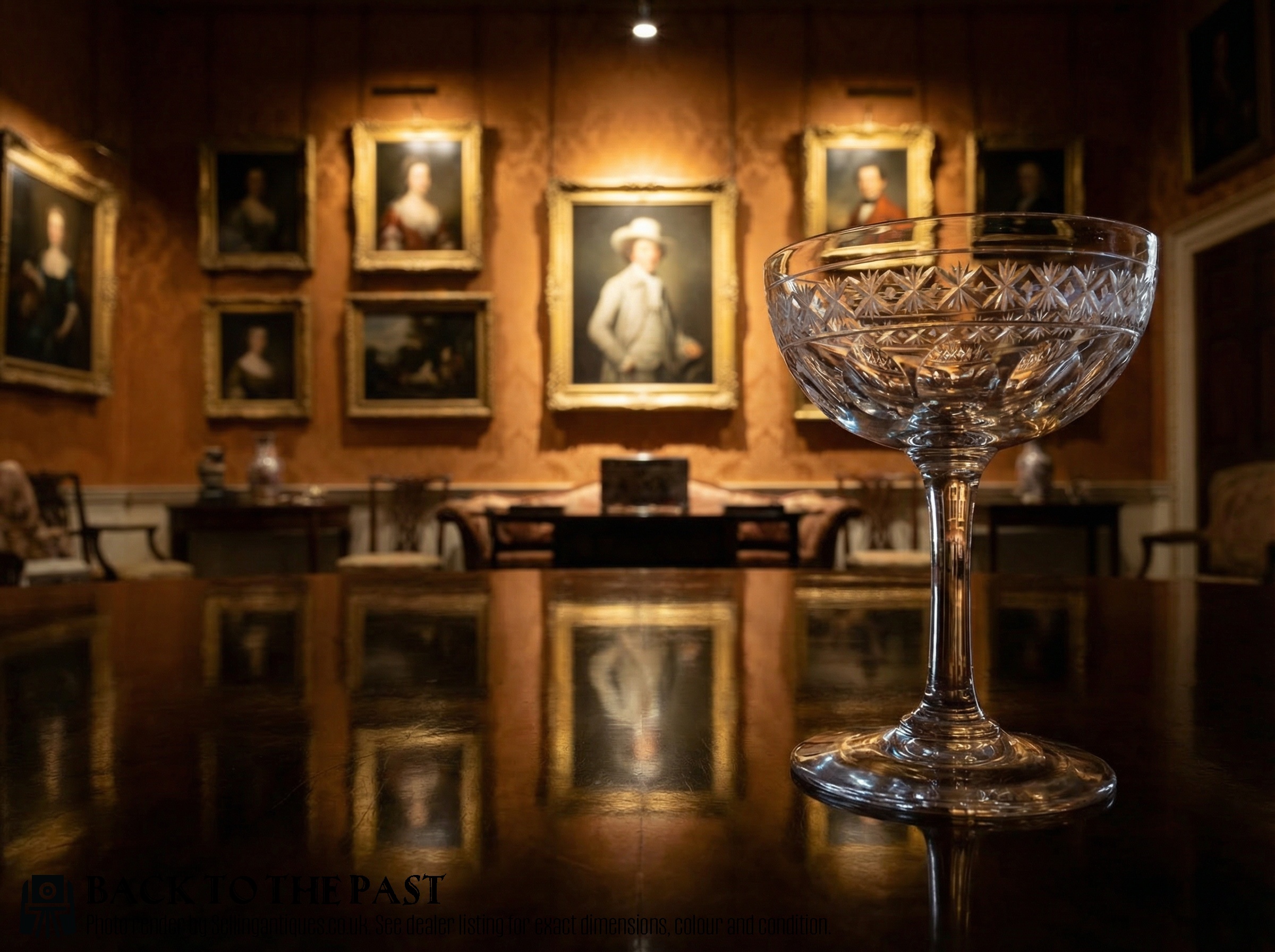
Crystal Glass Cocktail Coupes
Crystal glass cocktail coupes comprise low, wide bowls designed for champagne and mixed drinks, standing upon stems that range from short and hollow to tall and facet-cut. When buyers search for crystal glass cocktail coupes, they encounter diverse forms spanning the Regency, Victorian, Edwardian, and 1920s periods.
The selections on this page appear as sets of champagne bowls or matching glasses, created in English traditions. Forms include both intimate pairs and large sets suited for serving guests.
Victorian and Edwardian examples dominate the available styles, often featuring decorative surface work upon clear or coloured crystal.
How they were made
Maker's methods rely heavily on heavy glass, lead crystal, and cased glass in striking green or red over crystal layers. Artisans shaped these vessels through blowing and hand-finishing techniques.
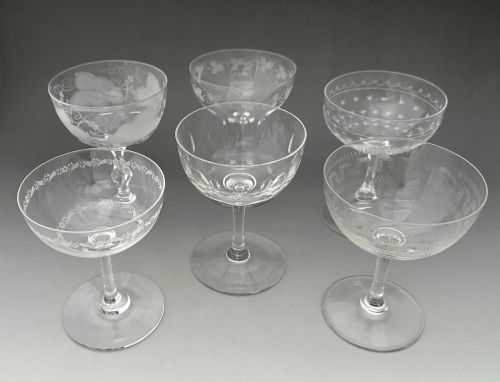
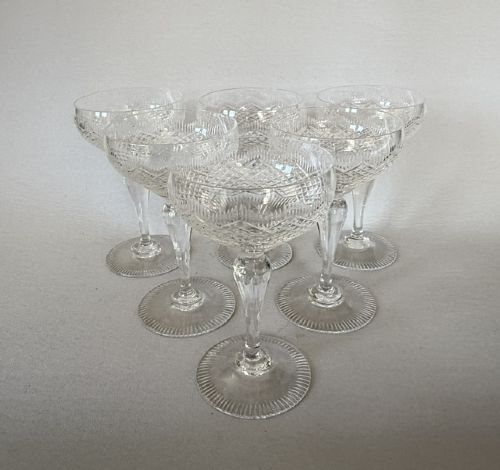
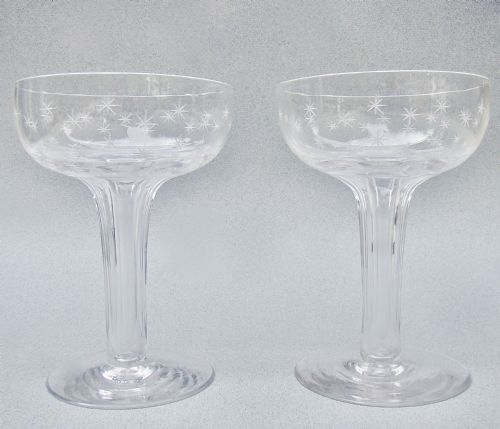
Decoration was achieved through precise cutting, star-etching, and detailed surface engraving depicting motifs such as fruiting vines. Stems were frequently facet-cut to catch the light from every angle.
Crystal Glass Cocktail Coupes Retail Price Guide 2026
Typical asking prices for crystal glass cocktail coupes among the pieces listed under this phrase on Sellingantiques today, from the lower quarter to the upper quarter. They describe what is for sale here now, not the wider market.
Some Victorian glasses feature hollow stems designed to watch the bubbles rise straight up from the base.
What varies in quality
Quality rests upon the clarity of the crystal and the crispness of the cutting or engraving on the bowl and foot. Hand-cut facets and intricate star-etchings demonstrate a higher degree of artisan skill than simpler moulded surfaces.
The completeness of a matched set significantly alters the character of the group, ranging from intimate pairs to extensive sets of sixteen glasses. Coloured cased glass variations, such as red or green over crystal, also reflect specific periods of production.
The Crystal Glass Cocktail Coupes Glossary
- Crystal glass
- A clear, brilliant form of glassware containing mineral additives that increase weight and refractive index. This material allows deep, sharp cutting.
- Cased glass
- Glass formed of two or more distinct layers of different colours, where the outer layer is partially cut away to reveal the contrasting colour beneath.
- Star-etched
- A decorative motif incised into the surface of the glass in a star pattern. This technique creates geometric sparkle across the bowl.
- Facet cut
- Flat polished planes ground into the stem or bowl of a glass. These surfaces catch the light and improve grip.
Crystal Glass Cocktail Coupes: Frequently Asked Questions
What drinks belong in crystal glass cocktail coupes?
These shallow bowls suit vintage champagne, prosecco, and classic cocktails that benefit from a wide surface area. The design encourages the release of aromas while holding the drink securely.
Traditional service for these glasses dates back through the Victorian and Edwardian eras, where they played a central role in formal dining and celebrations.
How do I care for antique crystal glass cocktail coupes?
Hand washing in lukewarm water with mild detergent preserves the clarity and prevents damage to the delicate cut stems and engraved bowls. Avoid sudden temperature changes to protect the older glass.
Storing them upright on stable surfaces prevents chipping along the fine rims of the bowls.
Are these glasses safe for modern use?
These pieces function well for toasts and dinners provided they receive careful handling during use and cleaning. The lead crystal and cut glass construction remains durable despite its age.
Their historical nature simply calls for gentle treatment rather than automated dishwashing.
How can I tell a Victorian coupe from a 1920s one?
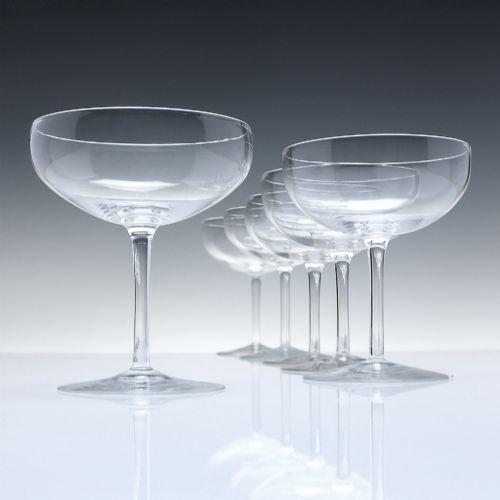
Victorian and Regency pieces often feature heavy hand-cutting, star-etchings, and engraved fruiting vines on thicker walls. Edwardian and 1920s examples frequently introduce larger matched sets with finer walled bowls and crisp facet-cut stems.
Examining the weight, engraving style, and overall silhouette helps determine the manufacturing period.