

Vintage Stemware Glasses
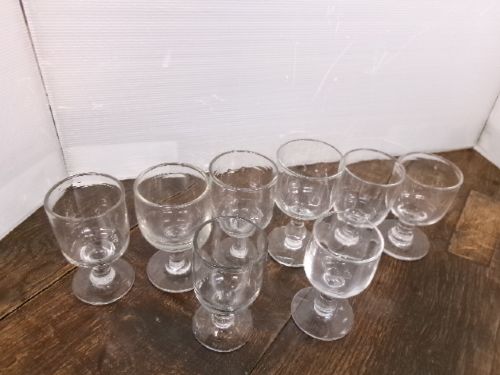
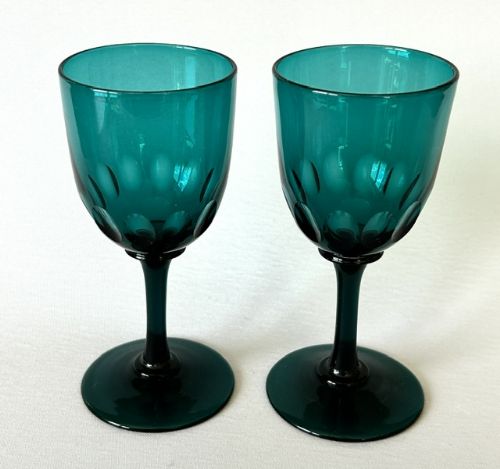
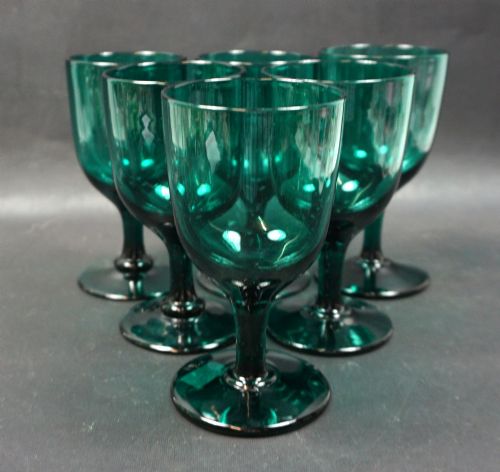
These vintage stemware glasses range from eighteenth-century lead crystal twists to colourful Victorian bowls.
Vintage Stemware Glasses
When you search for vintage stemware glasses, you encounter drinking vessels spanning multiple centuries of British and continental European design. The selection includes wine glasses, champagne coupes, ale glasses, and rummers produced across Georgian, Victorian, and Edwardian periods.
The pieces appearing most frequently range from eighteenth-century wine glasses with air or opaque twists in the stem to nineteenth-century coloured glass and twentieth-century cut crystal suites. Form follows function closely, distinguishing deep champagne bowls from tall hock glasses and slender cordials.
How they were made
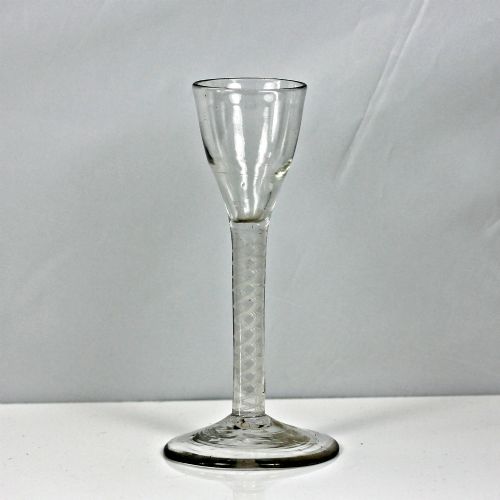
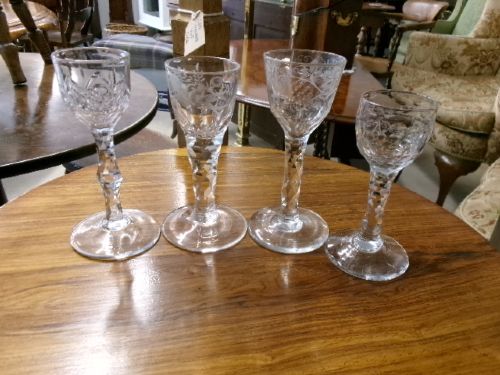
Glassmakers shaped these pieces using free-blowing and mould-blowing techniques, frequently employing lead glass and lead crystal to achieve clarity and weight. Stems were drawn or formed separately and applied while hot, often incorporating internal air bubbles or twisted threads of opaque white glass.
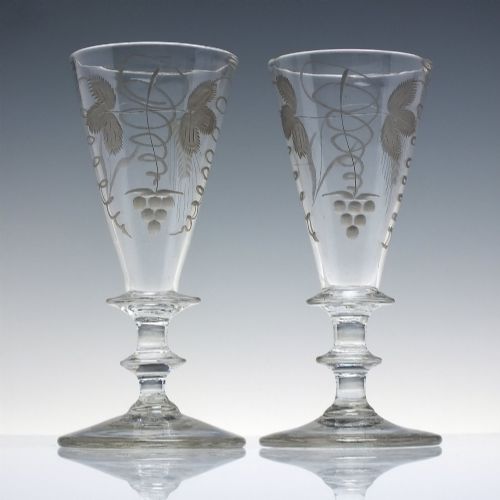
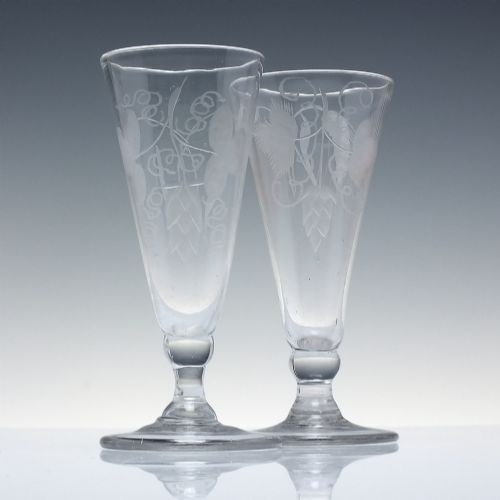
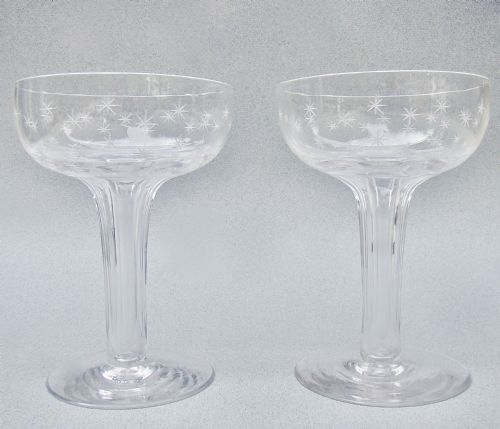
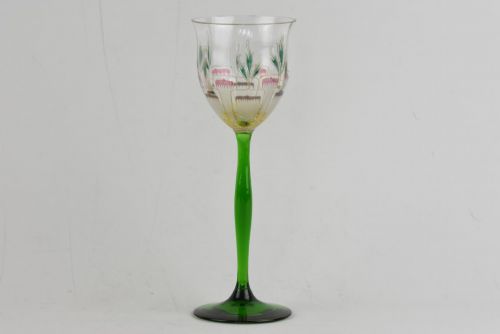
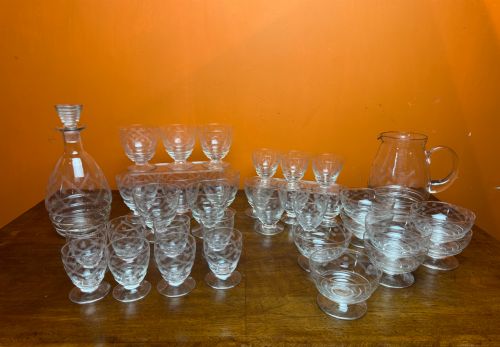
Decoration relied on wheel-engraving, star-etching, faceting, and floral enamelling, alongside overlay techniques where coloured glass layers were cut away to reveal clear crystal beneath. Surface manipulation like petal moulding and ribbing added texture to bowls and feet.
A tiny trapped bubble in an eighteenth-century stem proves a glassmaker's breath lives on inside the twist.
What varies in quality
Quality rests upon the precision of the glassmaker's hand and the purity of the material, separating standard production glassware from exceptional studio or factory output. Clarity in lead crystal and crispness in wheel-engraved or faceted decoration indicate superior craftsmanship.
Proportion and balance define the better examples, where the weight of the foot matches the delicacy of the stem and bowl. The complexity of internal stem formations, such as mixed twists or multi-series opaque threads, also distinguishes finer work from simpler plain stems.
Baccarat·Theresienthal·Webb Corbett·Salviati·James Powell
The Vintage Stemware Glasses Glossary
- Air twist
- A stem formed by drawing out elongated air bubbles within the molten glass into spiral threads. This technique was popular in eighteenth-century drinking vessels.
- Opaque twist
- A stem containing threads of white or coloured opaque glass twisted inside the clear metal. These are characteristic of mid-eighteenth-century English pieces.
- Hock glass
- A tall-stemmed wine glass traditionally used for German white wines, often featuring coloured overlay or elaborate bowl engraving. They appear in Edwardian and later periods.
- Rummer
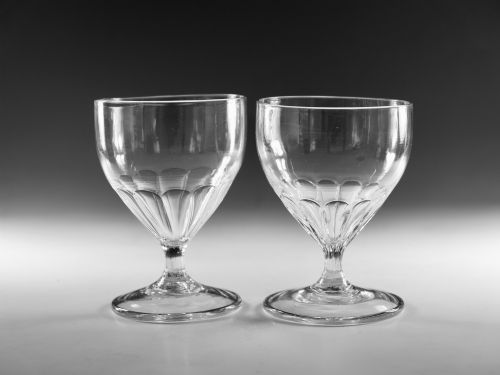
- A heavy, large-bowled drinking glass used for wine, punch, or spirits during the Georgian and Victorian eras. They typically sit on a short, sturdy stem and wide foot.
- Champagne coupe
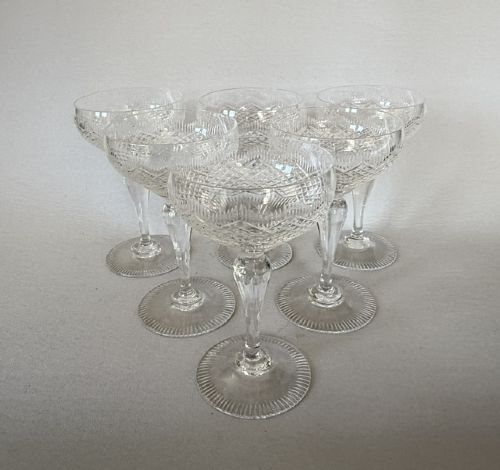
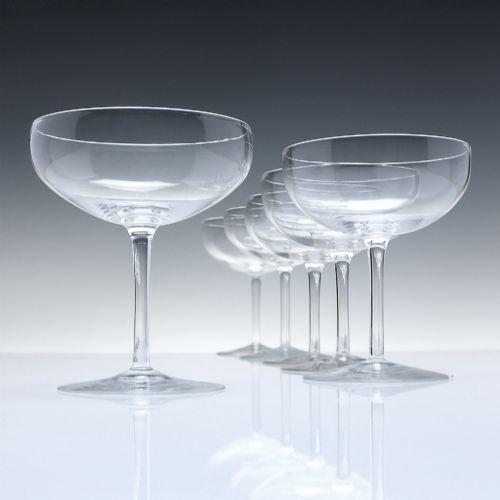
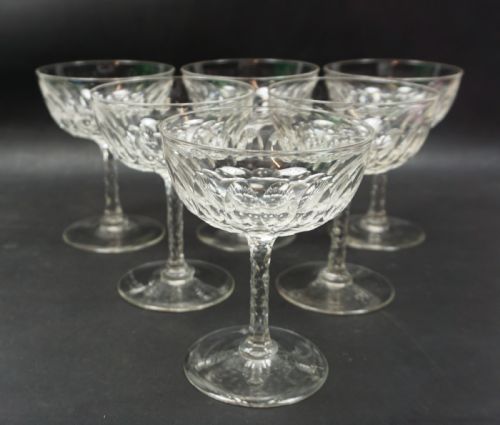
- A shallow, broad-bowled glass designed for sparkling wine. Victorian and Edwardian examples often display facet cutting or star-etching.
Vintage Stemware Glasses: Frequently Asked Questions
How do I date an old wine glass?
Dating relies on observing the manufacturing method, stem construction, and bowl shape. Pontil marks on the base, metal composition, and specific twist formations help place pieces into Georgian or Victorian periods.
Changes in fashion from plain balusters to air twists and later coloured glass provide further chronological markers for comparison.
Are these glasses safe to use?
Most antique drinking glasses remain functional for occasional use if handled carefully. Hand washing in warm water preserves the fragile lead glass and enamel decoration.
Sudden temperature changes should be avoided to prevent thermal shock in old, hand-blown material.
What is an air twist stem?
An air twist is formed by trapping elongated bubbles inside the molten stem and twisting the glass as it is drawn. This creates delicate internal spiral channels.
Master glassmakers used this technique extensively during the mid-eighteenth century on wine and ale glasses.
Why are some stems faceted?
Faceting involves grinding flat planes onto the stem or lower bowl using a wheel. This technique became prominent in the late eighteenth and nineteenth centuries.
Facet cutting increased the refractive qualities of lead glass, making the stems sparkle under candlelight.