

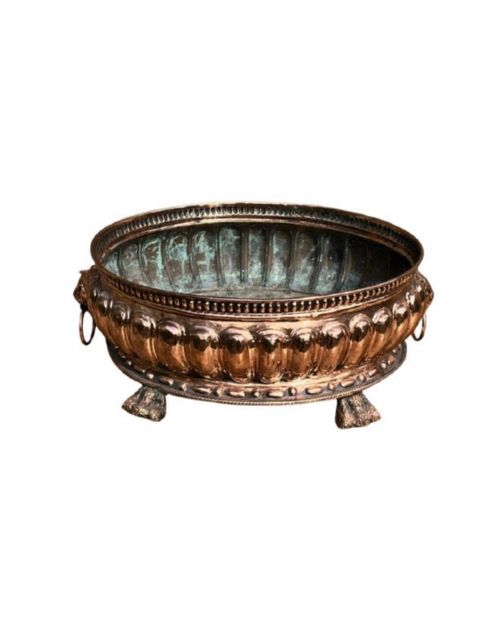
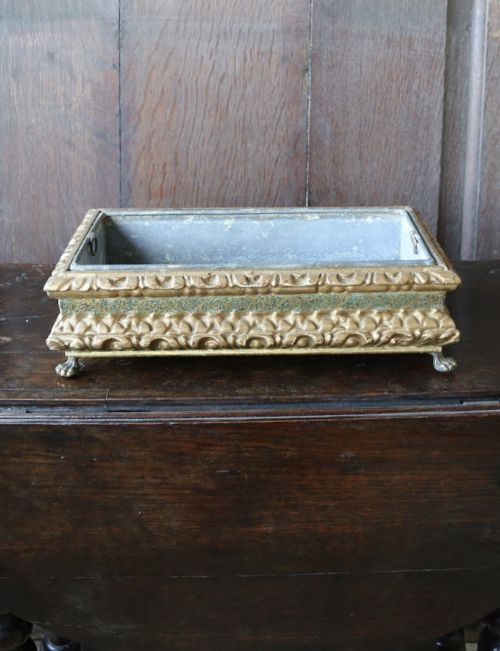


Claw Footed Jardiniere
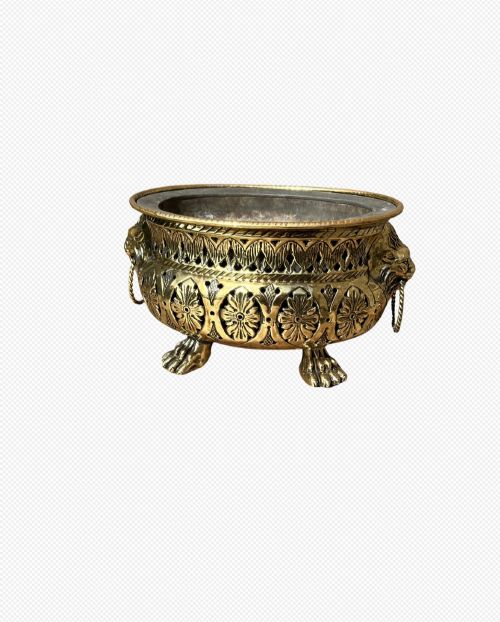
A claw footed jardiniere elevates indoor greenery onto sculptural supports, bringing distinct historical character and metalwork texture to a room.
Claw Footed Jardiniere
A claw footed jardiniere serves as a decorative plant holder or planter, frequently elevated on feet that draw from classical or animalistic motifs. When exploring a claw footed jardiniere, you will encounter vessels shaped from metal and wood across diverse historical eras.
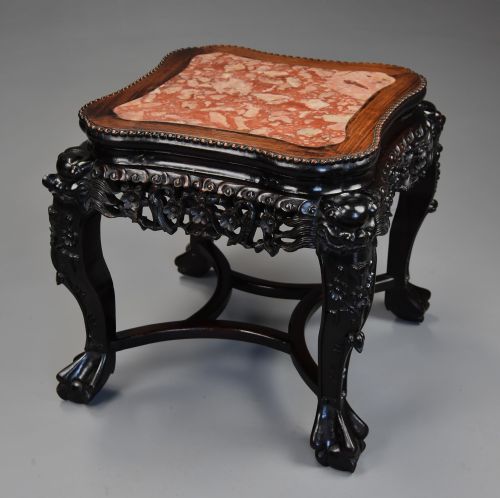
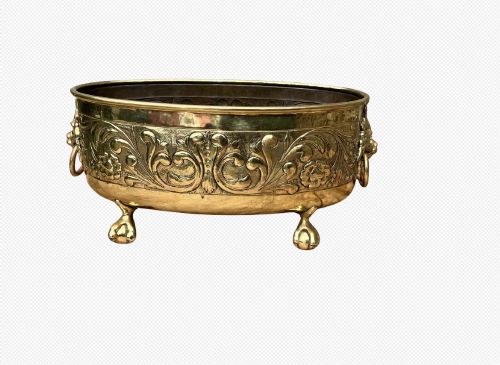
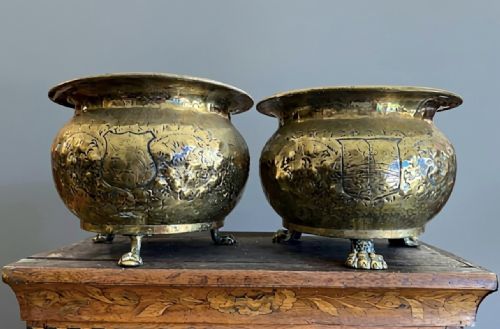
The selections span from Victorian brass cylinders and Edwardian examples to earlier continental pieces like Dutch brass planters and French copper vessels. Alongside traditional jardiniere forms, related plant stands, pot stands, and low tables with marble inset tops appear within the group.
Origins stretch from Britain and continental Europe to China, encompassing styles such as French Empire, Italian Neo-Classical, Gothic Revival, and Qing Dynasty. These pieces range from pierced and repoussé brass to carved hardwood and lead constructions resting upon distinct feet.
How they were made
Metals such as brass, copper, and zinc form the primary bodies of these vessels, often shaped through repoussé work or piercing techniques. Artisans hammered, chased, and perforated sheet metal to create surface patterns, animal masks, and decorative bands.
Hardwoods including mahogany and other timbers provide the structure for stands and certain planters, frequently paired with inset marble tops. Carved gilt wood and cast metal elements also appear, uniting rigid frames with decorative ornamentation.
Lions roar silently from the handles of nineteenth century brass vessels, guarding the ferns within.
What varies in quality
The crispness of execution in repoussé decoration and the depth of surface chasing distinguish finer metalwork from simpler production. Pierced designs show varying levels of precision in the fretwork, while cast elements like lion mask handles display sharper relief on superior examples.
Material selection and structural joinery define the standard of wooden stands and marble-topped tables. Finer pieces employ dense hardwoods with careful turning and stable joinery to support heavy stone inserts or planted vessels securely.
The Claw Footed Jardiniere Glossary
- Repoussé
- A metalworking technique where the artisan hammers the design from the reverse side to form a raised pattern on the front. This method gives texture and depth to brass and copper planters.
- Jardiniere
- An ornamental pot or stand designed to hold plants or flowers indoors. These vessels range from heavy metal cylinders to decorative wooden stands.
- Torchiere
- A tall stand or lamp base historically designed to hold a light source, appearing here adapted for plant display. Such stands elevate greenery to eye level.
- Gilt wood
- Timber coated with a thin layer of gold leaf or gold paint to simulate solid gold. It provides a rich decorative surface on continental boxes and stands.
Claw Footed Jardiniere: Frequently Asked Questions
What is a claw footed jardiniere used for?
These vessels serve as decorative holders for potted plants, elevating greenery within a domestic interior. They function as standalone decorative objects or plant stands.
Historically, certain brass and copper examples also doubled as wine coolers or display basins in grand rooms. Today, they accommodate house plants while contributing period texture to a space.
How do I care for a brass jardiniere?
Metal vessels require gentle dusting and occasional cleaning with appropriate non-abrasive metal care products to maintain their surface finish. Avoid harsh chemical cleaners that strip historical patination.
When using them for live plants, place a waterproof liner inside the metal body to protect the antique base from moisture damage and soil corrosion.
How do I tell Victorian from Edwardian brass planters?
Victorian pieces often display heavier cast ornamentation, Gothic Revival influences, or dense repoussé work with dark patination. They lean towards robust proportions and classical animal motifs.
Edwardian examples tend to exhibit lighter construction, brighter brass finishes, and refined Edwardian aesthetic touches. Direct dating often relies on stamped registry marks or known stylistic shifts around the turn of the twentieth century.
Can I use an antique plant stand outdoors?
These pieces are designed for indoor domestic settings and lack weatherproofing for external environments. Exposure to rain, frost, and direct elements will damage timber, marble, and patinated metal surfaces.
Keeping them inside preserves the original joins, gilding, and polished metal finishes against degradation.