


Claw Foot Work Table
A claw foot work table brings neat proportions and clever interior compartments to a room, offering a practical surface with hidden storage.
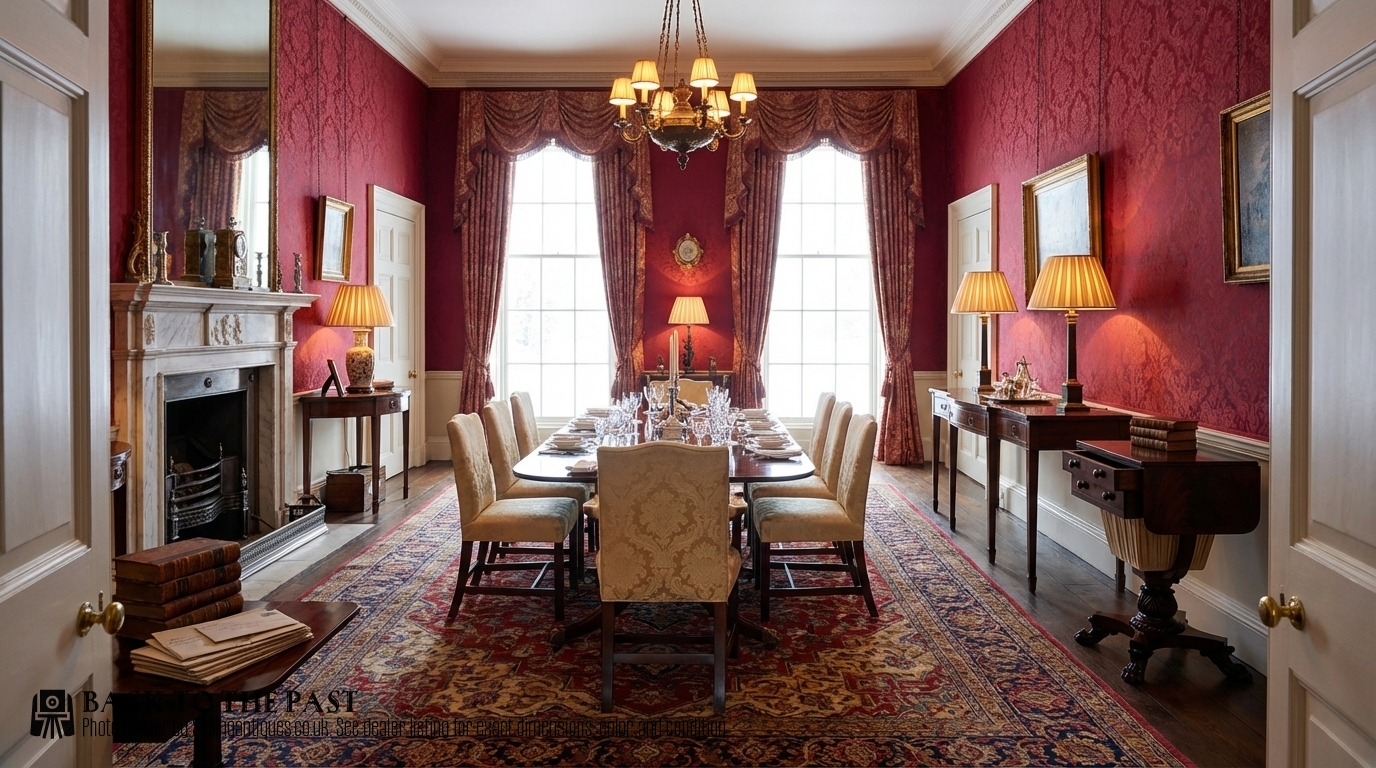
Claw Foot Work Table
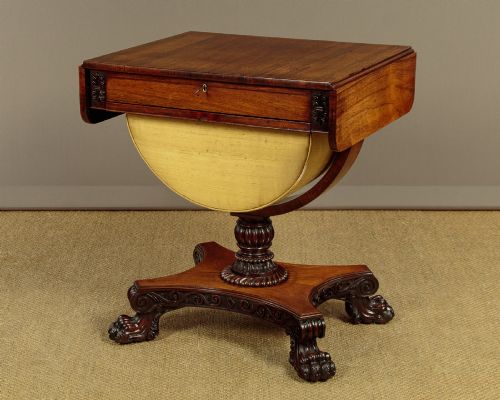
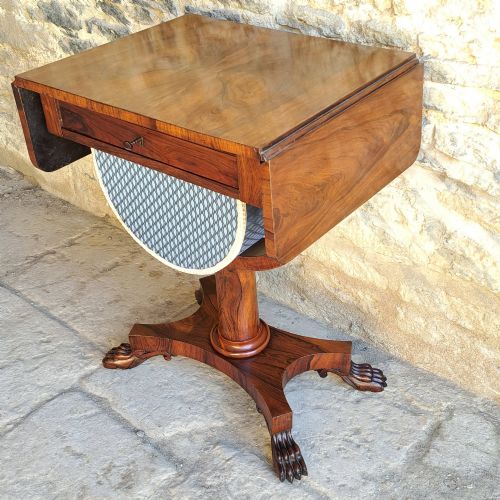
A claw foot work table is a compact item designed for needlework and domestic tasks, combining a top surface with internal compartments or an attached bag. The examples on this page span the Georgian, Regency, William IV, and Victorian periods, with rosewood and mahogany appearing frequently as the primary timbers.
Most pieces function as sewing tables, work tables, or occasional tables, featuring pedestals or legs supported by distinct claw feet. Makers often integrated drop leaves or games tops, adapting the standard sewing table into a versatile piece of furniture for the parlour.
How they were made
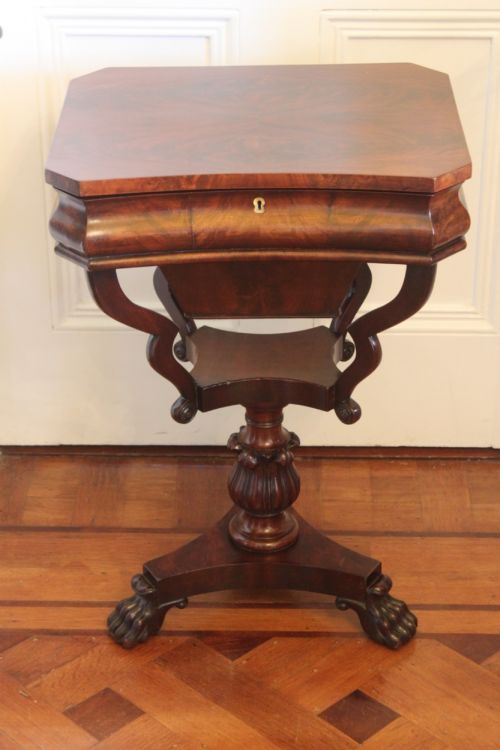
Cabinet makers utilised solid and veneered timbers, selecting flame mahogany, rosewood, and occasional exotic woods like Karelian birch to create rich surface figures. Flame mahogany and curl grain veneers provide striking grain patterns across the top and drawer fronts.
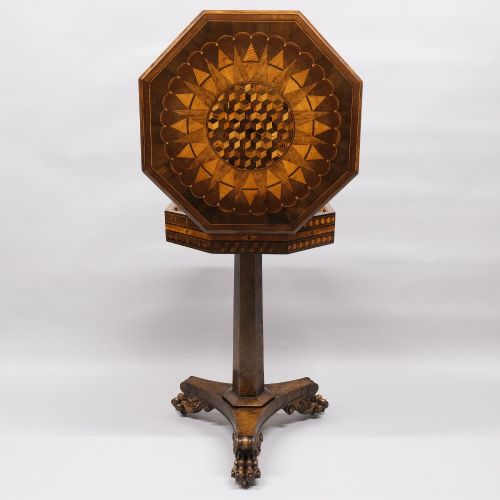
Structural stability relies on turned pedestals, pillar supports, and carved claw feet, often accented with brass castors or ormolu mounts. Secondary elements include fitted interior trays, fabric or silk bags, and parquetry work utilising specimen woods.
Many work tables include secret compartments hidden inside sliding boxes, designed to keep sewing pins safely away from curious fingers.
What varies in quality
Quality rests on the selection of timber veneers, such as figured mahogany or rosewood, and the crispness of the carving on the pedestal and claw feet. Superior examples display thoughtful proportions, integrated interior fittings, and precise joinery that holds firm over decades.
The refinement of the brass castors, the execution of any parquetry or stringing, and the original condition of the internal compartments distinguish finer workshops from standard production pieces.
Ralph Turnbull·Gillows of Lancaster
The Claw Foot Work Table Glossary
- Work table
- A small table designed for sewing and needlework, typically equipped with drawers, compartments, or an underslung bag. These pieces served domestic tasks in 19th-century sitting rooms.
- Flame mahogany
- A veneer cut from the fork of a mahogany tree where the branch meets the trunk. It creates a distinctive, swirling flame-like pattern across the wood surface.
- Parquetry
- Geometric wood mosaic work used for decorative surfaces on tabletops. Craftsmen fit small blocks of specimen woods together to form repeating patterns.
- Pedestal
- A central column supporting a table top above a base of feet. This construction allows legroom while maintaining stability.
Claw Foot Work Table: Frequently Asked Questions
What is a claw foot work table used for?
These tables served as designated stations for sewing, needlework, and small writing tasks in the home. The top provided a steady surface, while internal compartments kept threads, needles, and tools organised.
Today, they function well as bedside tables or compact side tables in living spaces, where the hidden storage remains genuinely useful.
How do I date a claw foot work table?
Dating relies on timber choices, leg styles, and construction methods. Regency and Georgian pieces often feature rosewood or flame mahogany with delicate turned pedestals, while Victorian examples tend to be heavier mahogany.
Looking at the interior compartments, drawer construction, and hardware helps narrow down the decade of manufacture.
Are these tables sturdy enough for daily use?
Most pieces are built from solid hardwoods like mahogany and rosewood, making them durable for everyday placement. The pedestal base and claw feet distribute weight evenly across the floor.
Care should be taken with drop leaves and delicate internal silk bags, which reflect their original purpose rather than heavy modern loads.
What woods were commonly used?
Mahogany and rosewood dominate the selection, often utilised as veneers over a stable secondary wood. Cabinet makers also employed satinwood, Karelian birch, and various specimen woods for parquetry details.
These rich timbers were chosen for their deep colour and ability to take a smooth polish.