

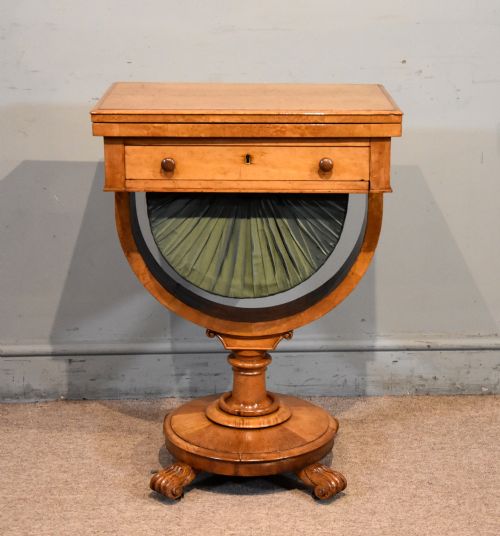


Antique Pleated Work Basket
An antique pleated work basket search brings up elegant nineteenth-century sewing tables and stands designed to hold needlework and small domestic tasks.
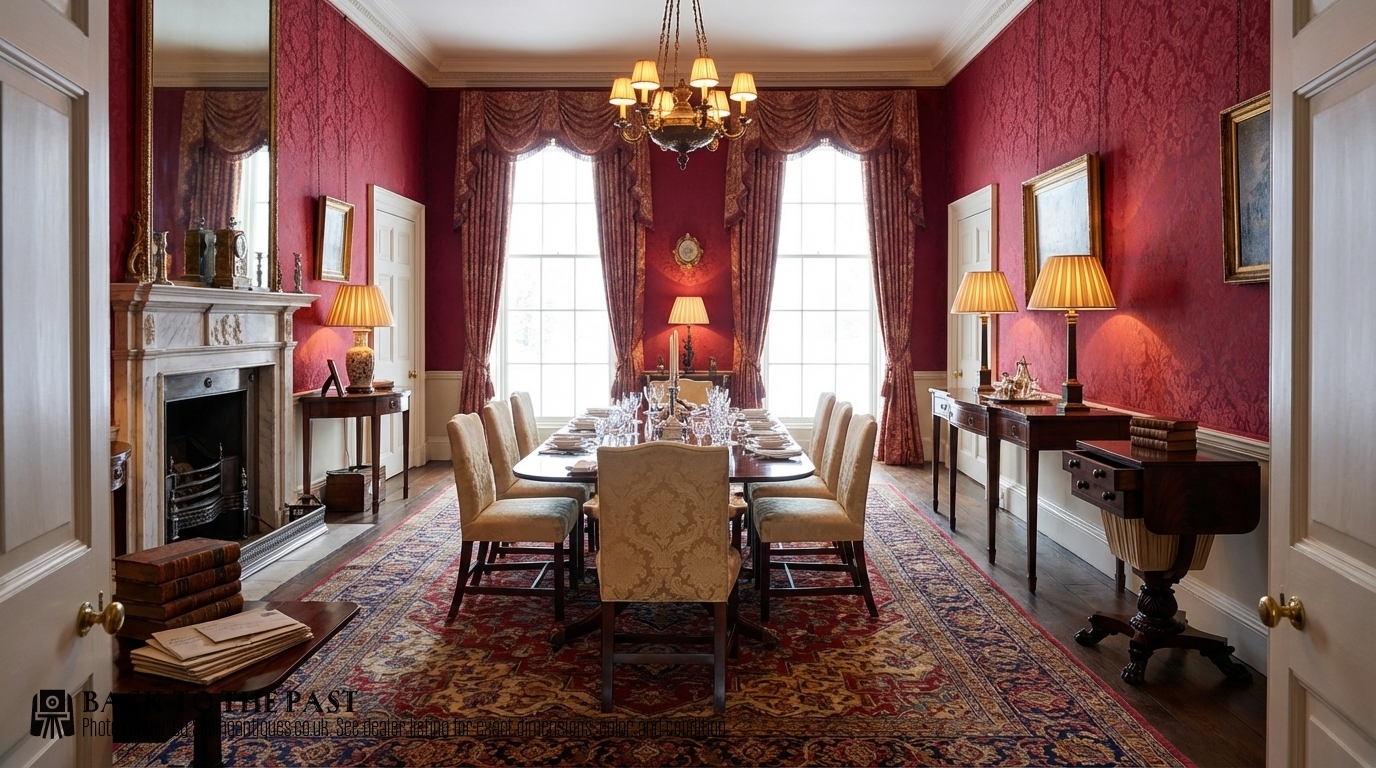
Antique Pleated Work Basket
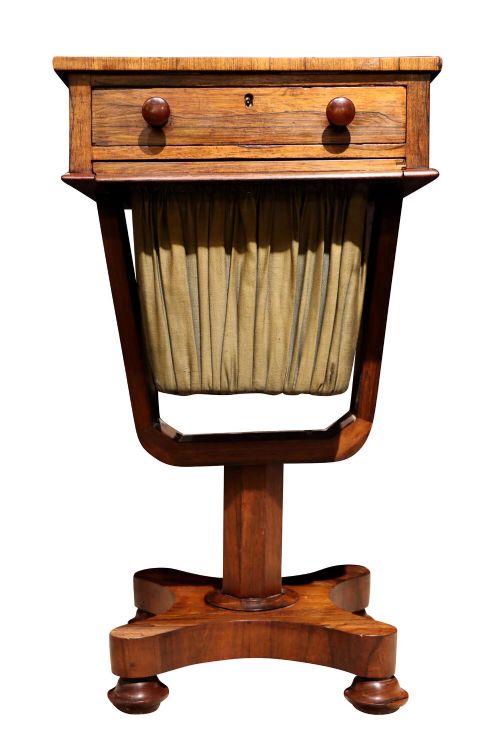
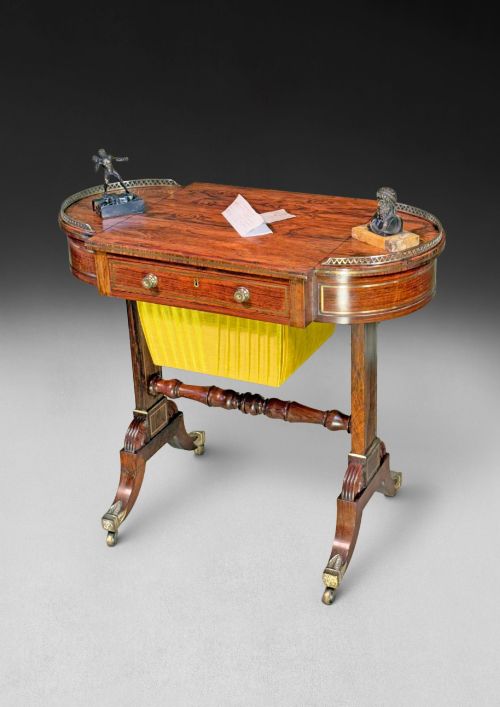
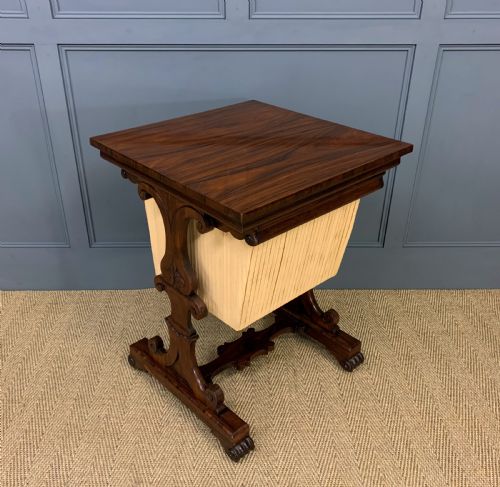
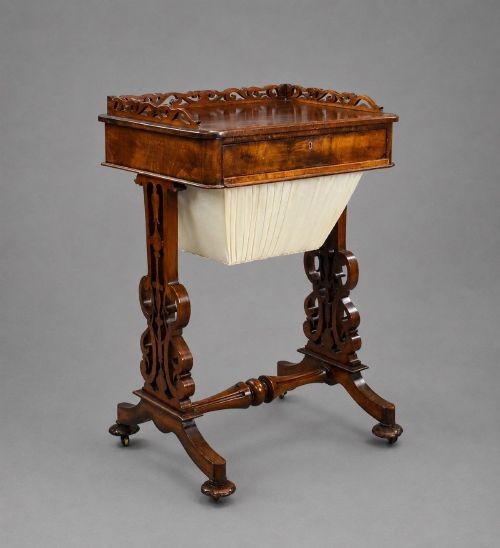
An antique pleated work basket typically refers to nineteenth-century sewing tables and work stands that incorporate fabric bags or compartments for textiles. These domestic pieces appear across the Regency, Victorian, and Edwardian periods.
The primary forms found here include sewing tables, occasional tables, work tables, and side tables. Makers of the period combined functional storage with refined furniture design, often featuring drop flaps and specialised compartments.
Examples on this page span from Georgian and Regency eras through to the late Edwardian period. Buyers encounter diverse timbers such as mahogany, rosewood, burr walnut, and maple.
How they were made
Cabinet makers utilised dense hardwoods including mahogany, rosewood, burr walnut, and maple for the frames and table tops. These timbers were often selected for rich grain patterns and polished to a high lustre.
Silk and other fabrics were integrated into the design to form the hanging bags and pleated work baskets attached beneath the tables. Brass hardware and occasional inlay work added decorative contrast to the timber structures.
Antique Pleated Work Basket Retail Price Guide 2026
Typical asking prices for pleated work basket among the pieces listed under this phrase on Sellingantiques today, from the lower quarter to the upper quarter. They describe what is for sale here now, not the wider market.
Listings feature woods like rosewood and burr walnut alongside fabrics and brass fittings across the 19th Century.
What varies in quality
The selection of timber grain heavily dictates the refinement of each piece, with highly figured mahogany, burr walnut, or pollard oak commanding attention. Finer examples display meticulous cabinet making in the joinery of drawers and drop flaps.
The retention of original fabric components, silk linings, and brass mounts preserves the historical integrity of the work table. Subtle details such as inlaid decoration and sophisticated turning on the legs elevate simpler forms.
The Antique Pleated Work Basket Glossary
- Regency
- A British design style spanning the early nineteenth century, characterised by classical restraint and elegance. Pieces from this period frequently utilise mahogany or maple.
- Drop flap
- A hinged leaf on the side of a table that lifts to extend the surface area. This mechanism appears on several work tables to save space.
- Burr walnut
- A prized timber veneer showing swirling knot formations. Cabinet makers used this material on top surfaces for dramatic visual texture.
- Sewing table
- A small specialised piece of furniture fitted with drawers and compartments for needlework. These often include suspended fabric baskets for textiles.
Antique Pleated Work Basket: Frequently Asked Questions
What is an antique pleated work basket?
An antique pleated work basket is a nineteenth-century sewing table or stand featuring a suspended fabric bag for needlework.
These pieces combine wooden work surfaces with soft textile compartments designed for domestic sewing and crafts.
How were these work tables used?
These tables served as functional furniture for sewing, embroidery, and small domestic tasks in the parlour or bedroom.
Drawers and internal compartments kept threads and needles organised while the lower bag held ongoing textile projects.
Which woods are most common?
Mahogany and rosewood appear frequently across Regency and Victorian examples on this page.
Makers also utilised burr walnut, maple, and satinwood to create decorative finishes on the table tops and cabinets.