



Claw Foot Sofa Table
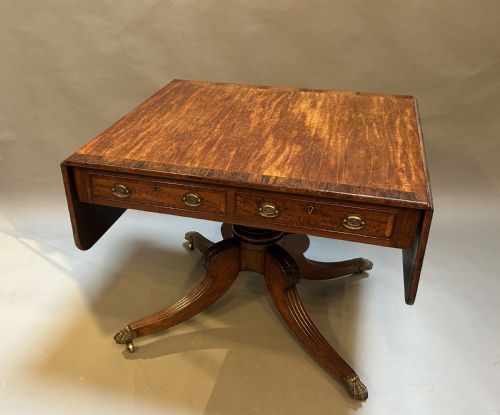
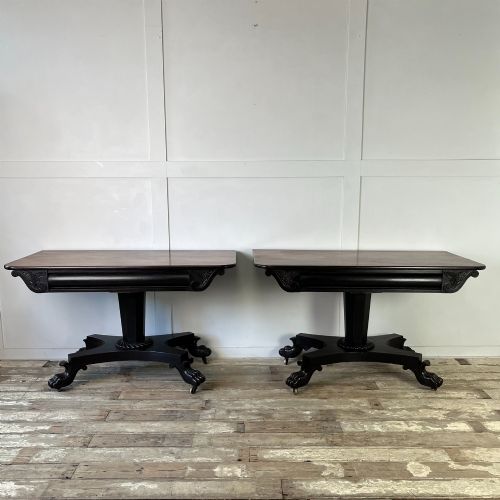
A claw foot sofa table brings refined surface space to a room, offering drop leaves and rich mahogany or rosewood construction.
Claw Foot Sofa Table
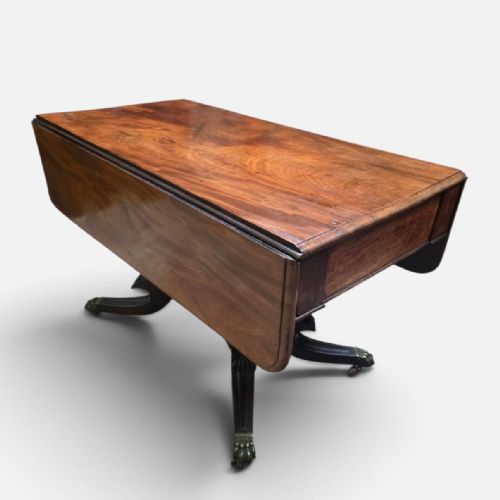
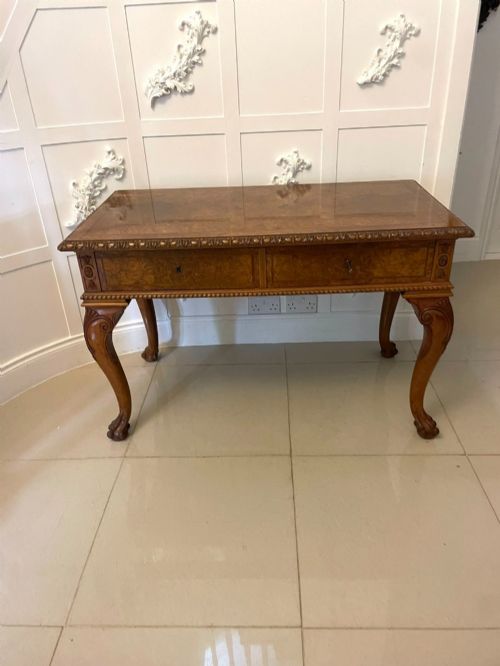
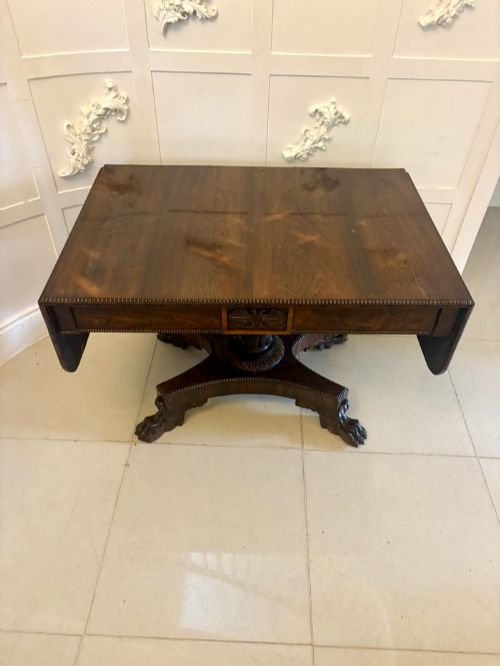
A claw foot sofa table represents a traditional form designed to sit neatly in front of seating or function freestanding in a room, often featuring drop leaves for adjustable surface area. The examples gathered under this search span multiple periods, with the Regency and William IV eras providing prominent expressions of the type alongside later revivals.
Makers utilised various native and exotic timbers, resulting in substantial mahogany and rosewood bodies complemented by decorative brass and ormolu details. Alongside authentic 19th-century specimens, the listings contain occasional pieces from the Georgian and early 20th-century periods, including Biedermeier and Empire revival interpretations.
Materials and construction
Timbers such as mahogany, rosewood, burr walnut, and Karelian birch form the primary structural and visual elements of these tables, selected for their rich grain patterns. Craftsmen incorporated brass inlay and ormolu mounts to accent the timber frames, particularly on Regency and Empire revival examples.
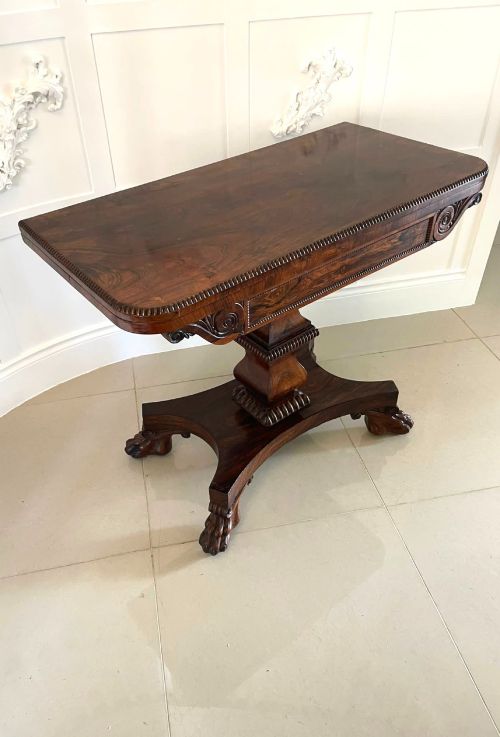
Support structures frequently rely on pedestal columns or sturdy legs terminating in carved claw feet, while drop leaves operate via hinged mechanisms to expand the usable top. Ebonised wood details and scroll carvings further demonstrate the cabinetmaker's repertoire across the different manufacturing dates.
Claw Foot Sofa Table Retail Price Guide 2026
Typical asking prices for claw foot sofa table among the pieces listed under this phrase on Sellingantiques today, from the lower quarter to the upper quarter. They describe what is for sale here now, not the wider market.
Assessing quality and execution
Superior examples display crisp carving on the claw feet and pedestals, executed with a precision that maintains clean lines and balanced proportions. The choice of timber also dictates the visual merit, with well-figured burr walnut, rich rosewood, and finely matched mahogany elevating the piece.
Construction integrity determines daily utility, particularly in the movement of drop leaf hinges, the alignment of drawers where present, and the stability of the central pillar or leg assembly. Finer pieces exhibit thoughtful integration of brass inlay and secondary woods that remain steadfast over centuries of use.
Gillows
The Claw Foot Sofa Table Glossary
- Sofa table
- A rectangular occasional table traditionally designed to stand behind a sofa, typically equipped with drop leaves on either end. These versatile pieces often feature small drawers beneath the top.
- Regency
- An English decorative style spanning the late 18th and early 19th centuries, characterised by classical motifs, Greco-Roman influence, and sophisticated brass inlay. Pieces from this era frequently utilise dark exotic woods.
- Ormolu
- Gilded bronze used for decorative mounts and furniture trim, adding metallic brilliance to the timber surfaces. It appears prominently on Biedermeier and Empire revival pieces.
- Drop flap table
- A table featuring hinged flaps on one or both sides that lift to enlarge the surface area and drop down when space is restricted. This mechanism allows the furniture to adapt to different room layouts.
Claw Foot Sofa Table: Frequently Asked Questions
What is a claw foot sofa table used for?
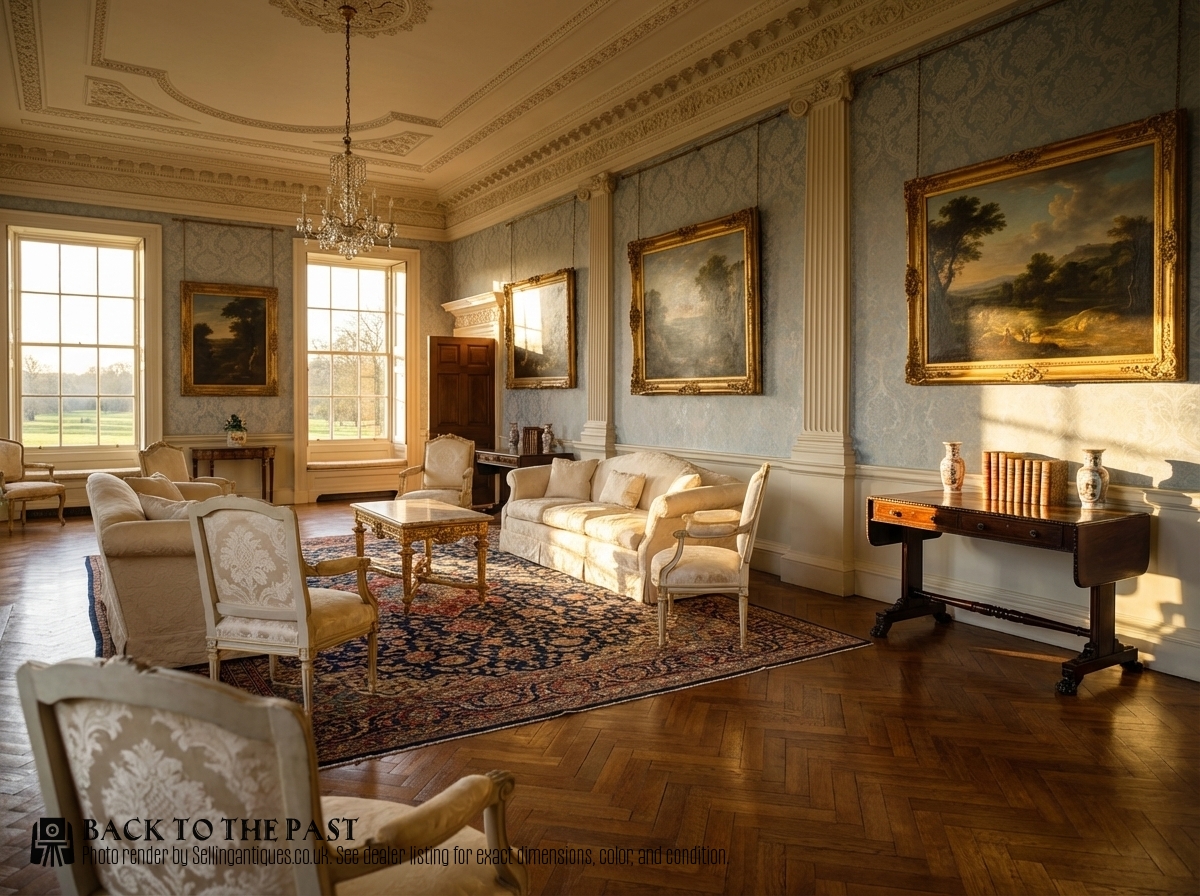
Originally placed behind a sofa or used freestanding in the centre of a room, these tables served multiple domestic purposes from writing to serving refreshments. The drop leaves allowed households to expand the surface area only when needed.
Today, they function well as console tables, hall furniture, or compact desks in modern interiors. Their versatile proportions make them practical for smaller spaces without sacrificing traditional character.
How do I identify a Regency sofa table?
Regency pieces typically display classical proportions, dark rosewood or mahogany timbers, and frequently incorporate brass inlay or ormolu mounts. The legs often terminate in distinct brass or carved claw feet.
Examining the construction methods beneath the top and inside any drawers reveals period joinery techniques. Stylistic references to ancient Greece and Rome help distinguish authentic early 19th-century work from later revivals.
Are all these tables from the 19th century?
While the majority originate in the 19th century, particularly the Regency and William IV periods, the selection also includes earlier Georgian examples and later 20th-century revivals. Each era brought distinct interpretations to the traditional form.
Stylistic details and timber choices usually point towards the correct period of manufacture. Craftsmanship standards remain high across both original antique periods and subsequent revival movements.
How do I care for a rosewood table?
Rosewood surfaces benefit from regular dusting with a soft, dry cloth to prevent the accumulation of abrasive particles. Avoiding direct sunlight and maintaining stable room humidity protects the timber and finish from cracking.
Occasional application of appropriate furniture wax preserves the natural lustre of the wood. Harsh chemical cleaners should be avoided entirely to protect the antique polish.