

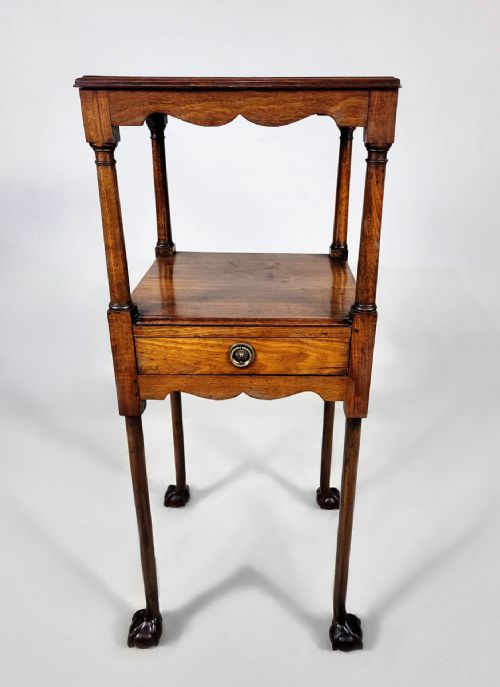
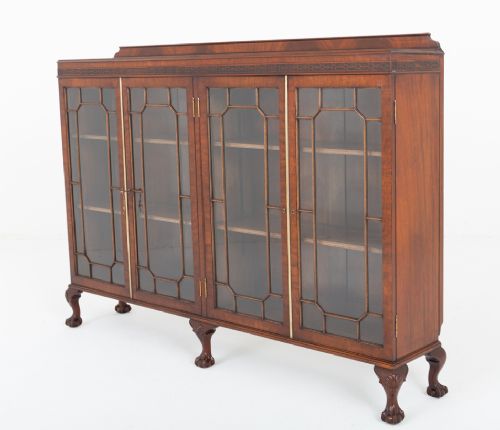
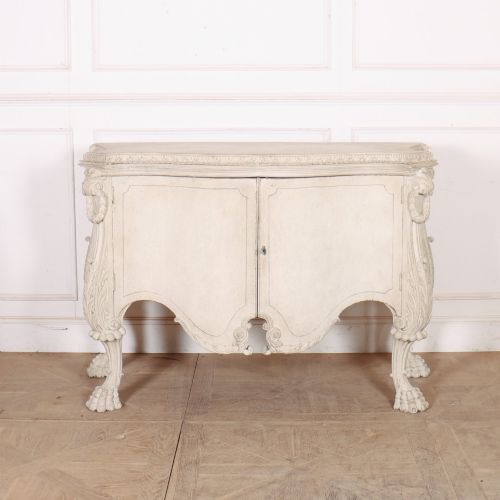
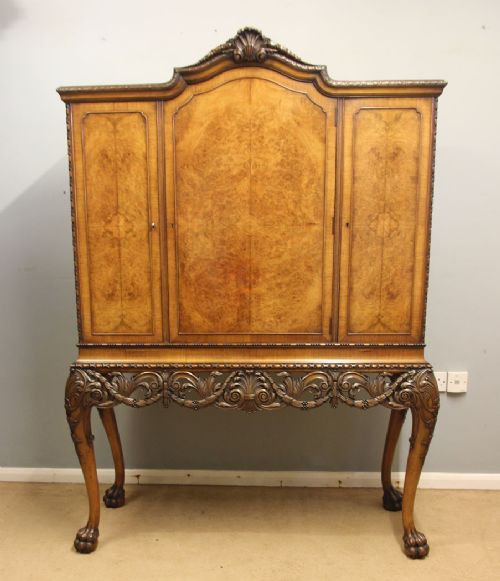

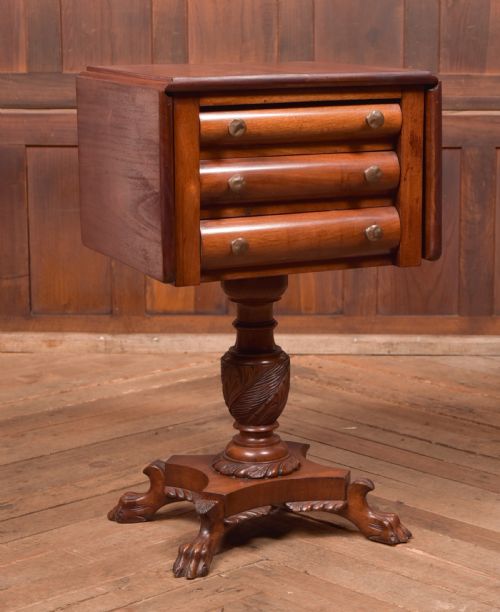


Claw Feet Side Cabinet
A claw feet side cabinet brings architectural presence to a room, grounding heavy timber in carved animal strength.
Claw Feet Side Cabinet
When you search for a claw feet side cabinet, you encounter versatile storage furniture spanning multiple revival movements and genuine nineteenth-century origins. These pieces range from compact bedside tables and music cabinets to grand glazed display units and extensive sideboards.
Mahogany dominates the available selection, often accompanied by burr walnut veneer, simulated rosewood, and occasional painted wood surfaces. Most examples date from the Edwardian era and the nineteen-twenties, alongside pieces from the Victorian period and the nineteenth century.
The characteristic support comes from carved legs terminating in ball and claw feet, echoing earlier stylistic revivals such as Chippendale and Queen Anne. Buyers frequently meet formats incorporating glass doors, brass inlay, or marble tops.
Materials and construction
Cabinet makers utilised dense hardwoods like mahogany and rosewood as the primary structural body, frequently enhancing visual depth with burr walnut veneer. These timbers provided the necessary stability for intricate carving on the legs and structural framework.
Decorative detailing relied on precision brass inlay and glazed panels to frame the contents of display compartments and linen cupboards. Interior surfaces occasionally featured fabric linings, particularly within cabinets intended for curated display.
Claw Feet Side Cabinet Retail Price Guide 2026
Typical asking prices for claw feet side cabinet among the pieces listed under this phrase on Sellingantiques today, from the lower quarter to the upper quarter. They describe what is for sale here now, not the wider market.
A solitary cutlery chest by Walker & Hall stands ready among the grand wardrobes and display cabinets.
Judging quality and character
The distinction between standard production and superior craftsmanship lies in the crispness of the carved claw feet and the selection of timber veneers. Finely figured burr walnut and rich mahogany grains elevate the visual impact of the cabinet body.
Hardware integrity and the precision of joinery separate utilitarian storage from refined cabinet work. Pieces featuring integrated brass inlay or architectural revival styling reflect greater artisan attention during construction.
Walker & Hall, Sheffield
The Claw Feet Side Cabinet Glossary
- Burr walnut veneer
- A thin slice of wood taken from the knotty growth of a walnut tree, applied to a secondary timber base to create swirling grain patterns. This technique maximises decorative surface appeal.
- Simulated rosewood
- A painted or stained wood finish designed to imitate the rich, dark grain of genuine rosewood. Cabinet makers used this method to achieve exotic aesthetics with domestic timbers.
- Demi lune
- A half-moon shape used to describe the curved front profile of console tables and side cabinets. This geometry saves floor space while maintaining a strong decorative presence.
- Waterfall bookcase
- A tiered shelving unit where each successive shelf steps back from the one below, resembling cascading water. It typically incorporates enclosed lower storage.
Claw Feet Side Cabinet: Frequently Asked Questions
What periods do these cabinets come from?
The selection spans from the early nineteenth century through Victorian and Edwardian periods, extending into the nineteen-twenties. Revival styles frequently draw inspiration from Georgian and Regency eras.
Craftsmanship reflects the prevailing aesthetic movements of each decade, ranging from French Empire influences to heavy Edwardian mahogany construction.
How were side cabinets used historically?
These pieces served multiple domestic functions, from storing cutlery and sheet music to displaying curated porcelain and linens. Bedside variants held chamber items and night essentials.
Larger configurations acted as principal storage furniture in dining rooms and living spaces, combining surface display with secure internal compartments.
What woods are commonly found?
Mahogany is the predominant timber across the selection, appearing in both solid form and veneer. Burr walnut and rosewood also feature prominently.
Secondary materials include brass for inlay and hardware, alongside glass panels and occasional marble top surfaces.