


Claw and Ball Feet Chairs
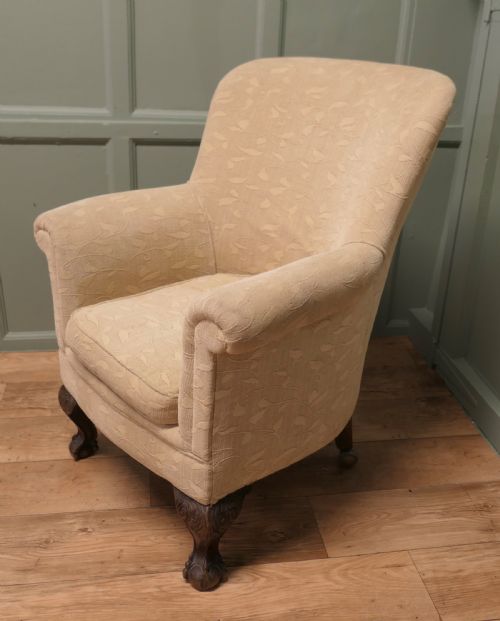
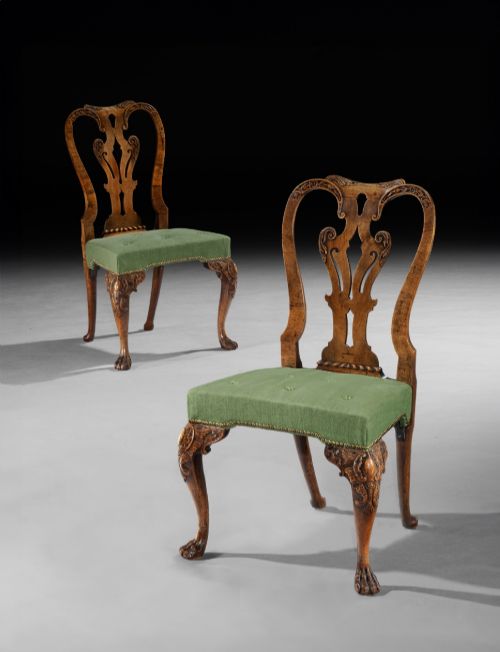
Claw and ball feet chairs bring grounded eighteenth-century presence to a room through carved bird talons clutching spheres.
Claw and Ball Feet Chairs
Claw and ball feet chairs span formal dining sets, library armchairs, and occasional seating shaped by centuries of revival and original production. A buyer searching this phrase encounters everything from eighteenth-century George II walnut side chairs to twentieth-century Chippendale revival dining sets.
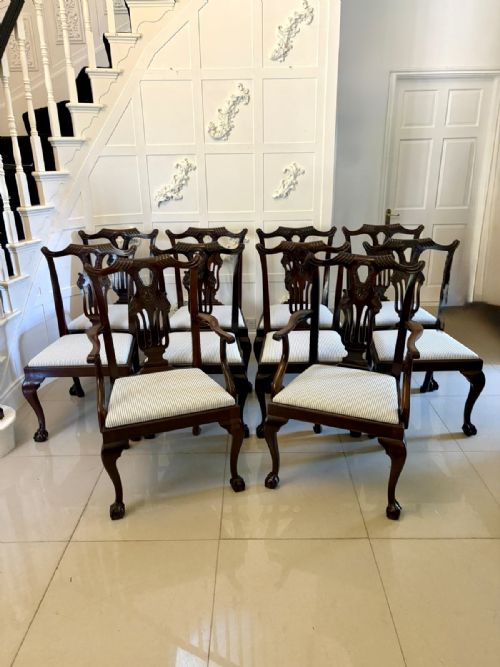
The selections on this page range across armchairs, side chairs, settees, and piano stools rendered in mahogany, walnut, and oak. Diners most frequently meet larger matched sets of mahogany dining chairs built in the Chippendale style.
Makers and manufacturers varied output across the Georgian, Victorian, and Edwardian periods, adapting the distinctive foot design to wing backs, tub chairs, and low stools. The underlying frames reflect changing domestic requirements for parlour, library, and dining room seating.
Materials and construction
Cabinetmakers relied heavily on solid mahogany and walnut for structural stability and fine carving detail. These dense timbers allowed artisans to shape the intricate talons and knuckles of the foot directly from the leg timber or apply them with precision.
Upholstery materials evolved from early horsehair and fabric coverings to include leather, velvet, and modern textiles secured over webbing and springs. Frames often combined mortise and tenon joinery with applied carvings on the knees and splats.
Claw and Ball Feet Chairs Retail Price Guide 2026
Typical asking prices for claw and ball feet chairs among the pieces listed under this phrase on Sellingantiques today, from the lower quarter to the upper quarter. They describe what is for sale here now, not the wider market.
Some nineteenth-century makers evidently believed fiercely that an armchair required the company of leather upholstery to reach its full potential.
Judging quality
Quality rests in the crispness of the carving on the foot and knee, where superior pieces exhibit deep undercut talons and realistic tension in the grasp of the sphere. Softer definition indicates worn moulds or hurried hand carving.
Proportion and timber selection separate master workshops from later volume production, particularly within revival periods where grain matching and frame heft dictate longevity.
Howard and Sons
The Claw and Ball Feet Chairs Glossary
- Ball and claw
- A furniture foot depicting a bird's talon, often an eagle or hawk, grasping a rounded sphere. This motif originated in Chinese art before entering European design during the early eighteenth century.
- Carver
- An armchair, usually designed with open arms to accommodate the wider garments of a dining host at the head of a table. These often accompanied sets of matching side chairs.
- Wing back
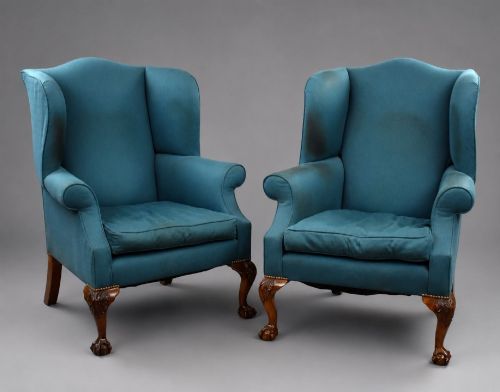
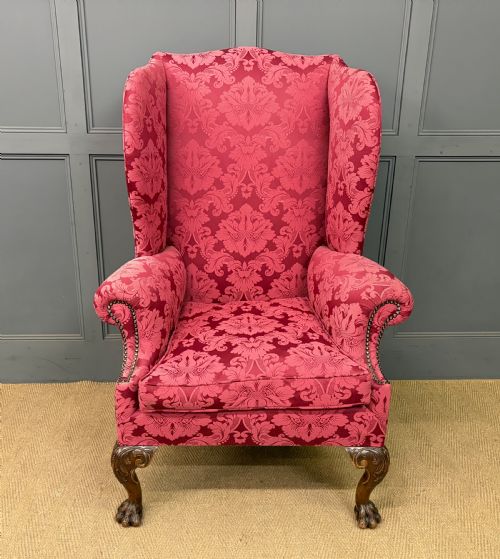
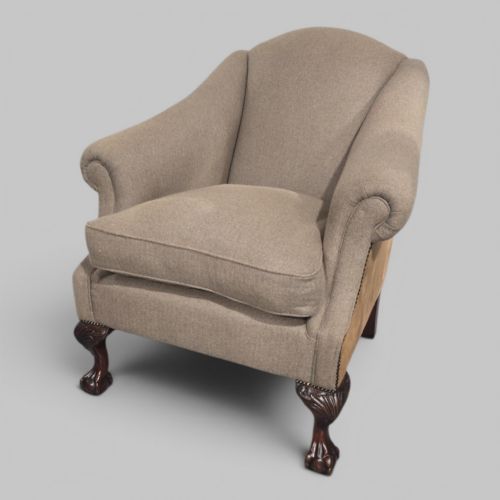
- An upholstered armchair featuring protective side panels designed to shield the sitter from draughts. These frequently stand on carved cabriole legs terminating in ball and claw feet.
- Splat
- The vertical wooden strip down the centre of a chair back. In these pieces, the splat is frequently pierced and carved with interlaced scrollwork.
Claw and Ball Feet Chairs: Frequently Asked Questions
Are these chairs comfortable for daily use?
Dining chairs and open armchairs offer upright support suited to long meals or desk work. Deep-seated wing chairs and leather club chairs provide softer cushioning designed for relaxed lounging.
Original padding often undergoes modern reupholstery to improve daily comfort while retaining the historic wooden frame. Buyers should check seat heights against standard tables.
How do I spot an eighteenth-century original?
Original pieces from the seventeen-hundreds display hand-cut joinery, timber shrinkage appropriate to age, and dense, patinated mahogany or walnut surfaces. Tool marks left by gouges and chisels on the inner frame offer clues to period handcraft.
Revival pieces from the Victorian and Edwardian eras often use machine-cut components, standardised screws, and cleaner internal woods. Comparing secondary timbers helps clarify the exact decade of manufacture.
Can I mix these chairs with modern tables?
Dark mahogany and walnut tones pair effectively with contemporary glass, metal, or stone dining tables as a contrasting statement piece. The sculptural weight of the carved foot anchors the seating visually against minimal modern surfaces.
Measuring table clearance is essential when pairing armchairs or carvers with modern dining frames. Low aprons on contemporary tables may restrict the entry of higher antique armrests.
How do I care for antique wood and leather?
Wood surfaces benefit from occasional application of quality beeswax to nourish the grain and protect the antique patina. Direct sunlight and sudden radiator heat must be avoided to prevent timber splitting.
Leather upholstery requires specialised conditioning balms to maintain flexibility and prevent cracking over time. Gentle dusting with a dry cloth keeps carved details free of debris.