




Classical Ruins Artwork
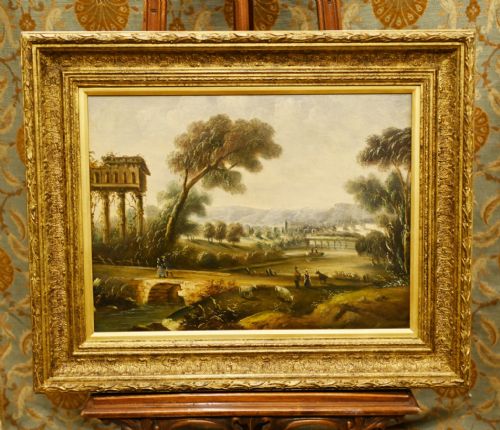
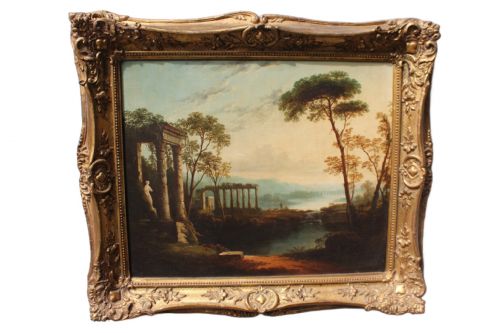
Classical ruins artwork captures the weathered remnants of antiquity in oil, watercolour, and print, bringing historical grandeur directly into domestic interiors.
Classical Ruins Artwork
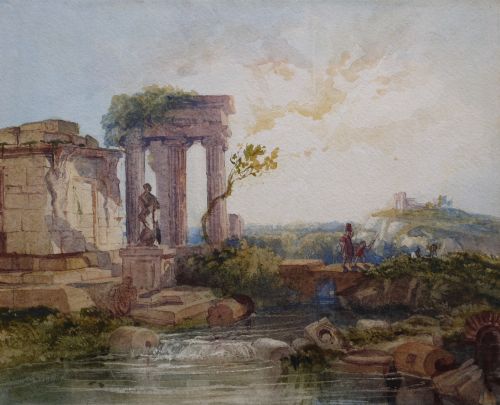
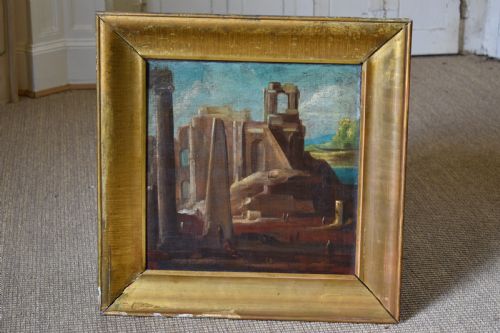
When buyers search for classical ruins artwork, they encounter depictions of ancient architecture, temples, and amphitheatres rooted in historical landscapes. These pieces record the physical legacy of Rome and Greece, often collected during the cultural journeys undertaken by European travellers.
The selections available range from detailed watercolours and gouaches to large oil paintings on canvas and panel. Works span from the seventeenth century through the nineteenth century, reflecting evolving interpretations of classical subjects.
Grand Tour watercolours and Neoclassical oils dominate the selection, capturing specific Mediterranean sites such as the Forum or the Campagna. Buyers frequently find framed watercolours and nineteenth-century prints depicting these architectural motifs.
Materials and methods
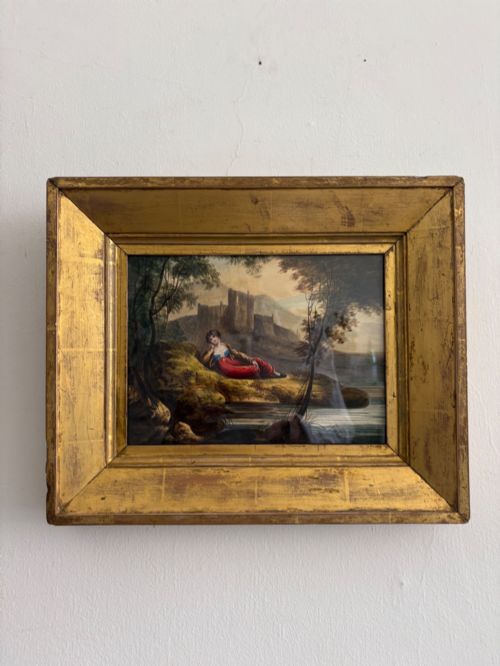
Artists executed these works using oil on canvas or panel, watercolour on paper, and gouache, often applying gold leaf and gilt to the surrounding wooden frames. Etchings and coloured prints offered reproducible alternatives to hand-painted scenes.
Support materials include aged paper, stretched canvas, and wooden panels, framed in gilded wood or simple moulded wooden surrounds. Pigments were applied by hand to capture the texture of weathered stone and overgrown vegetation.
Paper and gilded wood are the predominant materials recorded across the available paintings and framed prints.
Quality factors
Quality rests upon the precision of the architectural drawing and the handling of atmospheric light across the landscape. Works by documented painters or identified circles demonstrate superior control of perspective and depth compared to anonymous studio pieces.
The preservation of the original paper or canvas, along with the retention of period gilt frames, influences the overall character. Strong provenance and legible signatures distinguish accomplished records of historic sites from standard decorative items.
Richard Principal Leitch·Angelo Maria Crivelli·Franz Knebel·Francesco Piranesi·Francesco Zuccarelli·William Crouch
The Classical Ruins Artwork Glossary
- Grand Tour
- A traditional trip through Europe undertaken by upper-class young men to absorb classical culture and art. Items acquired along the route recorded these architectural sights.
- Neoclassical
- A style of art and architecture inspired by the classical arts of ancient Greece and Rome. It prioritises symmetry, proportion, and ancient motifs.
- Capriccio
- An architectural fantasy combining real and imaginary buildings, ruins, and other architectural elements in a fictitious setting. Artists used this genre to compose picturesque scenes.
- Gouache
- An opaque method of water-based painting using pigments bound in water-soluble gum. It provides solid fields of colour on paper supports.
- Campagna
- The countryside surrounding Rome, historically noted for its ruined aqueducts and pastoral views. Artists frequently painted this terrain during the nineteenth century.
Classical Ruins Artwork: Frequently Asked Questions
What periods do these artworks come from?
The pieces span from the seventeenth century to the late nineteenth century, encompassing seventeenth-century canvases and numerous nineteenth-century watercolours.
Travellers and artists produced these views across extended eras, reflecting shifting tastes in historical representation.
Where were these scenes usually painted?
Subjects focus on Mediterranean locations, particularly Rome, Pompeii, Tivoli, and the surrounding Italian countryside.
Artists recorded actual classical remains such as arches, forums, and aqueducts encountered during educational travels.
How should I frame and display them?
Many examples retain their period gilt frames, which complement the tonal palette of oil and watercolour works.
Keep pieces away from direct sunlight to protect fragile paper supports and water-based pigments from fading.
How do I distinguish an original watercolour from a print?
Closer inspection reveals brush strokes, pigment pooling, and hand-applied details unique to watercolour and gouache paintings.
Prints and etchings display ink patterns under magnification rather than the direct application of wet media onto paper.