


Classical Round Table
A classical round table brings distinct architectural symmetry and enduring historical form into a room.
Classical Round Table
A classical round table encompasses forms such as centre tables, gueridons, occasional tables, and coffee tables drawn from periods including the Regency, Victorian, and French Empire styles. These circular tables frequently serve as anchor pieces in reception rooms or hallways, offering a balanced silhouette that breaks up angular room layouts.
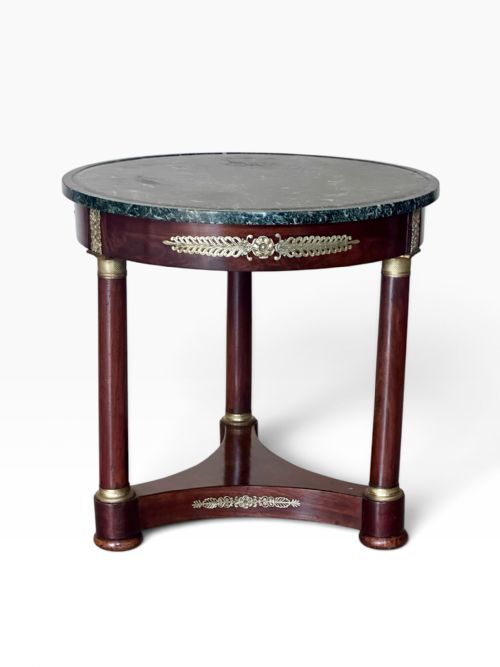
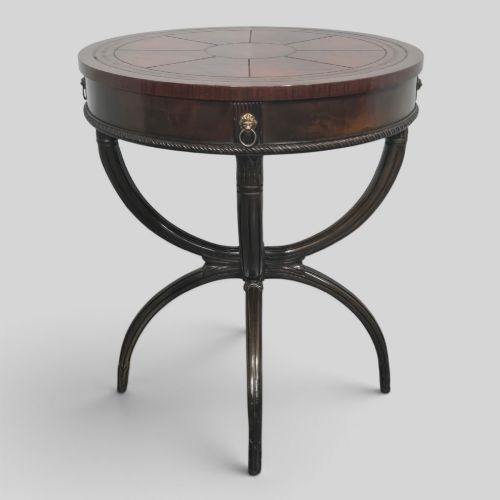
The versions most commonly encountered on this page date from the nineteenth and twentieth centuries, reflecting Neoclassical Revival, Grand Regency, and French Empire aesthetics. They range from timber-topped occasional pieces to substantial marble-topped centre tables decorated with gilt metal or bronze ornaments.
Materials and construction methods
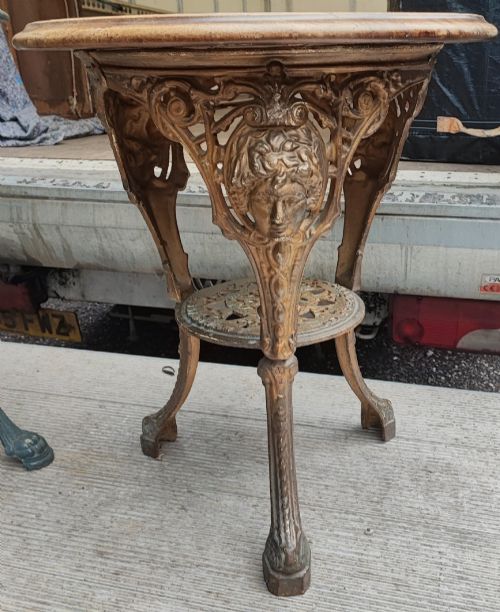
Makers utilised dense cabinet timbers such as mahogany, walnut, amboyna, and satinwood, often incorporating marquetry inlay, painted finishes, or canework to enrich the circular top and frieze. Selected pieces pair wooden structures with heavy statuary marble inserts or cast iron bases.
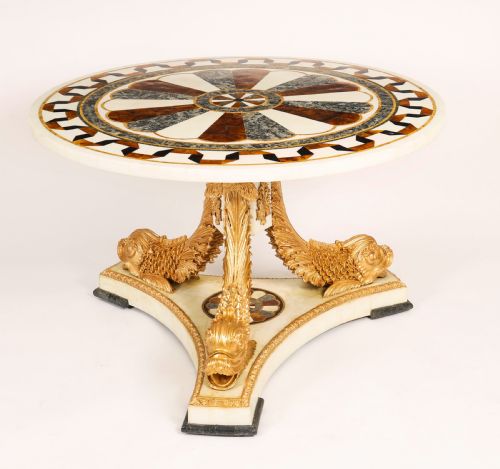
Decorative detailing relies on cast brass or ormolu mounts, bronze ornaments, and carved figural supports such as dolphins, executed in the French Empire and Regency traditions.
Listings feature circular tables spanning the nineteenth and twentieth centuries, incorporating mahogany, marble, ormolu, and bronze materials.
Distinctions in craftsmanship and design
Quality reveals itself in the architectural precision of the timber framing, the crispness of applied bronze or ormolu mounts, and the integration of stone elements like marble tops. Finer examples display meticulous marquetry inlay, balanced proportions, and substantial weight in their structural supports.
Simpler interpretations rely on plain wood or standard cast elements, whereas exhibition quality works demonstrate complex carving, specific stylistic references, and high-grade secondary woods.
Pietro Ferrario·Holland and Son
The Classical Round Table Glossary
- Gueridon
- A small French round table, typically supported by a central column or three legs, originating in the seventeenth century. These tables were frequently utilised for holding lamps or decorative objects.
- Ormolu
- Gilded bronze ornamentation applied to furniture, popular in French Empire and Regency design. The technique involves a mercury-gilding process that creates a deep, matte metallic finish.
- Marquetry
- The art of applying decorative pieces of veneer to a structure to form intricate patterns or pictures. Craftsmen selected contrasting woods such as satinwood and mahogany to create depth.
- Centre table
- A freestanding table designed to be viewed from all sides, usually placed in the middle of a room rather than against a wall. They often feature finished undersides and detailed pillar supports.
Classical Round Table: Frequently Asked Questions
Where should I place a classical round table?
These pieces function particularly well as freestanding centre tables in the middle of a principal room or as occasional tables in a hallway.
Their circular footprint allows foot traffic to circulate freely around them while offering a stable surface for lamps or decorative objects.
What woods were used for these tables?
Cabinet makers predominantly worked with mahogany, walnut, amboyna, and satinwood to construct the frames and tabletops of these pieces.
Selected examples incorporate exotic veneers and detailed marquetry inlay to create contrasting decorative patterns across the surface.
Are marble tops original to these tables?
Many nineteenth and twentieth century centre tables and gueridons were designed specifically with fitted statuary marble tops from creation.
These stone surfaces were chosen for their durability and coolness, often paired with gilt metal or bronze mounts along the frieze.